

Navigating Wind Load Design for Kenyan Structures
In Kenya’s dynamic architectural landscape, the relentless force of wind presents a significant challenge to structural integrity, particularly for high-rise developments in bustling urban centers like Nairobi and Kisumu, and for coastal constructions exposed to powerful oceanic gales in Mombasa and Kilifi. Understanding and accurately quantifying these wind actions is not merely a compliance exercise; it is fundamental to ensuring the safety, durability, and long-term performance of any structure. Neglecting a meticulous wind load assessment can lead to catastrophic failures, excessive structural vibrations, and premature material fatigue, making robust structural engineering input indispensable from the earliest design stages.
Understanding Wind Actions in Kenya’s Diverse Climates
The determination of wind actions on structures in Kenya is a complex process, requiring a deep understanding of local meteorological data, topographical influences, and the specific characteristics of the building itself. Cadreatech’s approach is rooted in the rigorous application of internationally recognised standards, primarily BS EN 1991-1-4 (Eurocode 1 Part 1-4), adapted to the unique Kenyan context. This involves establishing a basic wind speed (Vb) derived from reliable meteorological data, such as that provided by the Kenya Meteorological Department, which accounts for the region’s historical wind patterns.
Beyond the basic wind speed, several critical factors modulate the actual wind pressure exerted on a structure. The topography factor (ct) is crucial, especially in Kenya where varied terrains significantly impact wind flow. For instance, structures situated near prominent geographical features like the Ngong Hills can experience amplified wind speeds due to orographic uplift, requiring a higher ct value in calculations. Conversely, buildings in sheltered valleys might experience reduced wind effects. Cadreatech engineers meticulously assess the site’s surroundings, utilising detailed contour maps and site visits to accurately determine this factor.
Terrain categories, as defined in Eurocode 1, are another cornerstone of wind load assessment. These categories range from open sea or coastal exposures (Category 0 or I), common in Mombasa, Lamu, and Malindi, to suburban (Category III) and dense urban areas (Category IV), typical of Nairobi’s central business district or Kisumu’s expanding metropolitan zones. Each category dictates a different roughness length, influencing the wind profile and turbulence intensity at various heights. A high-rise building in Nairobi’s CBD, surrounded by other tall structures, will experience different wind effects compared to a standalone tower on the open plains of Kajiado, necessitating tailored terrain category application and consideration of shielding effects from adjacent buildings.
Furthermore, the directional factor (cdir) accounts for the anisotropy of wind climate, acknowledging that wind speeds are not uniformly distributed from all directions. Along the Kenyan coast, for example, the predominant Kaskazi (north-easterly) and Kusi (south-easterly) monsoon winds dictate specific critical directions for design. For high-rise structures, particularly those with unconventional geometries, dynamic response to wind becomes a paramount consideration. Flexible structures with low natural frequencies can experience significant oscillations, including vortex shedding, which can lead to excessive accelerations and discomfort for occupants, or even fatigue damage over time. Advanced analytical techniques, often complemented by computational fluid dynamics (CFD) simulations or even wind tunnel testing for very complex or super-tall projects, are employed to accurately predict these dynamic effects. This detailed modelling is essential for ensuring both structural integrity and occupant comfort, aligning with our expertise in High-Rise and Complex Structure Modelling.
For high-rise structures exceeding 50 meters in height or those with slender profiles, simply applying equivalent static wind loads can severely underestimate the true dynamic response. This oversight risks excessive sway, uncomfortable vibrations for occupants, and potential fatigue failure of structural elements and non-structural components like cladding. A thorough dynamic analysis is crucial to capture these complex interactions.
| Aspect of Design | Consequences of Neglecting Professional Wind Load Analysis |
|---|---|
| Structural Integrity | Increased risk of catastrophic failure, especially during extreme wind events, due to under-designed members and connections. |
| Occupant Comfort | Excessive building sway and vibrations, leading to motion sickness, discomfort, and reduced productivity for occupants. |
| Facade and Cladding | Frequent damage or detachment of facade elements, glazing, and roofing due to localised high suction pressures and fatigue. |
| Material Longevity | Accelerated fatigue of structural elements and connections, leading to premature material degradation and reduced design life. |
| Compliance & Liability | Non-compliance with national building codes, potential for legal action, fines, and professional disrepute for involved parties. |
| Cost Implications | High repair costs for damaged elements, potential for demolition orders, and significant financial losses from operational downtime. |
Advanced Wind Load Analysis for High-Rise and Coastal Projects
The design of structures in high-wind regions, particularly high-rise buildings and those situated along Kenya’s extensive coastline, demands an advanced level of wind load analysis that goes beyond standard prescriptive methods. Cadreatech employs sophisticated methodologies to address the unique challenges presented by these environments. For rigid structures, the Equivalent Static Wind Load (ESWL) approach is often sufficient, converting dynamic wind pressures into static forces for structural analysis. However, for flexible high-rise buildings, a dynamic analysis is indispensable. This involves determining the structure’s natural frequencies and mode shapes, then simulating its response to fluctuating wind forces, often using frequency-domain or time-domain approaches. This ensures that the building’s oscillations remain within acceptable limits for both structural safety and occupant comfort, typically quantified by acceleration criteria (e.g., peak acceleration limits of 15-20 milli-g for residential, 20-30 milli-g for offices).
Aerodynamic phenomena such as vortex shedding, galloping, and flutter are critical considerations for slender high-rise buildings. Vortex shedding, where alternating vortices are shed from opposite sides of a building, can induce resonant vibrations perpendicular to the wind direction. Proper building geometry, including chamfered corners or setbacks, can mitigate these effects. Cadreatech engineers leverage their experience to advise on optimal architectural forms that naturally reduce adverse aerodynamic responses, potentially negating the need for expensive tuned mass dampers. The integrity of cladding and non-structural components is also paramount. Local pressure coefficients, especially suction pressures at corners and edges, can be significantly higher than overall average pressures. Designing for these localized forces requires meticulous attention to detail in the specification of façade systems, fixings, and glazing to prevent wind-driven rain ingress and panel detachment during extreme weather events, a common concern in coastal areas like Malindi where strong gales are prevalent.
Coastal environments present a dual challenge: elevated basic wind speeds and the corrosive effects of salt-laden air. Structures in Mombasa, Kilifi, or Lamu are exposed to higher design wind pressures compared to inland regions, necessitating robust primary and secondary structural systems. Furthermore, the constant exposure to chlorides demands the use of corrosion-resistant materials and protective coatings for all exposed structural elements and fixings. Hot-dip galvanizing for steel members, marine-grade stainless steel for anchors, and high-performance concrete with adequate cover to reinforcement are standard specifications. The foundation design is also profoundly impacted, as increased overturning moments and uplift forces from wind require deeper pile foundations, larger raft foundations, or robust anchorage systems to ensure stability.
For existing structures, particularly those undergoing change of use or experiencing signs of distress, a comprehensive wind load reassessment is crucial. This often involves detailed site inspections, material testing, and advanced structural analysis to determine if the existing structure can withstand current code-mandated wind loads or if Retrofitting and Structural Strengthening measures are required. This proactive approach is vital in extending the lifespan of coastal properties exposed to increasing climatic variability.
A robust wind load assessment forms the bedrock of resilient structural design, particularly for the diverse architectural landscape across Kenya. Unlike gravity loads, wind loads are dynamic, highly variable, and exert complex pressures on building surfaces, demanding a methodical approach rooted in established engineering principles and local data. While Kenya does not have a unique national wind code, practising structural engineers typically reference international standards such as BS 6399-2, ASCE 7, or Eurocode EN 1991-1-4, adapting them with specific meteorological data from the Kenya Meteorological Department. This ensures designs are locally relevant and globally compliant.
The process begins with a meticulous determination of key parameters that influence wind pressure. The Basic Wind Speed (Vb) is fundamental; this is the reference wind speed for a specific region, typically determined from historical meteorological records over a defined return period (e.g., 50 years). Coastal regions like Mombasa, Malindi, and Kilifi inherently experience higher basic wind speeds due to their direct exposure to oceanic winds, contrasting significantly with inland areas such as Nairobi or Kajiado. Following this, the Terrain Category is assessed, classifying the site based on its surface roughness. Categories range from Category 1 (open terrain with negligible obstructions, like the vast plains of Kajiado or open sea fronts) to Category 4 (heavily built-up urban centres with numerous tall buildings, such as Nairobi’s CBD), each influencing the wind’s velocity profile and turbulence intensity.
Furthermore, the Topography Factor accounts for localised wind acceleration over hills, ridges, and escarpments, a common feature in many parts of Kenya, including the Great Rift Valley. A site situated on a prominent ridge in Naivasha, for instance, would experience higher wind speeds than a similar structure on flat ground. The Directionality Factor considers that wind often has a predominant direction, which can be critical for optimising the orientation of certain architectural features. For tall or slender structures, Dynamic Effects become paramount. Vortex shedding, buffeting, and gust effects necessitate a more sophisticated dynamic analysis, often involving response spectrum or time-history methods, to accurately predict the structural response and prevent resonant vibrations.
The typical wind load analysis process at Cadreatech follows a rigorous, multi-step methodology:
- Site Reconnaissance and Data Collection: Conduct a thorough site visit to assess surrounding topography, existing structures, and collect available local meteorological data including historical wind speed records and storm patterns.
- Determine Basic Wind Speed (Vb): Obtain the design basic wind speed from the Kenya Meteorological Department for the specific project location, ensuring it aligns with the required return period for the structure’s design life.
- Establish Terrain Category and Exposure Factor: Classify the site based on its surface roughness (e.g., open sea, rural, suburban, dense urban) to derive the appropriate exposure factor, which modifies the basic wind speed to account for local conditions.
- Calculate Topography Factor (Ct): Assess whether the building’s location on a hill, ridge, or escarpment will amplify local wind speeds, applying the relevant factor according to the chosen design code.
- Determine Pressure Coefficients (Cp): Utilise code provisions (e.g., tables and figures from BS 6399-2 or ASCE 7) to find external and internal pressure coefficients specific to the building’s geometry, aspect ratio, and roof type (e.g., flat, pitched, curved).
- Calculate Design Wind Pressure: Apply the fundamental formula P = 0.5 ρ (Vd)² * Cp, where ρ is the air density, Vd is the design wind speed (adjusted for height, terrain, and topography), and Cp is the pressure coefficient.
- Apply to Structural Elements: Distribute the calculated wind pressures to the building’s various surfaces (walls, roof, eaves) and analyse their effects on both primary structural elements (columns, beams, shear walls) and secondary elements (cladding, glazing, parapets).
- Dynamic Analysis (for High-Rise/Slender Structures): For structures susceptible to dynamic response, perform advanced analyses such as aeroelastic studies, response spectrum analysis, or time-history analysis to account for potential amplification of forces and deflections.
The culmination of this process is a comprehensive wind load report, detailing all assumptions, calculations, applied pressures, and the resulting forces and moments that the structure must safely resist.
The application of wind load design principles in Kenya requires a deep understanding of local environmental factors and specific structural challenges, moving beyond generic calculations to context-aware engineering. The unique conditions found in different counties demand tailored solutions that address both safety and longevity.
For projects situated along Kenya’s coastline, from Lamu to Diani, wind load design must contend with two significant factors:
- Accelerated Corrosion: The saline-rich air prevalent in coastal areas significantly accelerates the corrosion of exposed steel elements and reinforced concrete. This necessitates careful material selection, robust protective coatings, and meticulous detailing of connections to ensure the long-term integrity of the structure, especially components critical for resisting wind forces.
- Higher Wind Speeds and Gust Effects: Direct exposure to oceanic winds and the potential for tropical depressions means coastal structures are subjected to higher basic wind speeds and more severe gust effects compared to inland locations. This requires a higher level of conservatism in design and often warrants a more detailed analysis of extreme wind events.
Kenya’s growing skyline, particularly in Nairobi and Mombasa, introduces complex challenges for high-rise structures:
- Aeroelastic Phenomena: Beyond static wind pressures, tall and slender buildings are highly susceptible to dynamic aeroelastic phenomena like vortex shedding, galloping, and flutter. These effects can induce significant, sustained oscillations, which can compromise structural integrity over time and severely impact occupant comfort. Addressing these often requires advanced computational fluid dynamics (CFD) simulations and, for landmark projects, even wind tunnel testing to predict building behaviour accurately. Cadreatech’s expertise in High-Rise and Complex Structure Modelling is crucial here, integrating such complex data into comprehensive structural analyses.
- Occupant Comfort: Even if a high-rise structure is deemed safe, excessive sway or vibration from wind loads can cause discomfort, motion sickness, and anxiety among occupants. Design must therefore consider strict serviceability limits for acceleration, often more stringent than ultimate strength limits.
- P-Delta Effects: The increased lateral deflections experienced by slender high-rise structures under significant wind loads can amplify secondary moments due to gravity loads (known as P-Delta effects). These effects must be meticulously accounted for in the structural analysis to prevent progressive collapse.
Different regions in Kenya present unique wind load considerations:
- Nairobi: The capital’s dense urban fabric creates “urban canyon” effects, where wind can be channelled and accelerated between buildings. The proximity of numerous high-rises also leads to complex wind interactions and potential buffeting effects on adjacent structures.
- Mombasa and Coastal Counties: Direct exposure to strong monsoon winds, occasional tropical depressions, and the corrosive marine environment necessitate specialized design approaches that blend high wind resistance with durability against salt-laden air.
- Kisumu: Buildings along Lake Victoria’s shoreline experience unique wind patterns, often involving localized high wind speeds and gusting similar to coastal areas, albeit with different humidity profiles and storm characteristics.
- Kajiado and Rift Valley: Open plains and prominent escarpments in these regions can generate strong, unobstructed winds, demanding careful consideration of terrain and topography factors that might amplify wind speeds over significant distances.
Underestimating wind loads or employing a superficial design approach carries severe consequences. Structures may suffer catastrophic failure during extreme weather events, leading to significant loss of life, property damage, and substantial financial liabilities. Beyond outright collapse, inadequate design can result in costly structural damage, excessive vibrations, and frequent maintenance issues, compromising the building’s functionality and lifespan.
Cadreatech leverages sophisticated 3D modelling and Finite Element Analysis (FEA) software to accurately simulate wind pressure distribution and predict complex structural responses. This includes integrating data from advanced analyses like CFD or wind tunnel tests directly into the structural model, ensuring a holistic and precise design. This approach goes beyond basic code compliance to deliver optimal performance and safety.
Skipping professional engineering input in wind load design carries significant risks:
- Safety Risks: An under-designed structure is a public safety hazard, vulnerable to failure under severe wind events, with potential for catastrophic collapse and loss of life.
- Compliance Issues: Non-compliance with building codes and local regulations can lead to project delays, stop orders from county authorities (e.g., Nairobi County Urban Planning Department), and costly legal disputes.
- Serviceability Problems: Beyond safety, inadequate design can lead to excessive vibrations, undue noise from cladding, water ingress, or even repeated window breakages, rendering a building uncomfortable or unusable.
- Increased Costs: The financial implications of remedial work, such as Retrofitting and Structural Strengthening, legal liabilities, and reputational damage, far outweigh the initial investment in professional, comprehensive wind load design.
This comprehensive approach ensures that structures are not only safe but also durable and comfortable for their intended lifespan, reflecting Cadreatech’s commitment to engineering excellence in Kenya.
Inadequate wind load structural design in Kenya carries profound risks, extending beyond immediate structural failure to long-term serviceability issues, accelerated material degradation, and significant legal and financial liabilities. For high-rise structures, particularly in urban centres like Nairobi and Mombasa, the dynamic nature of wind forces can induce excessive accelerations, causing discomfort to occupants, and leading to non-structural element failures such as cracking of partitions, detachment of cladding, and damage to glazing. The consequences are particularly severe in coastal regions where structures are exposed to higher wind speeds, corrosive salt spray, and potential cyclonic activity, demanding a holistic design approach that integrates structural integrity with material durability.
The Engineer’s Board of Kenya (EBK) mandates that all structural designs be undertaken by registered and licensed professional engineers, adhering to relevant building codes and standards. While Kenya primarily references British Standards (BS 6399-2) and increasingly Eurocodes, the application requires local calibration and expert interpretation due to unique climatic conditions, terrain categories, and construction practices. Skipping professional wind load analysis means bypassing critical checks for ultimate limit states (ULS), which ensure the structure’s resistance to collapse under extreme wind events, and serviceability limit states (SLS), which control deflections, vibrations, and accelerations to maintain functionality and occupant comfort. Without proper analysis, buildings may experience resonant vibrations, a phenomenon where the natural frequency of the structure aligns with the frequency of wind gusts or vortex shedding, leading to amplified oscillations and potential fatigue failure of critical connections over time. This is especially pertinent for slender structures or those with unusual geometries, which can exhibit complex aerodynamic behaviour not adequately captured by simplified code provisions.
Failing to account for localised terrain effects, building height, and the specific dynamic characteristics of a structure can lead to designs that are either excessively conservative (over-engineered, wasting resources) or dangerously under-designed. Coastal structures, for instance, require special consideration for increased exposure and potential for wind-driven rain penetration, which can exacerbate corrosion if facade detailing and material selection are not robust. In high-rise projects, the interaction between adjacent buildings can create channeling effects or shielding, significantly altering local wind pressures.
Consider a multi-storey development in Kilifi or Malindi. Here, the design must not only withstand the direct wind pressures but also account for the corrosive environment. Inadequate facade design, for example, could lead to rapid deterioration of fixings and cladding panels, posing a significant safety hazard from falling debris. Similarly, in Nairobi’s rapidly expanding skyline, where new towers are often constructed in close proximity, a detailed wind tunnel study or advanced computational fluid dynamics (CFD) analysis may be necessary to understand complex wind interactions, including downwash effects, corner suctions, and pedestrian-level wind comfort. These analyses are crucial for optimising structural form and ensuring the longevity and safety of both the new building and its surroundings. For existing structures undergoing changes, a thorough wind load assessment is equally vital, as modifications can alter a building’s aerodynamic profile and dynamic response. Cadreatech’s expertise extends to structural engineering for renovation and extension projects, ensuring that any alterations meet current wind load requirements.
The legal ramifications of structural failure due to inadequate wind load design are severe, potentially leading to prosecution of the responsible engineer and developer, hefty fines, and lengthy litigation. Building owners and occupants face property damage, business interruption, and, most critically, risk to life and limb. Therefore, engaging a competent structural engineering firm like Cadreatech for high-rise and complex structure modelling, including sophisticated wind load analysis, is not merely a compliance step but a fundamental investment in safety, durability, and project viability. Our reports detail specific design assumptions, applied load cases, analysis methodologies (e.g., static equivalent method, dynamic analysis), and verification against code requirements, providing a transparent and defensible design record.
For structures exceeding 60 metres in height or those with significant slenderness ratios (height-to-width), static equivalent wind loads often become insufficient. Dynamic analysis, incorporating modal analysis, gust response factors, and potentially time-history analysis from wind tunnel data, is imperative. This ensures the design accounts for resonant effects and accurately predicts accelerations and displacements, crucial for meeting stringent serviceability criteria.
The following table summarises key differences in design outcomes when wind load analysis is either neglected or properly executed:
| Factor | Impact on Design |
|---|---|
| Basic Wind Speed (Vb) | Establishes the fundamental wind pressure, derived from historical meteorological data for the specific region. |
| Terrain Category | Defines the ground roughness (e.g., urban, suburban, open country) affecting the wind speed profile with height. |
| Topography Factor (ct) | Accounts for amplification or reduction of wind speeds due to hills, valleys, or other significant ground features. |
| Directional Factor (cdir) | Modifies wind speed based on the likelihood of wind blowing from specific directions, crucial for coastal monsoon winds. |
| Exposure Factor | Combines terrain and height effects to determine the dynamic pressure at any point on the building’s surface. |
| Building Height and Geometry | Influences overall wind forces, dynamic response characteristics, and localised pressure coefficients. |
| Dynamic Response | Critical for flexible structures; considers vortex shedding, natural frequency, and damping to assess oscillations. |
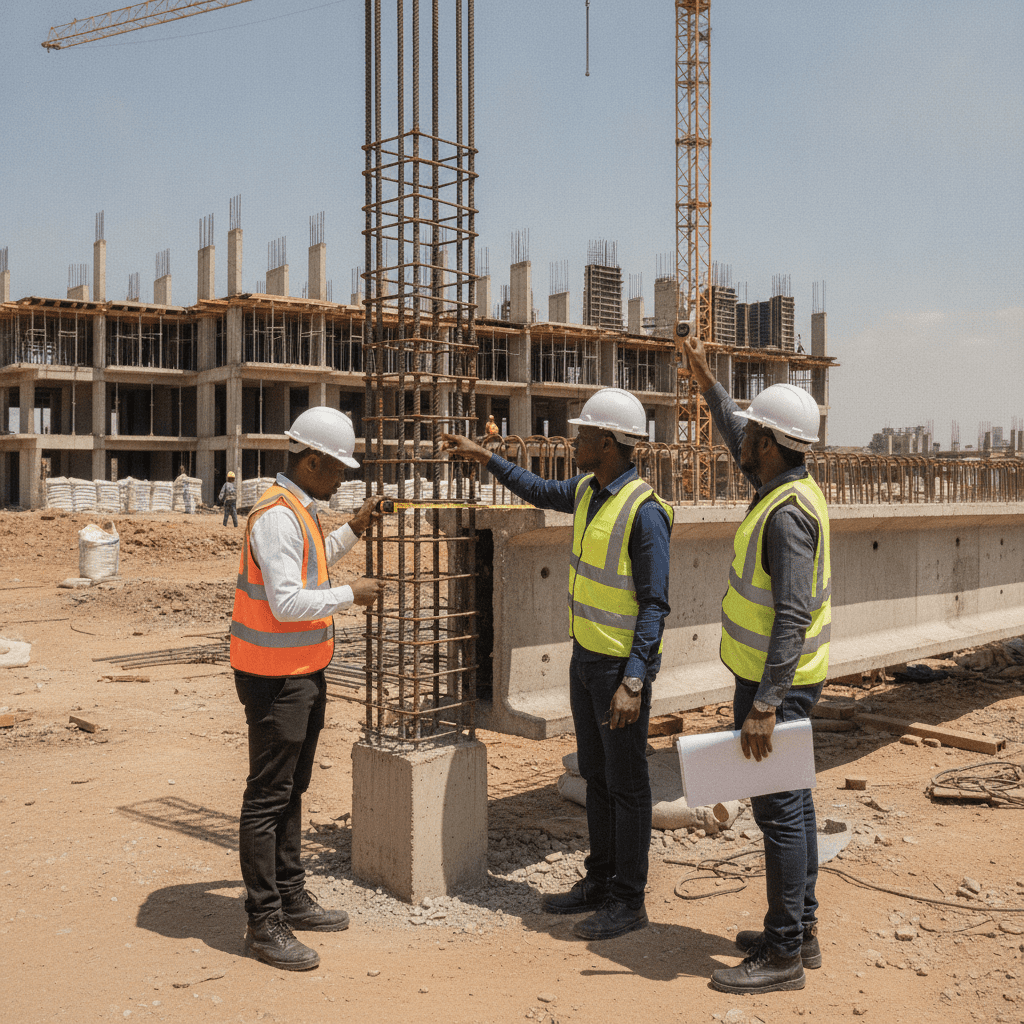
Detailed Wind Load Assessment Methodology for Kenyan Structures
| Aspect of Wind Load Design | Cadreatech’s Enhanced Approach |
|---|---|
| Wind Speed Data Sourcing | Utilises detailed, site-specific meteorological data from Kenya Meteorological Department. |
| Terrain and Topography Analysis | Involves precise site classification and advanced topographic modelling for accurate factors. |
| Pressure Coefficient Application | Applies code-specific coefficients, supplemented by CFD or wind tunnel data for complex geometries. |
| Dynamic Response Assessment | Performs aeroelastic studies and time-history analysis for high-rise and flexible structures. |
| Material and Detailing for Environment | Specifies corrosion-resistant materials and robust connections for coastal or extreme environments. |
| Serviceability Criteria | Designs to strict occupant comfort limits for acceleration, not just ultimate strength. |
| Advanced Modelling Integration | Leverages 3D FEA software to integrate complex wind load data into structural models. |
Critical Considerations and Local Context in Wind Load Design
Coastal Environment Challenges
High-Rise Specifics
County-Specific Context
The Importance of Advanced Modelling and Consequences of Skipping Professional Input
Risks, Compliance, and Kenyan Context in Wind Load Design
Frequently Asked Questions
What makes wind load design particularly challenging in Kenya’s coastal regions?
Kenya’s coastal regions, encompassing counties like Mombasa, Kilifi, and Kwale, present a unique confluence of challenges for wind load design. Firstly, these areas are classified under higher terrain categories due to their open exposure to the Indian Ocean, meaning higher basic wind speeds and gust factors are applicable compared to inland regions. Secondly, the marine environment introduces a corrosive atmosphere, requiring careful material selection and detailing to prevent premature degradation of structural elements, fixings, and facade components. Wind-driven rain, often accompanying high winds, can infiltrate poorly designed building envelopes, leading to internal water damage and mould. Furthermore, while rare, the potential for tropical cyclones or enhanced monsoonal winds necessitates robust design against extreme events. Engineers must consider the combined effects of wind, corrosion, and moisture, often employing advanced facade systems and corrosion-resistant materials, alongside dynamic analysis for taller structures, to ensure long-term durability and safety.
How does Cadreatech ensure compliance with Kenyan building codes for wind load?
Cadreatech adheres rigorously to the current Kenyan Building Code, which often references international standards such as BS 6399-2 (Loading for Buildings – Code of Practice for Wind Loads) and increasingly, Eurocodes (EN 1991-1-4: General actions – Wind actions), adapted for local conditions. Our process begins with a detailed site-specific wind study, considering the project’s location, surrounding terrain category, and building height. We utilise advanced computational software for structural analysis, integrating wind pressure coefficients, dynamic amplification factors, and gust response factors derived from these standards. For complex or high-rise structures, we may recommend and interpret results from specialised wind tunnel testing or Computational Fluid Dynamics (CFD) analysis to accurately model complex aerodynamic interactions. Our designs are then reviewed by senior engineers and submitted for regulatory approvals, ensuring full compliance with EBK requirements and local county planning regulations, providing clients with confidence in the structural integrity and safety of their investment.
What information is required for Cadreatech to provide a wind load assessment quotation?
To provide an accurate and tailored quotation for a wind load assessment, Cadreatech requires several key pieces of information. This typically includes the project’s full address or GPS coordinates, which allows us to determine the precise terrain category and basic wind speed for the location. We also need detailed architectural drawings, including floor plans, elevations, and sections, to understand the building’s geometry, height, and overall dimensions. Information on the intended use of the building (e.g., residential, commercial, industrial) and its expected design life is also crucial, as these influence the risk category and design parameters. For existing structures, any available structural drawings or reports are beneficial. The scope of the assessment (e.g., basic code compliance, detailed dynamic analysis, facade pressure analysis) will also influence the complexity and hence the scope of work. Providing comprehensive information upfront enables us to scope the necessary analysis accurately and provide a precise proposal for your project.
Can existing buildings be assessed for current wind load standards, and what is the process?
Yes, existing buildings can and often should be assessed against current wind load standards, especially if they are undergoing significant renovations, extensions, or a change in use that might alter their structural demands or expose them to higher risks. Cadreatech undertakes such assessments by first reviewing available as-built drawings and structural documentation. This is followed by a thorough site inspection to evaluate the building’s current condition, identify any existing structural deficiencies, and verify material properties through non-destructive or minor destructive testing if necessary. We then apply current wind load codes and standards to the existing structure’s geometry and compare the calculated demands with the existing structural capacity. If the assessment reveals deficiencies, we propose appropriate retrofitting and structural strengthening solutions. This process ensures that the building meets modern safety and serviceability requirements, mitigating risks associated with extreme wind events and extending its operational lifespan, thereby safeguarding occupants and investment.
Contact Cadreatech for Expert Engineering Consultancy
Ensure the safety, durability, and compliance of your next project with Cadreatech’s specialised wind load structural design expertise. From coastal developments to high-rise urban structures, our team of experienced engineers provides robust, code-compliant, and innovative solutions tailored to Kenya’s unique environmental challenges.
Contact us today for a detailed consultation and project-specific quotation.
Phone: +254 719 532 233
Email: info@Cadreatech.com
Website: Cadreatech.com
Key Takeaways
Understanding and accurately assessing wind loads is not merely a compliance exercise; it is fundamental to ensuring the safety, durability, and economic viability of any structure in Kenya, particularly in dynamic coastal and urban high-rise environments. Key insights from our discussion include:
- Site-Specific Wind Analysis is Crucial: Generalised wind data is insufficient for robust design in Kenya. A detailed analysis considering terrain categories, proximity to other structures, local meteorological records, and the specific exposure of the site is essential for accurate load determination, especially in complex urban canyons of Nairobi or exposed coastal sites like Malindi.
- High-Rise Dynamics Demand Special Attention: Beyond static pressure, high-rise buildings in Kenyan cities such as Mombasa and Kisumu require sophisticated dynamic analysis. This accounts for phenomena like vortex shedding, aeroelastic effects, and occupant comfort criteria, often necessitating advanced computational fluid dynamics (CFD) or even wind tunnel testing for optimal and safe design.
- Coastal Environments Present Unique Challenges: Structures along Kenya’s coastline (e.g., in Mombasa, Kilifi, Lamu) face significantly higher basic wind speeds as defined by relevant codes. Additionally, the added corrosive impact of saline air demands robust material selection, protective coatings, and meticulous detailing to ensure long-term structural integrity and serviceability.
- Compliance with International Standards and Local Adaptation: While Kenya often adopts international standards like BS 6399-2 or Eurocodes with specific National Annexes, their application must be rigorously adapted to local conditions, available material strengths, and regulatory frameworks to ensure relevance, safety, and economic viability.
- Integrated Design Approach is Paramount: Effective wind load design requires seamless collaboration between architects, structural engineers, and mechanical engineers from project inception. This integrated approach optimises building form, orientation, facade systems, and the overall structural system to mitigate adverse wind effects efficiently.
- The Role of Advanced Software and Expertise: Utilising advanced Computational Fluid Dynamics (CFD) and sophisticated structural analysis software, coupled with the deep expertise of qualified structural engineers, is indispensable for complex wind load assessments and the design of resilient structures in Kenya.
- Consequences of Neglect are Severe: Inadequate wind load design can lead to catastrophic structural failure, excessive deflections and vibrations, serviceability issues affecting occupant comfort, increased maintenance costs, and significant safety risks, particularly during the extreme weather events that Kenya experiences.
- Cadreatech’s Specialised Local Expertise: Cadreatech offers comprehensive wind load analysis and structural design services. We combine international best practices with an unparalleled understanding of Kenyan building codes, climate data, local construction practices, and specific regional challenges, delivering safe and compliant solutions.
These points underscore the critical need for expert structural engineering input from the earliest stages of a project to safeguard investments and lives against the formidable forces of wind.
Ensure Your Project Withstands Kenya’s Winds
Navigating the complexities of wind load structural design, especially for coastal or high-rise developments across Kenya, requires specialised knowledge and precision. Cadreatech’s team of experienced structural engineers is equipped with the expertise and advanced tools to conduct thorough wind analyses, ensuring your project is designed for optimal safety, durability, and full compliance with local and international standards.
Don’t compromise on structural integrity. Contact Cadreatech today to discuss your project’s unique requirements and receive a tailored engineering solution that protects your investment and ensures long-term performance.
Contact Cadreatech:
Phone: +254 719 532 233
Email: info@Cadreatech.com
Website: Cadreatech.com
