
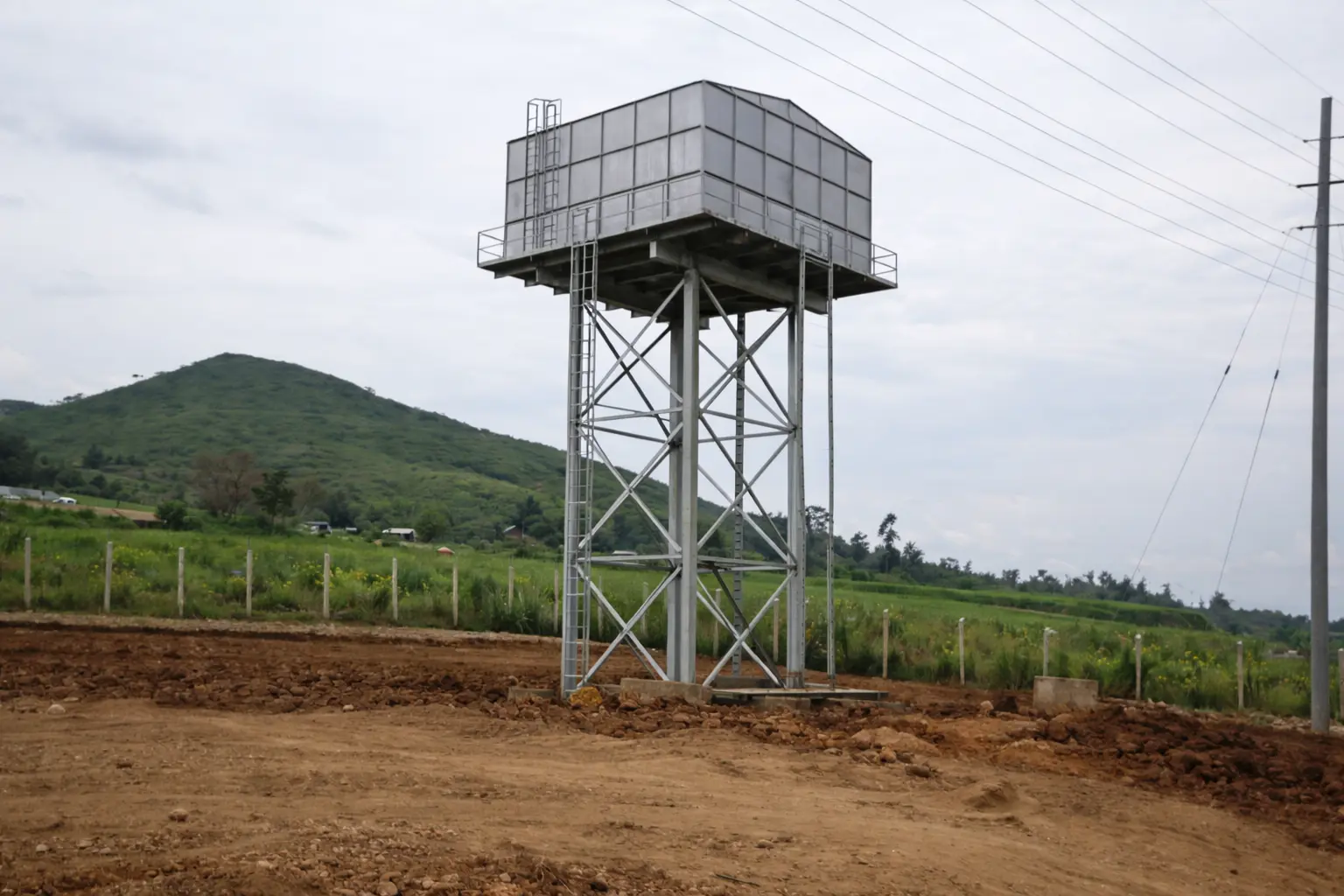
Elevated Water Tanks: Essential Structural Design in Kenya
The reliable provision of water is a cornerstone of public health, economic development, and agricultural productivity across Kenya. From urban high-rises in Nairobi to agricultural schemes in the Rift Valley and coastal communities in Mombasa, water storage tanks are critical infrastructure. However, the structural integrity of these vital assets is often underestimated, leading to potential catastrophic failures, significant financial losses, and severe service disruptions. Proper water tank structural design, particularly for elevated tanks and their foundations, is not merely a compliance exercise but a fundamental requirement for safety, longevity, and operational efficiency in the unique Kenyan environment. Ignoring the intricate engineering considerations for these structures can result in collapses, contamination, and a compromised water supply, underscoring the indispensable role of expert structural engineering input from concept to commissioning.
The Imperative of Expert Water Tank Design in Kenya
The design of water storage tanks, especially those elevated to provide gravitational pressure, presents a complex interplay of structural, environmental, and material engineering challenges. In Kenya, these challenges are compounded by diverse geological conditions, varying seismic activity, and specific climatic factors that demand a highly localised and expert approach. A robust structural design begins with a comprehensive assessment of all potential loads. These include dead loads (the weight of the tank structure itself, including pipes and accessories), live loads (the weight of the water, which fluctuates), wind loads (critical for elevated structures, especially in open, exposed areas like parts of Kajiado County), and seismic loads (particularly relevant in seismically active regions such like the Great Rift Valley).
For elevated tanks, wind loading is a paramount consideration. The significant surface area exposed to wind forces, combined with the structure’s height, can generate substantial overturning moments and shear forces at the base. Engineers must apply local wind speed data and relevant design standards (often adapted from international codes like ASCE 7 or Eurocodes to suit Kenyan conditions) to calculate these forces accurately. The dynamic response of the structure to wind gusts must also be analysed to prevent excessive vibrations or resonance. Similarly, seismic design is non-negotiable. Kenya experiences various levels of seismic activity, and tanks must be designed to withstand anticipated ground accelerations without collapsing or losing containment. This involves ductile detailing for concrete elements, proper anchorage for steel tanks, and consideration of hydrodynamic pressures exerted by the water during an earthquake.
Material selection is another critical aspect. Reinforced concrete tanks offer durability and fire resistance but require careful detailing for crack control and water tightness. Steel tanks provide flexibility in fabrication and speed of erection but demand robust corrosion protection, especially in coastal areas like Mombasa where saline air accelerates degradation. Plastic (HDPE or fibreglass) tanks are lighter and corrosion-resistant but typically limited to smaller capacities and may require additional external bracing for stability, especially when elevated. The choice of material impacts the entire design, from foundation requirements to maintenance regimes. Furthermore, the internal environment of a water tank, constantly exposed to water, necessitates specific considerations for water-retaining structures, including minimal crack widths, appropriate concrete cover, and non-toxic internal coatings to prevent contamination. Without a deep understanding of these factors and their specific application within the Kenyan context, the long-term reliability and safety of water storage infrastructure are severely compromised, leading to costly failures and service interruptions.
Foundational Engineering for Stable Water Storage Structures
The foundation of any water storage tank, particularly elevated structures, is its most critical structural component, directly responsible for transferring the immense weight of the tank and its contents, along with environmental loads, safely to the underlying soil. In Kenya, the diverse geological landscape presents a myriad of challenges that necessitate meticulous geotechnical investigation and bespoke foundation design. From the expansive black cotton soils prevalent in areas like Nairobi and Kisumu to the stable murram and rocky outcrops found in parts of the Rift Valley and Eastern Kenya, each site demands a tailored approach.
The initial step in any foundation design is a thorough geotechnical site investigation. This process typically involves:
- Desk Study and Reconnaissance: Reviewing existing geological maps, historical data, and conducting a preliminary site visit to identify visible features and potential hazards.
- Borehole Drilling/Trial Pitting: Advancing boreholes or excavating trial pits to various depths to collect soil samples and observe subsurface stratigraphy. For elevated tanks, depths of 10-20 metres or more are common, depending on tank size and soil conditions.
- In-situ Testing: Conducting tests like Standard Penetration Tests (SPT) or Cone Penetration Tests (CPT) within the boreholes to determine soil density, consistency, and strength parameters. Vane shear tests may be performed in cohesive soils.
- Laboratory Testing: Analysing collected soil samples for properties such as moisture content, Atterberg limits (for expansive clays), particle size distribution, consolidation characteristics, and shear strength parameters (triaxial compression, direct shear).
- Groundwater Assessment: Monitoring groundwater levels and assessing potential for uplift pressures or corrosive effects on foundation materials.
- Geotechnical Report Generation: Compiling all findings into a comprehensive report, including soil profiles, test results, recommended foundation types, allowable bearing pressures, anticipated settlements, and any necessary ground improvement measures.
For black cotton soils, which exhibit significant swelling and shrinking with moisture content fluctuations, conventional shallow foundations are often unsuitable. Engineers must consider deep foundations like piles or piers extending below the active zone of moisture variation, or implement ground improvement techniques such as pre-wetting, lime stabilisation, or rigid inclusions. In contrast, sites with stable murram or rock may allow for more economical shallow foundations such as isolated pad footings or raft foundations, provided the bearing capacity is sufficient and differential settlement is within tolerable limits.
Elevated tanks introduce specific foundational challenges related to uplift forces from wind and seismic events. Foundations must be designed not only to resist downward compressive loads but also to anchor the structure against these powerful upward forces. This often requires substantial concrete mass, deep pile embedment, or a combination of both. Differential settlement is another critical concern; even small variations in settlement across the foundation can induce significant stresses in the tank structure, potentially leading to cracking or structural failure. Cadreatech’s engineers meticulously analyse settlement patterns and design foundations to ensure uniform load distribution and minimise differential movement, safeguarding the long-term stability and integrity of the water tank structure. The specific design parameters, such as foundation dimensions, reinforcement detailing, and concrete mix designs, are derived directly from the geotechnical report, ensuring that the foundation is optimally matched to the site’s unique characteristics and the demands of the elevated tank.
The Criticality of Geotechnical Investigations and Foundation Design for Water Tanks
The stability and longevity of any water storage structure, particularly elevated water tanks, are fundamentally anchored in the integrity of its foundation. In the diverse geological landscape of Kenya, an exhaustive geotechnical investigation is not merely a recommendation but an indispensable prerequisite for robust water tank structural design. Skipping this crucial phase exposes the entire project to significant risks, ranging from differential settlement and structural distress to catastrophic failure, jeopardising both public safety and substantial investment.
Kenya’s varied topography presents a spectrum of soil conditions, each demanding specific engineering considerations. In counties like Nairobi and parts of Kajiado, expansive black cotton soils are prevalent. These clays exhibit significant volume changes with varying moisture content – swelling when wet and shrinking when dry. A foundation designed without accounting for this behaviour can experience severe uplift and settlement, leading to cracking in the tank structure, pipework rupture, and eventual collapse. Conversely, regions such as those around Kisumu and parts of the Rift Valley feature volcanic soils, which, while often fertile, can vary widely in bearing capacity and susceptibility to erosion. Coastal areas like Mombasa, with their sandy and often saline soils, pose challenges related to low bearing capacity, liquefaction potential during seismic events, and the aggressive corrosive environment for buried steel components.
A comprehensive geotechnical investigation typically involves drilling boreholes to specific depths, conducting Standard Penetration Tests (SPT) to assess soil consistency and density, and collecting disturbed and undisturbed soil samples for laboratory analysis. Key laboratory tests include moisture content, Atterberg limits (for cohesive soils), particle size distribution, direct shear tests, and consolidation tests. The findings culminate in a detailed Geotechnical Report, which delineates the soil stratigraphy, groundwater levels, recommended bearing capacities at various depths, and specific foundation design recommendations. For an elevated water tank, this report is critical for determining the type of foundation (e.g., shallow pad footings, raft foundations, or deep piles), the optimal embedment depth, and any necessary ground improvement techniques.
Consider a typical elevated water tank with a capacity of 100,000 litres. The dead weight of the water alone is 100 tonnes, not including the tank structure itself, supporting columns, and ancillary equipment. This immense load, coupled with dynamic forces from wind and potential seismic activity, must be safely transferred to the ground. An inadequate foundation design could lead to excessive differential settlement of perhaps 50mm or more across the footprint, inducing severe bending moments and shear forces in the supporting structure that were not accounted for in the superstructure design. This often manifests as visible cracks in concrete columns or beams, misalignment of the tank, and leakage at pipe connections.
Professional engineering input at this stage ensures that the foundation system is tailored to the site-specific conditions, providing the necessary stability and load-carrying capacity. This includes detailed calculations for punching shear, bending moments, and overall stability against overturning and sliding. For projects in areas prone to seismic activity, such as parts of the Great Rift Valley, the geotechnical report will also inform the seismic design parameters, including site class and spectral acceleration values, which directly influence the tank’s structural response to earthquake forces. Ignoring these critical steps is a false economy, invariably leading to costly repairs, operational downtime, and in worst-case scenarios, tragic structural failure.
Comprehensive Structural Design Process for Elevated Water Tanks
Designing an elevated water tank is a complex undertaking that demands a rigorous, multi-stage structural engineering process to ensure safety, serviceability, and long-term durability. Cadreatech’s approach integrates international best practices with local Kenyan contextual understanding, adhering to relevant British Standards (BS EN) and considering local building codes and environmental factors. The process begins long before any steel is cut or concrete is poured, focusing on meticulous analysis and detailed planning.
Key Design Considerations: Client Assumptions vs. Engineering Reality
| Client Assumption | Engineering Reality & Cadreatech’s Approach |
|---|---|
| “A standard tank design will work.” | Every site is unique. Soil conditions, wind exposure, seismic zone, and water quality dictate a bespoke design for the foundation and superstructure. A “standard” design is a recipe for failure. |
| “Just make it tall enough for pressure.” | Height directly impacts wind loads, slenderness ratios, and foundation requirements. Optimising height involves balancing hydraulic needs with structural efficiency and cost drivers. |
| “Concrete is concrete; steel is steel.” | We specify exact concrete grades (e.g., C25/30, C30/37) and steel reinforcement types (e.g., Y12, Y16, TMT bars with specific yield strengths) based on structural demands, environmental exposure, and local material availability and quality. |
| “It just needs to hold water.” | Beyond containing water, the tank must resist overturning from wind, lateral forces from seismic events, fatigue from repeated filling/emptying cycles, and ensure leak-tightness. Durability against coastal corrosion or aggressive water chemistry is paramount. |
Step-by-Step Structural Design Process for Elevated Water Tanks:
- Project Inception and Data Collection: This initial phase involves gathering all critical project data, including required tank capacity (e.g., 50,000 litres, 200,000 litres), desired elevation (e.g., 15m, 30m to top of tank), site location (for wind and seismic zone determination), intended water usage, and access constraints. Essential site visits and client consultations clarify the functional requirements and any specific operational parameters.
- Geotechnical Investigation and Foundation Design: As detailed previously, a thorough geotechnical report forms the bedrock of the foundation design. Based on recommended bearing capacities and soil profiles, engineers select an appropriate foundation type (e.g., isolated pad footings, combined footings, raft foundation, or piled foundations for very poor soil conditions). Detailed calculations for settlement, overturning stability, and punching shear are performed to ensure the foundation can safely transfer all loads to the subgrade.
- Load Determination and Analysis: All potential loads acting on the tank structure are meticulously calculated. This includes dead loads (weight of the empty tank, supporting structure, pipes, and ancillary equipment), live loads (weight of the water, which is the primary live load, and maintenance personnel), wind loads (calculated based on site-specific wind speeds, terrain category, and tank geometry, often critical for tall, slender structures), and seismic loads (determined from the site’s seismic zone factor and soil characteristics, particularly vital in Rift Valley regions).
- Preliminary Structural Sizing and Material Selection: Based on the calculated loads, initial dimensions for structural elements such as columns, beams, bracing, and the tank shell itself are estimated. Material properties, including concrete grades (e.g., C30/37 for tank walls to ensure impermeability and durability) and steel reinforcement grades (e.g., Fe 500), are specified, considering environmental exposure (e.g., higher cover for reinforcement in coastal areas to mitigate corrosion).
- Detailed Structural Analysis and Design: Using advanced structural analysis software (e.g., STAAD.Pro, ETABS), a comprehensive structural model of the tank and its supporting structure is developed. This model is subjected to various load combinations as per design codes (e.g., BS EN 1990, BS EN 1992, BS EN 1993, BS EN 1998 for seismic design). The analysis yields internal forces (bending moments, shear forces, axial forces) in all structural members. These forces are then used to design the reinforcement in concrete elements (columns, beams, slabs, tank walls) or the section sizes for steel elements, ensuring adequate strength and serviceability. Special attention is paid to connections, bracing systems, and stability against buckling.
- Detailing and Construction Drawings: The final stage involves translating the design into clear, unambiguous construction drawings. These drawings include general arrangements, detailed reinforcement drawings (showing bar sizes, spacing, laps, and bending schedules), connection details for steel structures, formwork drawings, and specifications for materials and workmanship. These documents are essential for accurate fabrication and construction, ensuring the built structure precisely matches the engineered design.
- Peer Review and Statutory Approvals: Prior to construction, the design drawings and calculations undergo an independent peer review by another qualified structural engineer to ensure accuracy and compliance. Subsequently, these documents are submitted to relevant county authorities (e.g., Nairobi City County, Mombasa County) for building permit approvals, a critical step for legal compliance and construction commencement.
Failure to engage professional engineers in this intricate process can result in a range of severe consequences. An undersized foundation might lead to catastrophic settlement, while inadequate reinforcement in the tank walls could result in cracking and chronic leakage, wasting valuable water resources. Incorrectly designed bracing could allow excessive sway under wind loads, causing fatigue failure, and a lack of seismic consideration could lead to collapse during an earthquake, particularly in Kenya’s active seismic zones. Beyond the immediate safety risks, non-compliant designs face significant delays in obtaining county approvals, potentially incurring penalties and project suspension. Cadreatech ensures every water tank structural design is not only safe and functional but also fully compliant and built to last, providing peace of mind for decades.
Risks, Compliance, and Contextual Challenges in Water Tank Design
The structural design of water tanks, particularly elevated structures, transcends mere capacity calculation. In Kenya, a multitude of factors, from diverse geological conditions to stringent regulatory requirements and unique environmental stressors, necessitate an uncompromising approach to engineering. Neglecting these critical considerations can lead to catastrophic failures, substantial financial losses, and, most importantly, a severe risk to human life and property. Cadreatech’s expertise is crucial in navigating these complexities to ensure robust, compliant, and durable water infrastructure.
Structural Integrity Risks and Their Mitigation
The primary concern for any water tank, whether ground-supported or elevated, is its structural integrity. Elevated tanks, however, introduce a greater degree of complexity due to the increased height and exposure to dynamic forces.
Foundation Failure: This is a prevalent issue in Kenya, particularly with diverse soil conditions. Regions like Kajiado and parts of Nairobi are characterised by expansive black cotton soils, which exhibit significant volume changes with moisture content fluctuations, leading to differential settlement. Coastal areas like Mombasa and Kilifi may have sandy, poorly consolidated soils with low bearing capacities, often requiring deep foundations such as piles or rafts. Conversely, areas with murram or lateritic soils might offer better bearing, but variations within a site are common. A comprehensive geotechnical investigation, including borehole drilling to depths of 10-15 metres for elevated tanks, Standard Penetration Tests (SPT N-values), and laboratory analyses (Atterberg limits, unconfined compressive strength, shear strength), is indispensable. Without this, foundations can settle unevenly, tilt the tank, induce excessive stresses in the superstructure, or even cause outright collapse.
Superstructure Failure: Elevated tanks are susceptible to a range of forces. Wind loads, calculated based on Kenyan wind maps and terrain categories (e.g., using BS 6399 or Eurocode 1 principles), can induce significant overturning moments, especially on slender support structures. Seismic loads, derived from local seismic zoning maps (e.g., for Nairobi and the Rift Valley areas which are more seismically active), must be accounted for to prevent resonance and structural instability. Inadequate bracing, slender columns, or poorly detailed connections can lead to buckling or shear failure. For steel tanks and supports, corrosion is a major concern, particularly in coastal environments where chloride ingress accelerates degradation, reducing section properties and load-carrying capacity over time. This necessitates robust protective coatings and cathodic protection where appropriate, along with a design that allows for routine inspection and maintenance.
Material Degradation: The choice and quality of construction materials are paramount. For reinforced concrete tanks, inadequate concrete cover, poor compaction, high water-cement ratios, or insufficient curing can lead to carbonation and chloride ingress, accelerating rebar corrosion. This manifests as spalling, cracking, and ultimately, loss of structural capacity. For steel tanks, fatigue due to cyclical loading (filling/emptying, wind gusts) and welding defects can compromise integrity. Adherence to material specifications (e.g., concrete grades C25/30, steel grade 460 MPa) and rigorous quality control during construction are non-negotiable.
Compliance and Regulatory Framework in Kenya
The regulatory landscape for construction in Kenya is designed to safeguard public safety and ensure structural integrity.
Building Codes: All structural designs in Kenya must comply with the Kenya Building Code (Cap 242 subsidiary legislation). While specific sections for water tanks are integrated, engineers often refer to internationally recognised standards like British Standards (BS 8110 for concrete, BS 5950 for steel) or Eurocodes (EN 1992 for concrete, EN 1993 for steel, EN 1998 for seismic design), which are widely adopted and adapted to local conditions. Adherence ensures that designs meet minimum safety and performance criteria.
County Approvals: Before any construction commences, detailed structural drawings and calculations, sealed by a registered structural engineer, must be submitted to the relevant county government (e.g., Nairobi City County, Mombasa County, Kisumu County) for approval. This process involves thorough scrutiny by county structural engineers. During construction, mandatory inspection stages (foundation, superstructure, completion) are required, where a registered engineer certifies compliance with approved plans. Skipping this process leads to non-compliance, potential demolition orders, substantial fines, and legal liabilities for the developer and the unregistered individuals involved. Cadreatech ensures all designs are fully compliant and guides clients through the county approval process efficiently.
Engineer’s Mandatory Role: The Engineers Act (2011) mandates that all structural designs be undertaken and supervised by engineers registered with the Engineers Board of Kenya (EBK). This ensures that designs are prepared by qualified professionals who are accountable for the safety and integrity of the structure. Engaging an unregistered person or attempting a “DIY” approach to structural design is not only illegal but also places the entire project and future occupants at extreme risk.
Specific Kenyan Contextual Challenges
Beyond general structural principles, Kenya presents unique challenges that must be integrated into water tank designs:
Water Hammer Effects: The rapid closure of valves or sudden pump stoppages can create significant pressure surges (water hammer) within the piping system connected to the tank. These dynamic loads can impose considerable stress on the tank structure, its connections, and supports. Proper surge analysis and the incorporation of surge alleviation devices (e.g., air chambers, pressure relief valves) are crucial design considerations to prevent fatigue and potential rupture.
Accessibility for Maintenance and Inspection: Design must incorporate safe and practical access for routine inspection, cleaning, and maintenance. This includes provisions for ladders, platforms, handrails, and adequate ventilation to prevent confined space hazards. Neglecting this leads to deferred maintenance, accelerating degradation and increasing long-term repair costs and risks.
Cost vs. Safety Paradox: There is often a temptation to cut corners on design fees or material quality to reduce initial project costs. However, the long-term consequences of such decisions are severe. A poorly designed or constructed water tank is a ticking time bomb, with potential repair costs, liability claims, and the incalculable cost of human life far outweighing any perceived initial savings. Cadreatech focuses on value engineering, optimising design for safety, durability, and cost-effectiveness without compromising standards.
Remote Site Logistics: For projects in remote areas, challenges include ensuring the quality of materials delivered, supervising construction activities effectively, and managing logistics for specialised equipment. Cadreatech leverages its extensive experience across Kenya to mitigate these challenges through robust project management and on-site supervision protocols.
Water Tank Structural Design Process: A Cadreatech Approach
A systematic approach is critical for the successful and safe delivery of water tank projects. Cadreatech follows a detailed methodology:
- Initial Client Consultation & Site Assessment: Understanding project requirements, desired capacity, elevation, site constraints, and intended use. A preliminary site visit to assess topography, access, and immediate environmental factors.
- Geotechnical Investigation Scope Definition: Specifying the scope for detailed geotechnical surveys, including borehole locations, depths, and required laboratory tests based on preliminary site assessment and tank size/height.
- Load Determination & Structural System Selection: Calculating all relevant loads (dead, live, wind, seismic, water, water hammer, thermal). Evaluating suitable structural systems (e.g., concrete tower, steel trestle, masonry support) considering site conditions, material availability, and cost-effectiveness.
- Detailed Structural Analysis & Design: Performing comprehensive structural analysis using advanced software (e.g., Finite Element Analysis) and hand calculations. Designing foundations, columns, beams, bracing, tank walls, roof, and connections in accordance with adopted codes (BS/Eurocodes).
- Preparation of Detailed Engineering Drawings & Specifications: Producing precise, buildable drawings (general arrangements, reinforcement details, connection details, fabrication drawings for steel) and comprehensive material specifications.
- Regulatory Submission & Approval: Preparing and submitting all necessary documentation, drawings, and calculations to the relevant county authorities for plan approval and obtaining construction permits.
- Construction Supervision & Quality Assurance: Providing expert oversight during the construction phase, conducting regular site visits, reviewing contractor method statements, approving materials, and certifying critical construction stages (e.g., foundation excavation, reinforcement fixing, concrete pours).
- Final Inspection & Certification: Upon completion, conducting a final structural inspection and issuing a Certificate of Structural Completion, confirming the structure has been built in accordance with the approved design and relevant standards.
Frequently Asked Questions
Why do I need a structural engineer for a water tank, especially if it’s “just” a tank?
While a water tank might seem straightforward, its structural design, particularly for elevated or large-capacity variants, involves complex engineering principles. An engineer ensures the tank can safely withstand not only the weight of the water but also dynamic forces like wind gusts, seismic activity, and the effects of water hammer from pumps. They account for diverse Kenyan soil conditions, which can lead to differential settlement if foundations are not properly designed. Without professional input, you risk catastrophic failure, which can lead to significant property damage, water supply disruption, and severe safety hazards. Beyond safety, an engineer ensures compliance with Kenyan building codes and county regulations, preventing costly demolition orders or legal issues.
What information does Cadreatech need to design my water tank?
To provide an accurate and robust design, Cadreatech requires several key pieces of information. This includes the precise site location (for assessing seismic zone, wind loads, and local geological conditions), the desired water storage capacity in litres or cubic metres, the proposed height of the tank (for elevated tanks), the intended use of the water (e.g., domestic, irrigation, fire fighting), and any spatial constraints on the site. Information on preferred materials (reinforced concrete or steel) and access limitations for construction equipment is also valuable. The more comprehensive the initial data, the more tailored and efficient our design process will be, directly influencing the scope of work for geotechnical investigations and structural analysis.
How long does the design process typically take?
The duration of a water tank structural design varies significantly based on its complexity, size, height, and the availability of essential site data. A standard elevated tank design, for instance, might take several weeks from initial consultation to final approved drawings. This timeline includes crucial stages such as preliminary design, detailed structural analysis, preparation of comprehensive drawings, and internal quality checks. Factors that can extend this timeline include the need for extensive geotechnical investigations, revisions requested by the client, or delays in obtaining necessary approvals from county authorities. We recommend clients engage us early in their project planning to allow ample time for a thorough and unhurried design process, ensuring optimal safety and efficiency.
Can an existing tank be assessed for structural integrity?
Absolutely. Cadreatech offers comprehensive structural assessment services for existing water tanks. This process typically involves a detailed visual inspection to identify any visible signs of distress such as cracks, spalling, corrosion, or settlement. We then employ non-destructive testing (NDT) techniques, such as rebound hammer tests or ultrasonic pulse velocity tests for concrete strength, and rebar scanning to determine reinforcement size and cover. For steel tanks, we might use ultrasonic thickness gauges to assess corrosion-induced section loss. Based on these findings and a review of any available as-built drawings, we conduct a structural analysis to determine the current load-carrying capacity. Our assessment concludes with a detailed report outlining the tank’s condition, identifying any deficiencies, and providing clear recommendations for repair, strengthening, or, if necessary, safe demolition. This proactive approach helps extend the lifespan of your asset and ensures continued safety.
Key Takeaways
- Holistic Structural Integrity is Paramount: Water tank structural design in Kenya, particularly for elevated systems, demands a comprehensive engineering approach that extends beyond mere capacity. It encompasses rigorous site investigations to understand soil mechanics (e.g., expansive black cotton, stable murram), accurate assessment of dead and live loads, dynamic wind and seismic forces, and potential water hammer effects. Professional design ensures the entire system – from foundation to tank shell – can withstand all anticipated stresses throughout its service life, preventing catastrophic failures and safeguarding investments and lives.
- Foundation Design is Non-Negotiable: The stability of any elevated water tank hinges critically on its foundation. In Kenya’s diverse geological landscape, this means accounting for varying soil bearing capacities, the presence of expansive clays requiring specialized raft or piled foundations, or corrosive coastal environments necessitating robust concrete mixes and rebar protection. Inadequate foundation design is a primary cause of structural distress, leading to differential settlement, tilting, and ultimately, the compromise of the entire tank structure.
- Material Selection and Detailing Matter: Whether opting for reinforced concrete, steel, or high-density polyethylene (HDPE) tanks, the choice of material significantly impacts design considerations. Concrete tanks require precise rebar detailing for crack control and strength, especially for water-retaining structures. Steel tanks demand careful consideration of welding, corrosion protection (e.g., internal linings, external painting for coastal regions like Mombasa), and fatigue. Every material choice necessitates specialized engineering expertise to ensure durability, watertightness, and structural resilience against environmental factors.
- Compliance with Local Codes and Best Practices: Adherence to relevant Kenyan building codes and international standards is not just a legal requirement but a fundamental aspect of safe engineering. This includes specific provisions for structural loads, material specifications, and construction methodologies applicable to water-retaining structures. Engaging licensed structural engineers ensures designs are compliant, facilitating smooth county approvals in jurisdictions like Nairobi, Kisumu, or Kajiado, and mitigating future legal and operational risks.
- Long-Term Performance and Maintenance Integration: A well-engineered water tank structure considers its entire lifecycle, including ease of inspection, maintenance, and potential future upgrades. Design elements like access ladders, platforms, and drainage systems are integrated from the outset. Skipping professional design often results in structures that are difficult or dangerous to maintain, leading to neglected issues that accelerate deterioration and necessitate expensive, complex repairs or premature replacement.
- Cadreatech’s Expertise Mitigates Risk: Engaging Cadreatech for water tank structural design ensures that every critical aspect, from initial feasibility studies and geotechnical investigations to detailed structural analysis, drawing production, and construction supervision, is handled with precision and adherence to the highest engineering standards. Our approach guarantees a safe, durable, and compliant water storage solution tailored to specific site conditions and client requirements, offering peace of mind and long-term value.
Partner with Cadreatech for Robust Water Storage Solutions
Ensuring the safety, longevity, and compliance of your water tank infrastructure is a critical investment. Don’t leave the structural integrity of your elevated or ground-level water tanks to chance. Cadreatech brings unparalleled expertise in structural engineering, offering comprehensive design, analysis, and supervision services tailored to the unique challenges of the Kenyan environment.
Whether you’re planning a new installation, assessing an existing structure, or require expert guidance on complex foundation challenges, our team is ready to provide precise, compliant, and cost-effective solutions. Contact us today to discuss your project requirements and receive a detailed quotation.
- Phone: +254 719 532 233
- Email: info@Cadreatech.com
- Website: Cadreatech.com
