
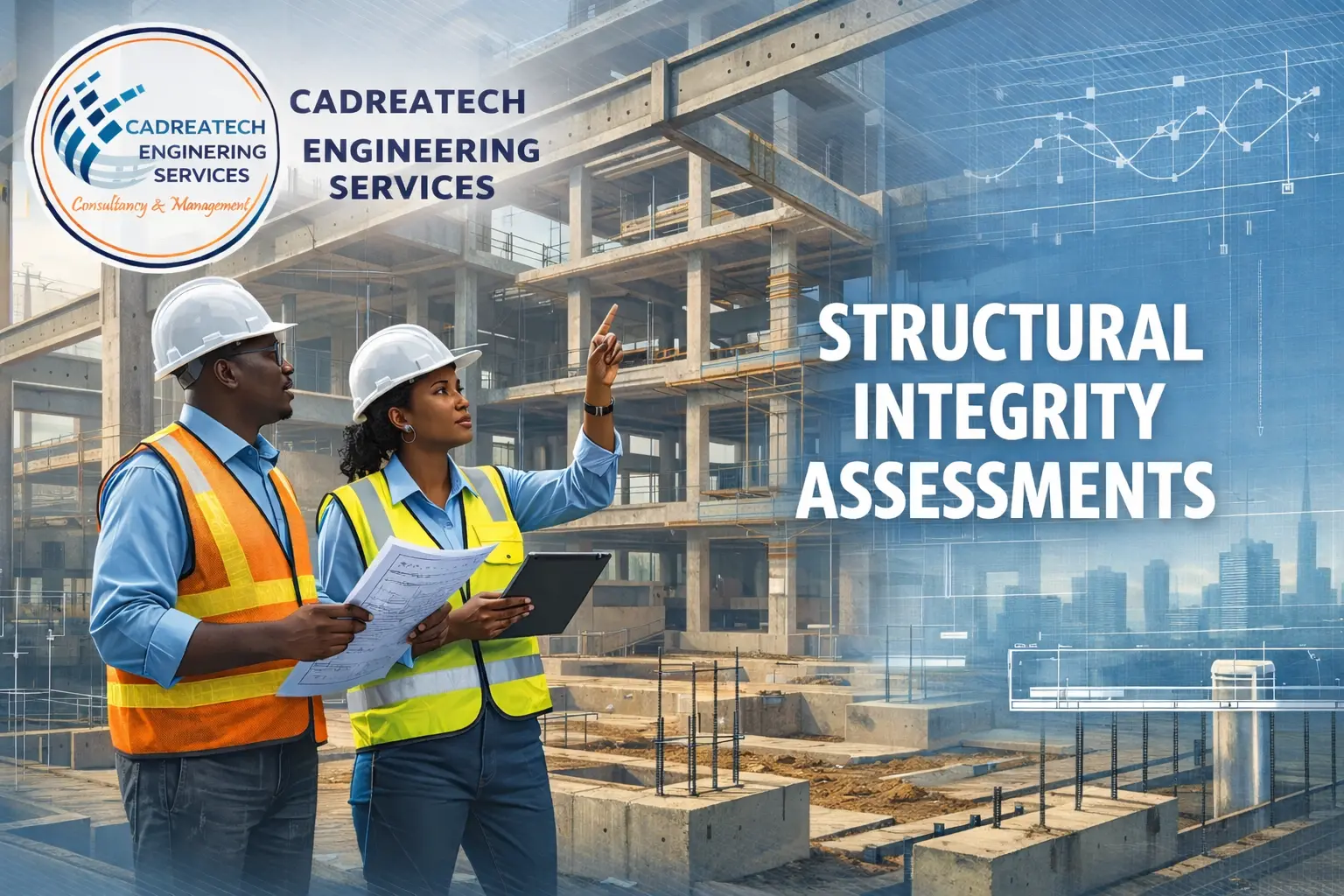
Overview of Structural Integrity Assessments
Structural Integrity Assessments go beyond routine building inspections and general condition audits by quantifying the actual performance margin, safety reliability, and load-carrying capacity of a structure. At Cadreatech Engineering Services, we conduct in-depth engineering evaluations to determine whether a building or civil structure can safely sustain applied loads over time, remain serviceable under daily use, and comply with current regulatory and design standards.
Our assessments consider both the original design intent and the current operational condition of the structure. This ensures that any changes arising from ageing, environmental exposure, material degradation, alterations, or changes in usage are properly evaluated and addressed before they develop into structural risks or safety hazards.
Scope of Structural Evaluation and Engineering Parameters
A structural integrity assessment involves a comprehensive technical review of all critical load-bearing elements and performance parameters, including:
-
Reinforcement adequacy, spacing, anchorage, and detailing compliance
-
Concrete strength, durability performance, and material quality
-
Column slenderness, buckling resistance, and axial load capacity
-
Beam bending, shear capacity, and deflection behaviour
-
Slab performance including cracking, vibration, and serviceability limits
-
Foundation performance, bearing capacity, and differential settlement
-
Overall load path continuity and structural redundancy
This multi-parameter approach ensures that both ultimate limit states (collapse prevention) and serviceability limit states (crack control, deflection, vibration) are evaluated to determine whether the structure is fit for continued use or requires intervention.
As-Built Condition Review and Design Compliance Checks
Cadreatech engineers conduct a detailed review of the as-built condition of the structure and compare it with the original approved structural drawings, design calculations, specifications, and statutory approvals. This process allows us to identify:
-
Construction deviations from approved designs
-
Inadequate reinforcement placement or omissions
-
Material substitutions without engineering approval
-
Workmanship defects affecting structural performance
-
Design changes implemented during construction without review
-
Progressive deterioration due to ageing and environmental exposure
We also assess whether the structure remains compliant with applicable building codes, engineering standards, and regulatory requirements in Kenya.
Analytical Methods and Structural Modelling
Our integrity assessments incorporate advanced engineering analysis and structural modelling techniques to quantify real performance capacity and identify critical stress zones within the structure. These analytical methods may include:
-
Load reassessment based on current and proposed building use
-
Structural simulations to evaluate stress distribution and failure mechanisms
-
Capacity checks for modified or extended structural elements
-
Progressive collapse sensitivity analysis where applicable
-
Assessment of redundancy and alternate load paths
This enables us to determine whether the structure has adequate safety margins under current loading conditions and anticipated future demands.
Field Investigations and Non-Destructive Testing (NDT)

To supplement analytical findings, our engineers conduct on-site inspections and field testing to verify actual material performance and structural behaviour. This may include:
-
Non-Destructive Testing (NDT) such as rebound hammer tests for concrete strength
-
Ultrasonic Pulse Velocity (UPV) testing for internal concrete defects
-
Cover meter scanning to locate reinforcement and assess concrete cover
-
Corrosion potential mapping to identify reinforcement deterioration
-
Measurement of crack widths, deflections, and settlement indicators
-
Visual condition surveys of structural and non-structural components
Field data allows us to validate assumptions used in design calculations and identify hidden defects that may not be apparent through visual inspection alone.
Assessment of Structural Defects and Risk Factors
Our assessments include targeted investigation of both visible and latent defects that may compromise structural safety or serviceability, such as:
-
Excessive cracking in beams, slabs, walls, and columns
-
Concrete spalling and reinforcement corrosion
-
Overloading due to change of use or equipment installation
-
Unauthorised modification or removal of structural members
-
Impact damage from vehicles, machinery, or construction activities
-
Fire damage, vibration effects, and foundation distress
-
Structural implications of vertical or horizontal expansions
Each identified defect is analysed to determine its structural significance, risk level, and urgency of intervention.
Suitability for Developers, Buyers, Insurers, and Institutions
Structural Integrity Assessments provide critical decision-making support for a wide range of stakeholders, including:
-
Developers conducting technical due diligence before acquisition
-
Property buyers and tenants seeking assurance of structural safety
-
Insurance firms evaluating risk exposure and underwriting decisions
-
Facility managers responsible for long-term safety and maintenance planning
-
Institutions such as hospitals, schools, churches, and government facilities
-
Owners planning renovations, extensions, change of use, or vertical expansion
These assessments help stakeholders avoid costly structural failures, legal exposure, safety incidents, and unplanned rehabilitation costs.
Structural Integrity Assessment Report and Engineering Recommendations
At the conclusion of the assessment, Cadreatech provides a comprehensive Structural Integrity Assessment Report that includes:
-
Structural safety ratings and risk classification
-
Performance grading of key structural components
-
Identification of critical defects and failure mechanisms
-
Remaining service life estimation
-
Compliance assessment with applicable engineering standards
-
Prioritised strengthening, retrofitting, or repair recommendations
-
Maintenance strategies and monitoring plans
-
Advisory guidance on continued occupancy or load restrictions
The report is structured to support technical decision-making, regulatory engagement, financing processes, and insurance documentation.
Ensuring Long-Term Safety, Compliance, and Asset Value
Structural Integrity Assessments play a vital role in protecting life safety, asset value, regulatory compliance, and long-term operational reliability of buildings and infrastructure. Through proactive evaluation and timely intervention, building owners and managers can:
-
Prevent structural failure and progressive deterioration
-
Extend the service life of their assets
-
Reduce lifecycle maintenance and repair costs
-
Maintain regulatory and insurance compliance
-
Safely accommodate changes in building use and occupancy
Cadreatech’s engineering-led approach ensures that structures remain safe, functional, and fit for purpose throughout their lifespan.
Frequently Asked Questions (FAQ)
What is a structural integrity assessment?
A structural integrity assessment is a detailed engineering evaluation of a building or structure to determine its actual safety, load-carrying capacity, and structural reliability. Unlike general inspections, it quantifies performance margins and identifies whether a structure can safely support current and future loads over time.
When should a structural integrity assessment be carried out?
A structural integrity assessment should be conducted when:
-
Purchasing or selling a building
-
After visible cracking, settlement, or structural damage
-
Before renovation, extension, or change of use
-
Following fire, impact, flooding, or seismic events
-
For ageing buildings or facilities with heavy usage
-
When required by insurers, financiers, or regulatory authorities
How long does a structural integrity assessment take?
The duration depends on the size, complexity, and condition of the structure. Small buildings may take a few days, while large or complex facilities may require several weeks including site investigations, testing, analysis, and report preparation.
Does the assessment involve destructive testing?
In most cases, the assessment relies on non-destructive testing (NDT) and visual inspections. However, limited destructive testing such as concrete coring or material sampling may be recommended where critical verification is required or where test results are inconclusive.
Will the assessment disrupt building operations?
Assessments are planned to minimise disruption. Most inspections and tests can be carried out while the building remains in use. Where access to certain areas is required, Cadreatech coordinates with building management to ensure safety and minimal operational interference.
What is included in the final structural integrity assessment report?
The final report includes:
-
Structural safety rating and risk classification
-
Assessment of load capacity and serviceability
-
Identification of defects and failure mechanisms
-
Remaining service life estimation
-
Compliance assessment with applicable standards
-
Engineering recommendations for repair, strengthening, or monitoring
-
Clear guidance on continued occupancy and usage limitations
Is a structural integrity assessment required by law in Kenya?
While not mandatory for all buildings, structural integrity assessments are often required for regulatory approvals, insurance underwriting, financing, change of use approvals, and high-risk or public-use facilities. Authorities may also request assessments for ageing or distressed structures.
Can Cadreatech assist with strengthening and remedial works?
Yes. Cadreatech provides both assessment and engineering design support for strengthening, retrofitting, and remedial interventions. We can prepare repair designs, strengthening details, and provide technical oversight during implementation.
How often should a building undergo a structural integrity assessment?
The frequency depends on building age, usage intensity, environmental exposure, and risk profile. High-occupancy or mission-critical facilities may require periodic assessments every few years, while ageing structures benefit from scheduled condition and integrity reviews.
How do I book a structural integrity assessment with Cadreatech?
You can contact Cadreatech Engineering Services through the website, phone, or email to request an assessment. Our team will review your building details, advise on scope, and provide a tailored technical proposal and quotation.
