
Executive Summary
In Kenya’s vibrant construction landscape, where dreams of modern homes, towering offices, and vital infrastructure take shape from the bustling streets of Nairobi to the coastal vibes of Mombasa, success hinges not just on individual expertise but on seamless teamwork. Episode 3 of Built Environment Conversations dives into the intricate construction ecosystem, revealing the multitude of professionals involved—from land surveyors mapping the ground to environmental experts assessing impacts—and why their coordination is the linchpin of any project. We’ll explore the journey starting right after you buy that plot of land, unpacking each role’s contributions and the pitfalls of poor synchronization. At its core, construction isn’t a solo act; it’s a symphony where misalignment can lead to costly discord, delays, and subpar results.
By understanding this interconnected system, clients can avoid common traps like redesigns, regulatory hurdles, and budget overruns. We’ll highlight how effective coordination saves time and money, fostering structures that are safe, sustainable, and built to last. And we’ll spotlight how Cadreatech streamlines this process by uniting consultants under one roof, acting as your reliable coordinator and long-term partner in risk reduction. If you missed Episode 2 on consultants vs. contractors, catch up here: 👉 https://cadreatech.com/built-environment-conversations/consultants-vs-contractors-kenya-construction-industry
After Buying Land: What’s Next in Kenya’s Construction Journey?
You’ve just secured that prime plot in Nairobi’s suburbs or a scenic spot in Kisumu—congratulations! But land ownership is merely the starting line in Kenya’s construction race. What follows is a meticulously orchestrated sequence of steps involving diverse professionals, each adding a layer of expertise to transform raw earth into a functional asset. Skipping or mishandling any phase can snowball into delays, legal snags, or structural woes down the line.
First things first: verify and prepare the site. This isn’t about rushing to break ground; it’s about laying a solid foundation—literally and figuratively. In Kenya, where land disputes are rife due to historical title issues or encroachments, starting with accuracy is paramount. The process begins with a land surveyor, who ensures boundaries are clear and the terrain is understood. From there, architects envision the design, engineers crunch the numbers for safety and efficiency, and approvals from county governments seal the deal. Only then does the contractor step in to build.
This post-land-purchase roadmap isn’t linear; it’s interdependent. Miscommunication between an architect’s vision and a structural engineer’s calculations, for instance, could force costly revisions. In a country where construction contributes over 5% to GDP and supports Vision 2030’s infrastructure goals, understanding this ecosystem empowers clients to navigate it wisely. Let’s break it down step by step, highlighting why each professional matters and how coordination ties it all together.
The Key Players in the Construction Ecosystem
Kenya’s construction projects involve a surprising array of specialists, far beyond the builder you see on-site. Think of it as a puzzle: each piece is essential, but without proper fitting, the picture falls apart. From geotechnical probes to electrical layouts, these roles ensure compliance, safety, and sustainability. Here’s a deep dive into the main contributors, their responsibilities, and why they’re indispensable.
Land Surveyors: Mapping the Foundation

.
Role and Responsibilities of Land Surveyors
Land surveyors are tasked with precisely defining the physical and legal boundaries of a property. This involves measuring distances, angles, and elevations to create accurate maps and plans. In Kenya, they must adhere to standards set by the Institution of Surveyors of Kenya (ISK) and the Land Registration Act of 2012. Their responsibilities extend to verifying existing title deeds against physical markers, identifying any discrepancies that could lead to costly legal battles. For instance, in cases where land has been subdivided informally, surveyors use cadastral surveying techniques to establish official boundaries, which are then registered with the Ministry of Lands and Physical Planning.
Beyond basic mapping, surveyors assess the site’s suitability for development. They evaluate factors like soil composition at a high level (though detailed analysis comes later from geotechnical engineers), natural features such as rivers or cliffs, and potential encroachments from adjacent properties. In urban expansions like those in Nairobi’s satellite towns, surveyors also check for utility easements—underground pipes or power lines—that could restrict building placements.
Tools and Techniques Used by Land Surveyors
Modern land surveyors in Kenya leverage advanced technology to enhance accuracy and efficiency. Global Positioning System (GPS) devices provide real-time coordinates with centimeter-level precision, ideal for large rural plots in areas like the Maasai Mara or Laikipia. Total stations combine electronic distance measurement with theodolites for angle readings, while drones equipped with LiDAR (Light Detection and Ranging) sensors capture high-resolution aerial topography, especially useful in inaccessible terrains like the hilly Central Highlands or the rugged northern frontiers.
For engineering-informed surveys, they might employ GIS (Geographic Information Systems) software like ArcGIS to overlay data layers, including flood risk maps from the Water Resources Authority. This integration allows for preliminary recommendations on site preparations, such as terracing slopes to prevent erosion or elevating structures in flood-prone coastal plains near Mombasa.
Kenyan Context and Challenges
Kenya’s diverse terrain presents unique challenges for land surveyors. From the volcanic soils of the Rift Valley, which can shift during seismic activity, to the sandy dunes of the coastal regions susceptible to tidal influences, surveyors must account for environmental variability. In densely populated urban areas like Nairobi, where land scarcity drives up values (with prime plots in Westlands fetching over KSh 100 million per acre according to HassConsult reports), tight boundaries increase the risk of neighbor disputes. Surveyors often collaborate with lawyers to resolve these, drawing on the National Land Commission’s dispute resolution mechanisms.
Additionally, in arid and semi-arid lands (ASALs) covering 80% of Kenya, surveyors address water table issues and nomadic land use patterns, ensuring developments respect communal rights under the Community Land Act of 2016. Climate change exacerbates these, with rising sea levels threatening coastal surveys, as noted in Kenya’s National Climate Change Action Plan.
Importance of Coordination with Other Professionals
Land surveyors don’t work in isolation; their outputs form the bedrock for subsequent consultants. The topographic data they provide informs architects’ site layouts, geotechnical engineers’ soil tests, and civil engineers’ drainage plans. Early coordination via shared digital models prevents mismatches, such as designing a building on unstable ground. In projects under Vision 2030, like the Konza Technopolis, integrated surveying ensured seamless alignment with infrastructure plans.
Potential Risks if Land Surveyors Are Overlooked
Skipping or skimping on surveying invites disaster. Building on disputed land can lead to court injunctions, as seen in numerous cases before the Environment and Land Court. Unsuitable site designs might cause structural failures, like collapses during heavy El Niño rains. In Nairobi’s informal settlements, inaccurate surveys have resulted in encroachments on riparian reserves, attracting fines from NEMA up to KSh 1 million. Precise surveys mitigate these, saving potentially 10-20% in legal and rework costs.
In summary, land surveyors are the unsung heroes who turn abstract land titles into tangible, buildable realities, setting a foundation of accuracy and compliance in Kenya’s dynamic construction landscape.
Architects: Visionaries of Form and Function
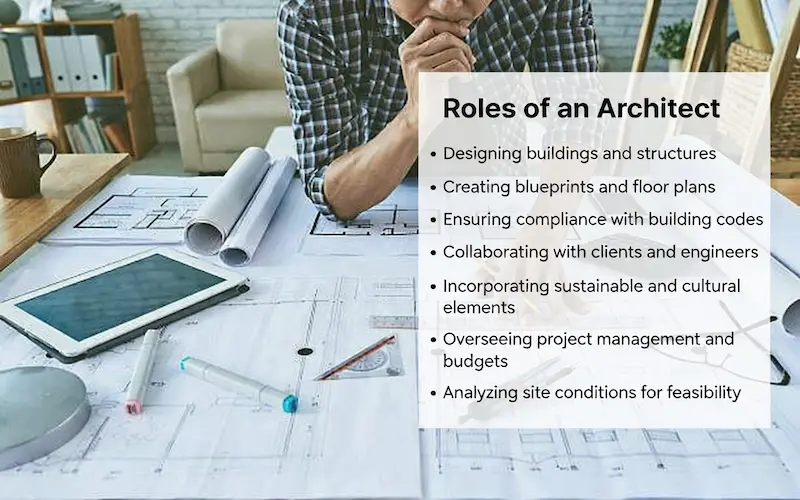
Once the site is surveyed and boundaries are clear, architects take center stage to translate abstract ideas into tangible designs. These creative professionals blend artistry with technical acumen, focusing on how spaces will look, feel, and function for users. In Kenya’s evolving built environment, where rapid urbanization demands innovative solutions to address housing shortages, infrastructure needs, and climate resilience, architects are pivotal in creating structures that are not only visually appealing but also practical, sustainable, and culturally resonant. As Kenya pushes towards achieving Vision 2030 goals, including affordable housing and sustainable cities, architects play a key role in designing developments that harmonize with the natural landscape, promote energy efficiency, and foster community well-being. Their work bridges the gap between client aspirations and real-world constraints, ensuring that buildings contribute positively to the socio-economic fabric of the nation.
The Evolution of Architecture in Kenya
Architecture in Kenya has a rich history influenced by indigenous traditions, colonial legacies, and modern global trends. From the traditional manyatta huts of the Maasai, which emphasize communal living and natural materials, to the Swahili coastal designs featuring intricate coral stone carvings and open courtyards for ventilation, local architecture has always adapted to environmental and cultural demands. Post-independence, architects like David Mutiso pioneered modernist styles, as seen in landmarks such as the Kenyatta International Convention Centre (KICC). Today, with urbanization rates at over 4% annually (per UN Habitat data), architects are at the forefront of addressing challenges like slum upgrading in areas such as Mathare and integrating smart city elements in emerging hubs like Konza Technopolis. This evolution underscores their role as visionaries who must balance heritage preservation with forward-thinking innovation.
Role and Responsibilities of Architects
Architects begin their involvement by deeply understanding the client’s needs, conducting interviews and site visits to grasp requirements—whether for a modest family home in Kisumu overlooking Lake Victoria, a towering commercial skyscraper in Nairobi’s bustling Central Business District (CBD), or eco-friendly lodges in wildlife-rich areas like the Amboseli National Park. They develop initial conceptual sketches, iterating through feedback loops to refine ideas into comprehensive blueprints. These plans meticulously consider spatial flow, ensuring logical movement between rooms; accessibility for all users, including those with disabilities as per the Persons with Disabilities Act; and cultural context, such as incorporating communal spaces in designs for extended Kenyan families.
Registered and regulated by the Board of Registration of Architects and Quantity Surveyors (BORAQS), architects must ensure their designs comply with national standards, including the Building Code of Kenya, which dictates everything from minimum room sizes to fire safety protocols. Their responsibilities extend to post-survey site analysis, where they incorporate natural features like sunlight orientation to maximize passive solar heating in cooler highland regions or natural ventilation to combat heat in lowland areas. They also oversee aesthetic elements, selecting materials that resonate locally—such as laterite blocks sourced from quarries in Athi River for a rustic, earthy appeal in rural developments, or sleek glass facades for contemporary urban vibes in upscale neighborhoods like Gigiri. Additionally, architects often lead the procurement of building permits, liaising with county governments to navigate zoning laws that restrict building densities in sensitive ecological zones.
Beyond design, architects advocate for inclusive planning, integrating gender-sensitive features like safe lighting in public spaces or child-friendly layouts in residential complexes. In large-scale projects, they may serve as project managers, overseeing timelines and budgets in collaboration with quantity surveyors (QS). Their holistic approach ensures that the final structure not only meets immediate needs but also anticipates future adaptations, such as expandable modules for growing families or modular designs for easy retrofitting with green technologies.
Tools and Techniques Used by Architects
Architects in Kenya harness a suite of digital and traditional tools to bring precision and creativity to their work. For 2D drafting and detailed technical drawings, AutoCAD remains a staple, allowing for accurate scaling and annotations. Revit, a powerful Building Information Modeling (BIM) software, enables 3D simulations that integrate architectural elements with structural and MEP (Mechanical, Electrical, and Plumbing) systems, facilitating virtual walkthroughs to identify issues early. SketchUp is favored for quick, intuitive visualizations during brainstorming sessions, helping clients envision concepts without technical jargon.
In pursuit of sustainable designs, architects employ specialized software like EnergyPlus or DesignBuilder to model thermal performance and energy consumption. For instance, in hot regions like Garissa or the coastal belt, these tools simulate how passive cooling techniques—such as overhanging eaves or cross-ventilation—can reduce reliance on air conditioning, potentially cutting energy bills by 40% according to studies from the Kenya Green Building Society. Hand sketches, often done with pencils or digital tablets, remain vital for initial ideation, capturing spontaneous ideas that software might constrain. Emerging technologies like Virtual Reality (VR) headsets, using platforms such as Unity or Enscape, allow clients to “walk through” proposed designs immersively, fostering better feedback and reducing revision cycles.
Drone imagery from surveys is imported into these tools for hyper-realistic site modeling, while parametric design software like Grasshopper enables complex, adaptive forms inspired by nature, such as biomimetic structures mimicking termite mounds for natural cooling. In collaborative settings, cloud-based platforms like Autodesk BIM 360 ensure real-time sharing with other consultants, streamlining workflows in multi-disciplinary teams.
Kenyan Context and Challenges
In Kenya, architects navigate a vibrant yet challenging tapestry of cultural diversity, environmental pressures, and socio-economic disparities. The country’s 42 ethnic groups influence design preferences—from the colorful, communal layouts preferred in Luo communities around Lake Victoria to the minimalist, earth-toned aesthetics in Kikuyu highlands. Incorporating vernacular elements, like makuti thatched roofs made from palm fronds for coastal resilience against cyclones and heavy rains, not only honors heritage but also aligns with the Kenya Green Building Society’s guidelines for low-carbon, eco-friendly construction. This approach reduces environmental impact, using locally sourced materials to minimize transport emissions and support rural economies.
However, challenges abound. Rapid informal urban growth in slums like Kibera, home to over 250,000 residents, requires architects to design affordable, upgradable housing solutions that can transition from basic shelters to durable homes, often on limited budgets under KSh 500,000 per unit. Economic disparities force a delicate balance: crafting luxury villas in affluent suburbs like Karen with high-end finishes, while scaling designs for mass housing under the government’s Affordable Housing Programme, which aims for 500,000 units by 2027 at prices between KSh 1-3 million. Climate adaptation is paramount; in flood-prone areas around the Lake Victoria basin, architects incorporate elevated floors, permeable pavements, and green roofs to manage stormwater and mitigate risks from rising water levels due to climate change, as projected by the Kenya Meteorological Department.
Regulatory hurdles, such as varying county bylaws—Nairobi’s strict height limits in residential zones versus Mombasa’s coastal setback requirements—add complexity. Corruption in permitting processes, highlighted in Transparency International reports, can delay projects, while material shortages from supply chain disruptions (e.g., cement price hikes during global events) force adaptive designs. Architects also grapple with skills gaps in the workforce, advocating for more training through institutions like the University of Nairobi’s School of the Built Environment.
Importance of Coordination with Other Professionals
Architects often act as the orchestrators of the construction ecosystem, coordinating with a web of professionals to ensure cohesive outcomes. They rely on land surveyors for accurate site data to inform layouts, avoiding misplacements that could violate boundaries. With structural engineers, they collaborate on load-bearing feasibility, adjusting designs to accommodate beams without compromising open spaces. MEP engineers are consulted for utility integration, ensuring ducts and pipes fit seamlessly into architectural voids.
Using BIM as a central platform, architects detect and resolve early conflicts—for example, repositioning windows to avoid clashing with plumbing lines or electrical conduits. In mega-projects like the Standard Gauge Railway (SGR) stations, this coordination ensured aesthetic harmony with functional engineering, blending modern lines with efficient passenger flows. Quantity surveyors provide cost feedback, prompting value engineering tweaks, while geotechnical input refines foundation placements. Environmental consultants influence green features, like incorporating biodiversity corridors in urban designs.
This interdisciplinary synergy, facilitated through regular meetings and shared digital models, prevents silos that lead to rework. In Kenya’s context, where projects like the Nairobi Expressway involved multiple stakeholders, effective coordination reduced delays by 20%, per KeNHA reports, highlighting architects’ role as collaborative leaders.
Potential Risks if Architects Are Overlooked
Overlooking or underutilizing architects invites a cascade of risks that can undermine project success. Without their input, buildings risk fundamental inefficiencies—such as poor natural lighting increasing artificial energy needs by up to 30%, inflating utility bills and contradicting Kenya’s energy conservation goals under the Energy Act. Non-compliant designs might fail inspections by the Kenya Bureau of Standards (KEBS), leading to costly demolitions or modifications, as witnessed in the 2020 crackdown on substandard structures in Eastleigh.
In commercial developments, inefficient spatial planning—cramped offices or illogical retail flows—can reduce rental yields by 15-25%, deterring investors in a market where prime office space in Upper Hill commands KSh 120 per square foot. Cultural insensitivity, like ignoring communal gathering spaces in multi-family housing, can spark community backlash or low occupancy rates. Safety hazards emerge too; inadequate fire egress designs violate codes, risking lives as in past tragedies like the 2019 DusitD2 attack, where escape routes were critical.
Environmentally, skipping architectural sustainability features exacerbates issues like urban heat islands in Nairobi, contributing to higher cooling demands. Legal repercussions include fines from county governments or NEMA for zoning violations. Proper architectural involvement mitigates these, enhancing usability, market value, and longevity—turning potential pitfalls into assets that appreciate over time.
Case Studies of Architectural Impact in Kenya
To illustrate their value, consider the Mama Ngina Waterfront in Mombasa: Architects integrated Swahili motifs with modern amenities, creating a public space that boosts tourism while withstanding coastal erosion. In contrast, the hurried designs in some informal settlements have led to unstable structures prone to collapse during rains. Successful projects like the Britam Tower in Nairobi showcase how architects’ vision, combined with engineering, yields iconic, functional landmarks that symbolize progress.
Architects thus visionary bridge dreams and reality, crafting spaces that inspire, endure, and adapt in Kenya’s diverse and dynamic settings, ensuring every project contributes to a more livable future.
Civil Engineers: Masters of Infrastructure
Civil engineers are the backbone of site development in Kenya’s construction projects, transforming raw land into functional, connected spaces that support communities and economies. They oversee the broader infrastructure elements—roads, drainage systems, utilities, and earthworks—ensuring that the project integrates seamlessly with its surroundings. In a nation where infrastructure deficits cost the economy billions annually (as per World Bank estimates), civil engineers play a pivotal role in designing resilient systems that withstand Kenya’s unpredictable climate, from torrential rains in the highlands to droughts in arid zones. Their work not only facilitates smooth construction but also enhances long-term usability, preventing issues like flooding or erosion that could derail timelines or endanger lives. As Kenya advances Vision 2030’s Big Four Agenda, emphasizing infrastructure as a pillar of economic growth, civil engineers bridge the gap between architectural visions and real-world execution, creating durable networks that power sustainable development.
The Evolution of Civil Engineering in Kenya
Civil engineering in Kenya traces its roots to pre-colonial times, when communities engineered simple irrigation channels and footpaths adapted to local terrains. The colonial period marked a shift with the construction of the Uganda Railway (1896–1901), which relied on rudimentary civil works but often suffered from poor soil management and flood vulnerabilities. Post-independence in 1963, the field expanded rapidly with nation-building projects like the Seven Forks Hydroelectric Scheme in the 1970s, where civil engineers designed dams and canals to harness the Tana River’s power. The 1980s and 1990s saw a boom in urban infrastructure, including the expansion of Nairobi’s road network under President Moi’s era.
Today, civil engineering is digitized and regulated, with professionals licensed by the Engineers Board of Kenya (EBK) under the Engineers Act of 2011. Major milestones include the Standard Gauge Railway (SGR) completed in 2017, a feat of civil ingenuity spanning 472 km, and the Nairobi Expressway, which alleviated traffic congestion. With climate change intensifying extreme weather, modern civil engineers incorporate resilient design principles from the Kenya National Adaptation Plan, focusing on green infrastructure like permeable roads. Institutions like Jomo Kenyatta University of Agriculture and Technology (JKUAT) train specialists, producing graduates who tackle contemporary challenges such as smart city planning in Konza and sustainable water management in the Lake Victoria basin. This evolution positions civil engineers as strategic enablers of Kenya’s infrastructure renaissance.
Role and Responsibilities of Civil Engineers
Civil engineers manage the macro-level development of construction sites, encompassing transportation, water management, waste systems, and site preparation. Their core responsibilities include designing and overseeing the construction of access roads, bridges, and culverts to ensure safe connectivity. They develop stormwater management plans using hydrological models to handle flash floods, which are common in urban hubs like Mombasa during the long rains. In rural settings, such as the expansive farmlands of the Rift Valley, they plan durable gravel roads and reinforced bridges capable of withstanding seasonal downpours and heavy agricultural traffic.
They collaborate on site grading—leveling the terrain to optimize drainage and prevent ponding—and integrate utilities like water, sewer, and power lines into trenches that avoid conflicts with other systems. Civil engineers also conduct environmental assessments for erosion control, recommending techniques like gabion walls or vegetative buffers. They navigate regulatory approvals from entities such as the Kenya Roads Board (KRB) for national roads or the Water Resources Authority (WRA) for water infrastructure, ensuring alignment with policies like the National Spatial Plan 2015–2045.
In large-scale projects, they lead feasibility studies, cost estimations (in tandem with QS), and construction supervision to maintain quality. Their work extends to sustainability, incorporating low-impact development (LID) features like rain gardens to recharge aquifers. Licensed under EBK, they adhere to standards from the Kenya Bureau of Standards (KEBS) and international guidelines like those from the American Society of Civil Engineers (ASCE), adapted for local conditions.
Tools and Techniques Used by Civil Engineers
Civil engineers in Kenya utilize a mix of traditional surveying and cutting-edge digital tools to achieve precision. AutoCAD Civil 3D is a go-to for 3D modeling of terrains, roads, and drainage networks, allowing for dynamic simulations of water flow. HEC-RAS (Hydrologic Engineering Center’s River Analysis System) software models flood scenarios using data from the Kenya Meteorological Department (KMD), predicting peak flows during El Niño events. For rural bridge design, they employ SAP2000 for structural analysis under load.
Geospatial tools like ArcGIS integrate satellite imagery and LiDAR data for site mapping, while drone surveys provide real-time topographic updates. In water infrastructure, EPANET simulates pipe networks for efficient distribution, crucial in water-scarce areas like Wajir. BIM platforms facilitate coordination, overlaying civil designs with architectural and MEP elements to preempt clashes. Advanced techniques include ground improvement methods like vibro-compaction for soft soils and permeable concrete for eco-friendly pavements. These tools enable predictive analytics, such as using AI-driven models to forecast maintenance needs, reducing long-term costs by up to 25% in Kenyan infrastructure projects.
Kenyan Context and Challenges
Kenya’s civil engineering landscape is shaped by its geography and socio-economic realities. Urban centers like Nairobi face gridlock, prompting engineers to design elevated expressways and smart traffic systems, as in the 2022 Nairobi Western Bypass. Coastal Mombasa contends with sea-level rise and saline intrusion, requiring corrosion-resistant materials for drainage. Rural areas in counties like Marsabit grapple with poor road access, where civil engineers prioritize all-weather roads to support agriculture and tourism.
Challenges include funding constraints—many projects rely on Chinese loans or PPPs—leading to phased implementations. Climate variability, with floods costing KSh 20 billion yearly (per NDMA reports), demands adaptive designs like raised embankments. Regulatory hurdles, such as inter-county coordination for cross-border roads, and skills shortages in specialized areas like seismic engineering add layers. Material inflation, exacerbated by global events, forces value engineering. In informal settlements, civil engineers innovate with community-led drainage to combat cholera outbreaks from poor sanitation.
Importance of Coordination with Other Professionals
Civil engineers thrive on collaboration, serving as the integrative force in the ecosystem. They work closely with land surveyors to refine grading plans based on accurate topography. Architects benefit from their site grading expertise to align building footprints with natural slopes. MEP engineers coordinate utility layouts to avoid trench conflicts, using BIM for clash detection. Structural engineers consult on foundation interfaces with roads and bridges.
In approvals, civil input aligns with NEMA for environmental compliance and county planners for zoning. For instance, in the Lamu Port project, civil coordination with geotech and environmental teams optimized causeway designs. Regular progress meetings and shared models prevent delays, as seen in the SGR where integrated planning minimized land acquisition disputes. This synergy accelerates approvals by 15-20% and ensures holistic outcomes.
Potential Risks if Civil Engineers Are Overlooked
Omitting civil engineers leads to systemic failures that cascade across projects. Poor drainage designs cause waterlogging, delaying construction by weeks and fostering mosquito breeding grounds, as in some Nairobi estates during 2024 rains. Erosion from ungraded sites can undermine foundations, leading to cracks and collapses costing millions in repairs.
In rural areas, substandard roads erode quickly, isolating communities and inflating transport costs by 30%. Urban utilities without proper trenching result in frequent outages or leaks, disrupting MEP systems. Regulatory non-compliance invites fines from KRB or WRA, potentially halting projects. Historical cases, like the 2018 Nairobi floods exacerbated by inadequate stormwater systems, highlight how overlooked civil input amplifies vulnerabilities, increasing insurance premiums and eroding public trust.
Case Studies of Civil Engineering Impact in Kenya
The Nairobi Expressway exemplifies success: Civil engineers designed multi-level interchanges and toll systems, reducing commute times by 70% and boosting economic activity. In contrast, the incomplete sections of the Northern Corridor due to poor initial drainage led to costly variations. Rural triumphs include the Isiolo-Moyale road, where civil reinforcements against flash floods improved trade links. The Thwake Dam’s civil components, with advanced spillways, now supply water to 1.2 million people, averting droughts.
Civil engineers thus master the art of connectivity, ensuring infrastructure not only supports but elevates Kenya’s development trajectory in a challenging environment.
Structural Engineers: Ensuring Strength and Stability

Structural engineers are the guardians of a building’s integrity, meticulously calculating and designing the framework that supports the entire structure against the forces of nature and human use. They create the “skeleton” that holds everything up—beams, columns, slabs, and foundations—ensuring resilience against gravity, wind loads, seismic activity, and other environmental stresses. In Kenya’s rapidly urbanizing landscape, where high-rises pierce the Nairobi skyline and infrastructure spans diverse terrains from coastal humidity to Rift Valley quakes, structural engineers are essential for preventing collapses and ensuring longevity. As the country advances ambitious projects under Vision 2030, including skyscrapers and bridges, their expertise mitigates risks, optimizes materials, and integrates sustainability, turning architectural visions into safe, enduring realities. By collaborating across disciplines, they not only comply with stringent codes but also innovate to address local challenges like variable soils and climate extremes, providing safety for occupants, value for investors, and resilience for communities in a nation where construction drives over 5% of GDP growth.
The Evolution of Structural Engineering in Kenya
Structural engineering in Kenya has progressed from traditional, empirical methods to sophisticated, data-driven practices influenced by global standards and local necessities. Pre-colonial structures, like the stone fortresses of the Swahili coast or mud-and-thatch dwellings in the interior, relied on intuitive designs passed down generations, often using natural materials like coral rag and timber for load-bearing. The colonial era introduced formal engineering with projects like the Nairobi Railway Station in 1899, employing British codes for iron girders and masonry, though many failed due to unfamiliarity with local seismic and soil conditions.
Post-independence in 1963, the field modernized with the establishment of the University of Nairobi’s engineering faculty, training locals in reinforced concrete techniques for landmarks like the Hilton Hotel in 1969. The 1980s oil boom spurred high-rises, but tragedies like the 1996 Ngara building collapse exposed gaps in seismic design. The adoption of Eurocode standards in the 2000s, adapted via the Kenya Building Code, marked a turning point, emphasizing earthquake resistance in the Rift Valley. Today, with EBK regulation since 2011, structural engineers use AI and BIM for projects like the Pinnacle Tower, Africa’s tallest under construction. Climate change integration, per the National Climate Change Action Plan, now includes resilient materials against corrosion and flooding. This evolution reflects a blend of heritage, innovation, and adaptation, positioning structural engineering as a cornerstone of Kenya’s built future.
Role and Responsibilities of Structural Engineers
Structural engineers bear the weighty responsibility of ensuring a structure’s stability and safety throughout its lifecycle. They begin by analyzing loads—dead (permanent weights like walls), live (occupants and furniture), wind, seismic, and snow in high altitudes—and design elements to resist them. This involves sizing beams and columns, specifying reinforcement in concrete, or selecting steel sections for frames. They collaborate on foundation designs, integrating geotechnical data to choose types like strip footings for low-rises or caissons for skyscrapers.
Registered with the EBK, they must comply with the Building Code and Eurocode 8 for seismic zones, conducting risk assessments and detailing connections to prevent brittle failures. Responsibilities include material selection—high-strength concrete for durability or prestressed elements for spans—and overseeing construction quality through inspections. In sustainable projects, they optimize for low-carbon alternatives like bamboo-reinforced composites. They also handle retrofits for existing buildings, assessing vulnerabilities in aging stock like colonial-era structures in Mombasa. Their reports certify compliance, enabling permits from NCA and counties. Ultimately, structural engineers safeguard lives, as their designs must endure for 50-100 years, factoring in maintenance and adaptability.
Tools and Techniques Used by Structural Engineers
Structural engineers leverage advanced software and analytical techniques for precise, efficient designs. ETABS and SAP2000 are staples for finite element analysis (FEA), simulating dynamic responses to winds and quakes—crucial for Nairobi’s Upper Hill gusts up to 40 m/s. STAAD.Pro handles complex geometries, while Robot Structural Analysis integrates with Revit for BIM workflows.
For seismic design, they use response spectrum methods in software like SeismoStruct, modeling base isolators or dampers to absorb vibrations. Material testing involves non-destructive techniques like ultrasonic pulse velocity for concrete strength or Schmidt hammer for hardness. In labs, they conduct compressive tests per KEBS standards. Emerging tools include AI-driven optimization in Grasshopper for parametric designs and drones for post-construction inspections. Cloud platforms like Autodesk Forge enable real-time collaboration, reducing errors by 15%. These tools allow for probabilistic analyses, incorporating uncertainties like soil variability, ensuring designs exceed safety factors of 1.5-2.0.
Kenyan Context and Challenges
In Kenya, structural engineers confront a spectrum of contextual challenges shaped by geography, climate, and development pressures. The Rift Valley’s seismic activity, with faults capable of magnitude 7 quakes, demands specialized designs like shear walls or moment-resisting frames. Coastal humidity in Mombasa accelerates corrosion, requiring epoxy-coated rebar or stainless steel. Variable soils—from laterites in Central to lacustrine deposits around Lake Victoria—necessitate tailored solutions to combat settlement.
Urbanization strains resources: high-rises in Nairobi’s CBD, like the 300m Britam Tower, must withstand wind loads while adhering to height restrictions. Rural bridges in flood-prone Kerio Valley face scour risks from erratic rains. Economic challenges include material costs—steel imports fluctuating with forex rates—and skills gaps, with only 5,000 EBK-registered engineers for a population of 50 million. Regulatory inconsistencies across counties complicate compliance, while corruption in inspections undermines integrity. Climate change amplifies loads: heavier rains increase hydrostatic pressures, per KMD forecasts. Informal settlements pose retrofitting dilemmas, where substandard materials lead to vulnerabilities.
Importance of Coordination with Other Professionals
Structural engineers are pivotal in interdisciplinary coordination, ensuring their designs mesh with the broader ecosystem. They rely on geotechnical data for foundation specs, adjusting pile depths based on soil reports. Architects provide load distributions, prompting iterations for aesthetic-structural balance—like slender columns in open lobbies. Civil engineers align on site grading to prevent uneven loading, while MEP integration via BIM avoids duct-beam clashes.
QS factor in material costs for value engineering, swapping steel for concrete where feasible. Environmental consultants influence green designs, like using recycled aggregates. In projects like the SGR viaducts, coordination reduced variations by 20%. Regular workshops and shared models foster synergy, complying with NCA’s multi-disciplinary requirements and enhancing efficiency.
Potential Risks if Structural Engineers Are Overlooked
Bypassing structural engineers invites dire risks, from immediate failures to long-term liabilities. Inadequate designs on weak soils lead to differential settling, cracking walls or collapsing floors—costs soaring 40% for fixes. Seismic non-compliance in the Rift risks catastrophe during quakes, as in the 1928 Subukia event. Coastal corrosion without proper specs causes rebar rust, weakening frames as seen in Mombasa collapses.
High-rises without wind analysis sway excessively, causing occupant discomfort or glass failures. Legal ramifications include EBK sanctions or lawsuits, with collapses like 2015 Sunshine Building claiming lives and Sh200 million in claims. Insurance voids and halted projects erode investor confidence. Overlooked input also misses sustainability, leading to higher maintenance—20% more over a decade. Proper involvement averts these, prioritizing safety.
Case Studies of Structural Engineering Impact in Kenya
The KICC’s iconic tower, designed in 1973 with a reinforced concrete core, has withstood decades without major issues, showcasing early seismic foresight. In contrast, the 2016 Huruma collapse, due to insufficient reinforcement, killed 51 and spurred code reforms. Successful modern examples include the Global Trade Centre (GTC) in Westlands, where structural engineers used post-tensioned slabs for efficient spans, completing ahead of schedule. The Dongo Kundu Bridge’s cable-stayed design resists coastal winds and quakes, boosting trade. These illustrate how structural expertise turns challenges into triumphs.
Structural engineers thus ensure buildings endure, providing unyielding strength and stability in Kenya’s dynamic environment, where their calculations protect lives and legacies.
Mechanical and Electrical Engineers (MEP): Powering Functionality
Mechanical, Electrical, and Plumbing (MEP) engineers are the vital force that infuses buildings with functionality, comfort, and efficiency, transforming static structures into dynamic, livable environments. They design and integrate systems for heating, ventilation, air conditioning (HVAC), electrical power, lighting, fire protection, plumbing, and sanitation, ensuring seamless operation amid diverse challenges. In Kenya’s context, where climatic extremes range from the scorching heat of arid northern regions to the humid coastal belts and cooler highlands, MEP engineers tailor solutions that incorporate energy-efficient technologies like solar units to combat high electricity costs and grid unreliability. As the nation pursues sustainable development under Vision 2030 and the Big Four Agenda, MEP expertise is crucial for reducing carbon footprints, optimizing resource use, and enhancing indoor air quality in urbanizing areas like Nairobi and Mombasa. By preventing hazards such as electrical fires, water leaks, or poor ventilation, MEP engineers not only ensure occupant safety and well-being but also drive long-term cost savings—potentially 20-30% in operational expenses—while aligning with green building standards. Their collaborative use of tools like Building Information Modeling (BIM) avoids system clashes, fostering sustainable, resilient infrastructure that supports Kenya’s economic growth in a resource-constrained environment.
The Evolution of MEP Engineering in Kenya
MEP engineering in Kenya has undergone a transformative journey, evolving from basic colonial-era installations to sophisticated, integrated systems driven by technology and sustainability imperatives. During the British colonial period, MEP was rudimentary—simple electrical wiring in urban centers like Nairobi using imported generators and basic plumbing in administrative buildings, often overlooking local climate needs, leading to inefficiencies like water shortages during droughts. Post-independence in 1963, the focus shifted to national development, with projects like the expansion of Jomo Kenyatta International Airport in the 1970s introducing modern HVAC for passenger comfort amid rising tourism.
The 1990s energy crisis, marked by frequent blackouts from Kenya Power, spurred innovations in backups and renewables, while the 2000s saw the adoption of international standards like ASHRAE (American Society of Heating, Refrigerating and Air-Conditioning Engineers) for HVAC. The Energy Act of 2006 and establishment of the Energy and Petroleum Regulatory Authority (EPRA) in 2019 formalized regulations, emphasizing efficiency. Today, with EBK oversight, MEP engineers leverage BIM and IoT for smart buildings, as in the Konza Technopolis data centers. Climate change adaptation, per the National Climate Change Response Strategy, now includes resilient designs against floods and heatwaves. This evolution reflects a shift towards holistic, eco-friendly systems, positioning MEP as key to Kenya’s green transition.
Role and Responsibilities of MEP Engineers
MEP engineers encompass three intertwined disciplines: mechanical for thermal comfort and ventilation, electrical for power and lighting, and plumbing for water and waste management. Mechanical specialists design HVAC systems tailored to Kenya’s varied climates—evaporative cooling for dry arid zones like Turkana or heat pumps for cooler Mount Kenya regions—incorporating energy-efficient solar-assisted units to reduce grid dependency. They calculate airflow rates, duct sizing, and zoning to maintain optimal indoor conditions, preventing mold in humid areas.
Electrical engineers plan distribution networks, from transformers to outlets, including smart lighting with LED and sensors for energy savings. They address Kenya’s grid unreliability—outages averaging 4-6 hours monthly per KNBS data—by integrating uninterruptible power supplies (UPS), generators, and renewables like solar PV panels, cutting reliance on Kenya Power by up to 50% in off-grid setups. Fire alarm and security systems fall under their purview, ensuring compliance with safety codes.
Plumbing engineers handle water supply, drainage, and sanitation, designing systems with rainwater harvesting tanks and greywater recycling to combat scarcity in 80% of arid lands. They specify fixtures for efficiency, like low-flow taps, and sewage treatment for urban density.
Collectively, MEP engineers conduct load calculations, energy audits, and commissioning tests. Licensed by EBK, they ensure adherence to EPRA standards for energy, KEBS for materials, and NEMA for environmental impact. Their responsibilities include retrofits for existing buildings, optimizing old colonial structures in Kisumu for modern efficiency.
Tools and Techniques Used by MEP Engineers
MEP engineers employ specialized software and techniques for precise, integrated designs. HAP (Hourly Analysis Program) and Carrier’s eDesign for HVAC load calculations simulate annual energy use, factoring KMD weather data. Revit MEP enables BIM modeling, visualizing 3D systems to detect clashes with structures early.
For electrical, ETAP analyzes power flows and short circuits, while Dialux optimizes lighting layouts for lux levels. Plumbing uses Pipe-Flo for hydraulic modeling, ensuring pressure balances in high-rises. IoT sensors monitor real-time performance post-installation, with tools like Autodesk Navisworks for coordination reviews.
Techniques include value engineering—swapping copper wiring for aluminum to cut costs—and sustainable practices like VRF (Variable Refrigerant Flow) systems for zoned cooling. In renewables, PVsyst simulates solar integrations. These tools reduce design errors by 25%, per industry benchmarks, enhancing efficiency in Kenyan projects.
Kenyan Context and Challenges
Kenya’s MEP landscape is defined by climatic diversity, resource constraints, and rapid growth. Coastal humidity demands corrosion-resistant materials for HVAC coils, while highland cold requires heating without high energy use. Grid instability—80% rural electrification but frequent blackouts—forces hybrid systems.
Challenges include water scarcity affecting 17 million Kenyans (per Water.org), necessitating innovative plumbing like atmospheric water generators. Urban density in slums like Mukuru strains sanitation, risking cholera. Regulatory fragmentation—EPRA for energy, WRMA for water—complicates compliance. Material imports inflate costs amid forex volatility, while skills shortages in rural areas hinder implementation. Climate change worsens extremes, with floods damaging electricals in Nyando Valley. Economic disparities mean balancing luxury MEP in Runda with basic systems in affordable housing.
Importance of Coordination with Other Professionals
MEP engineers coordinate extensively to avoid conflicts and optimize outcomes. With architects, they align duct routes with aesthetics; structural engineers ensure beam penetrations for pipes. Civil input on site utilities prevents trench overlaps, using BIM for virtual clash detection—saving 10-15% in rework.
Geotech data informs foundation waterproofing, while QS provides cost analyses for efficient specs. Environmental consultants guide green certifications like EDGE. In projects like the Two Rivers Mall, MEP coordination with all teams enabled seamless integration of solar and rainwater systems. This collaboration, through joint reviews, ensures holistic designs compliant with multi-agency standards.
Potential Risks if MEP Engineers Are Overlooked
Neglecting MEP input leads to hazardous, inefficient buildings. Poor HVAC causes poor air quality, exacerbating respiratory issues in polluted Nairobi. Electrical oversights risk fires—Kenya reports 5,000 annually per NFSC—or shocks from faulty wiring. Plumbing failures cause leaks, flooding basements and breeding diseases.
Non-compliance with EPRA incurs fines up to KSh 1 million or shutdowns. High energy bills from inefficient systems—up to 40% waste—erode ROI. In humid coasts, ignored corrosion leads to system failures within years. Past incidents, like 2018 mall blackouts from undersized backups, highlight disruptions. Retrofits cost 50% more; proper MEP averts these, ensuring safety and sustainability.
Case Studies of MEP Engineering Impact in Kenya
The Vipingo Ridge eco-resort showcases MEP success: Solar HVAC and rainwater plumbing reduced energy use by 60%, earning green awards. In contrast, some informal Nairobi buildings with DIY electricals suffered fires, claiming lives. Urban triumphs include the Hub Karen mall, where MEP integrated smart lighting and efficient plumbing, cutting bills by 25%. The JKIA Terminal 1A’s MEP upgrades handled increased passenger loads with reliable backups during outages.
MEP engineers thus power functionality, optimizing comfort, safety, and sustainability in Kenya’s built spaces, where their systems breathe life into structures for generations.

Quantity Surveyors (QS): Guardians of Budgets
Quantity Surveyors, often abbreviated as QS, serve as the financial stewards of construction projects in Kenya, acting as the vigilant custodians who ensure fiscal discipline and value maximization throughout the project lifecycle. Their role extends far beyond simple number-crunching; they are integral to ensuring that every shilling invested yields maximum value while mitigating the risks of financial pitfalls that plague many developments. In a market where material costs can swing wildly due to global supply chain disruptions, import duties, and local economic fluctuations—such as the 2022-2023 spikes influenced by the Russia-Ukraine conflict affecting steel imports—QS provide the foresight and precision needed to keep projects economically viable from inception to completion. As Kenya’s construction sector booms, contributing over 5% to GDP and supporting initiatives like the Big Four Agenda’s affordable housing drive, QS are indispensable for bridging the gap between ambitious architectural visions and pragmatic budgeting. They employ analytical rigor to forecast, control, and optimize costs, preventing the overruns that have derailed high-profile projects, while promoting ethical procurement and sustainable practices that align with national goals for economic stability and resource efficiency.
The Evolution of Quantity Surveying in Kenya
Quantity surveying in Kenya has a storied evolution, rooted in colonial practices and adapting to post-independence demands for national development. During the British colonial era, QS functions were handled by British-trained professionals, focusing on cost control for infrastructure like the Kenya-Uganda Railway, using rudimentary ledgers to track imported materials amid logistical challenges. Post-1963 independence, the profession localized with the establishment of the Kenya Institute of Quantity Surveyors (KIQS) in 1972, training locals at institutions like the University of Nairobi to manage burgeoning projects such as the Kenyatta National Hospital expansions.
The 1980s economic liberalization introduced market-driven tendering, but corruption scandals in public works highlighted the need for ethical standards, leading to the Public Procurement and Disposal Act of 2005 (revised as PPADA in 2015). The 2000s saw digital transformation with software adoption, while the 2010 Constitution’s devolution empowered counties, complicating multi-jurisdictional budgeting. Today, QS integrate sustainability per Vision 2030, using green cost metrics for eco-friendly materials in projects like the Green Affordable Housing Programme. Climate change considerations, such as factoring in rising material costs from flood-damaged supplies, and global trends like BIM for cost modeling, position QS as strategic advisors in a sector valued at over KSh 1 trillion annually.
Role and Responsibilities of Quantity Surveyors
At the core of a QS’s responsibilities is the preparation of detailed cost estimates and budgets, serving as the financial blueprint for the entire project. This begins early in the project lifecycle, often during the feasibility stage, where they analyze preliminary designs from architects and engineers to forecast total expenses with high accuracy. They break down costs into granular components: labor rates influenced by union agreements, materials like aggregates from local quarries, equipment rentals from firms like Mantrac Kenya, overheads including site security, and contingencies for risks like political instability delaying imports.
QS are also pivotal in contract administration, drafting conditions that protect clients from variations. During construction, they conduct interim valuations—site inspections to measure completed work against the BoQ—and certify payments, maintaining healthy cash flows to avoid contractor defaults. Post-construction, they prepare final accounts, reconciling claims and deductions. Registered with the Board of Registration of Architects and Quantity Surveyors (BORAQS), QS must uphold ethical standards, auditing for compliance with anti-corruption laws. In public projects, they enforce value for money under PPADA, evaluating social impacts like job creation. Their advisory role includes life-cycle costing, assessing long-term maintenance to inform decisions like choosing durable roofing over cheaper alternatives.
Tools and Techniques Used by Quantity Surveyors
QS in Kenya harness specialized tools and techniques for precise cost management. Software like WinQS or CostX enables digital take-offs from BIM models, automating quantity calculations for elements like rebar tonnage. Excel and MS Project aid in scheduling-linked budgeting, while Causeway CATO integrates tender analysis.
The Bill of Quantities (BoQ) is a flagship technique, a detailed schedule itemizing works per SMM7 standards, facilitating competitive bidding. Value engineering workshops systematically review designs for cost savings, using brainstorming to substitute materials—e.g., local clay bricks for imported claddings. Risk registers quantify uncertainties with Monte Carlo simulations in @Risk software, modeling scenarios like 15% cement price hikes. Feasibility studies employ NPV (Net Present Value) and IRR (Internal Rate of Return) calculations, sensitivity analyses testing variables like CBK interest rates. In procurement, e-tendering platforms like IFMIS ensure transparency. These tools reduce errors by 20-30%, per KIQS studies, enhancing accuracy in volatile markets.
Kenyan Context and Challenges
In Kenya’s dynamic construction landscape, QS navigate economic volatility, regulatory complexities, and environmental pressures. Material prices fluctuate wildly—cement from Bamburi rising 10-15% seasonally due to dry-season demand or fuel costs—exacerbated by import dependencies and forex swings against the USD. The sector’s informality in slums like Kibera challenges accurate costing for upgrades, while public projects under Big Four face scrutiny from the Auditor General for overpayments, as in road contracts audited revealing 20% excesses.
Devolution creates varying county procurement rules, complicating multi-site budgets. Corruption risks, ranked 123/180 on Transparency International’s index, demand vigilant ethics. Climate impacts, like El Niño floods delaying works, inflate contingencies. Skills gaps, with only 2,000 BORAQS-registered QS for a booming industry, strain capacity. Economic disparities mean balancing luxury developments in Westlands (costs KSh 20,000/m²) with affordable housing (capped at KSh 3 million/unit). QS address these by advocating local sourcing and green costing for sustainability goals.
Importance of Coordination with Other Professionals
QS are central to coordination, providing financial insights that shape interdisciplinary decisions. They collaborate with architects on cost-effective designs, suggesting alternatives like modular construction to trim 15% off budgets. Structural engineers receive material cost data for optimal specs, while MEP input informs energy modeling for ROI calculations.
Using BIM, QS extract quantities in real-time, avoiding discrepancies. Civil engineers align infrastructure budgets, and geotech reports factor into risk contingencies. In tendering, QS evaluate bids with technical teams for holistic awards. For projects like the Nairobi Expressway, this synergy contained variations under 10%. Regular cost review meetings ensure alignment, complying with NCA oversight and enhancing bankability for financiers like AfDB.
Potential Risks if Quantity Surveyors Are Overlooked
Omitting QS invites fiscal chaos, with overruns rampant—KIQS reports 40% of projects exceed budgets by 20%+ due to unforecasted hikes. Without BoQs, tenders become inaccurate, fostering disputes and delays. Corruption thrives sans ethical evaluations, as in past scandals costing billions.
Feasibility gaps lead to unviable projects, stranding investments like stalled housing schemes. Poor risk management ignores strikes or weather, ballooning costs 30-50%. Legal fines from PPADA violations hit KSh 10 million, while inadequate final accounts spark litigation. In essence, skipping QS turns controlled investments into gambles, eroding profitability.
Case Studies of Quantity Surveying Impact in Kenya
The Konza Technopolis project exemplifies QS success: Detailed BoQs and value engineering contained costs within KSh 1.2 trillion, delivering phase one on budget. In contrast, the Arror and Kimwarer dams scandal, with alleged overpayments of KSh 21 billion, underscores poor QS oversight. Affordable housing in Ngong, where QS optimized local materials, slashed costs 25%, enabling 5,000 units. The SGR’s QS-led tenders ensured competitive pricing, saving millions despite scope changes.
In essence, QS are the unsung heroes who bridge the gap between ambitious designs and realistic budgets. Their meticulous work ensures that projects in Kenya’s booming sector—valued at over KSh 1 trillion annually—deliver on promises without breaking the bank, fostering a legacy of efficient, accountable development.
Environmental Impact Assessments (EIA): Safeguarding Sustainability
Environmental Impact Assessments (EIAs) represent a critical checkpoint in Kenya’s construction process, enforced by the National Environment Management Authority (NEMA) under the Environmental Management and Coordination Act (EMCA) of 1999. Before any shovels hit the ground or approvals are granted, EIA experts conduct thorough evaluations to gauge a project’s potential effects on the natural and social environment. This isn’t just regulatory box-ticking; it’s a proactive measure to balance development with ecological preservation in a country rich in biodiversity yet vulnerable to climate change impacts like prolonged droughts and erratic floods.
The EIA process begins with scoping, where experts identify key issues based on the project’s scale and location. For a high-rise in Nairobi’s Upper Hill, this might involve assessing air quality degradation from construction dust or noise pollution affecting nearby residents. In coastal Mombasa, focus shifts to marine ecosystems, ensuring developments don’t encroach on mangroves vital for carbon sequestration and storm protection. Specialists study biodiversity—mapping habitats of endangered species like the Hirola antelope in arid zones or bird migration paths in wetlands—using tools like GIS mapping and field surveys.
Pollution risks are scrutinized in detail: soil contamination from chemical spills, water pollution from runoff carrying sediments into rivers like the Athi, or atmospheric emissions from machinery. Community effects are equally vital; EIAs include public participation forums, as mandated by law, to gather input from locals who might face displacement or health risks. For instance, in the Lamu Port-South Sudan-Ethiopia Transport (LAPSSET) corridor projects, EIAs addressed fisherfolk concerns over disrupted livelihoods, leading to compensation plans.
Recommendations from EIAs often include mitigations to minimize harm. These could be green spaces integrated into urban designs to combat the heat island effect in cities like Kisumu, waste management strategies recycling construction debris, or erosion control measures like terracing on sloped sites. In renewable energy projects, such as wind farms in Turkana, EIAs ensure minimal disruption to wildlife corridors.
Kenya’s commitment to sustainable development, embedded in Vision 2030 and the UN Sustainable Development Goals (SDGs), amplifies the EIA’s importance. For affordable housing schemes under the Big Four Agenda, EIAs prevent developments from harming sensitive areas like riparian zones along the Nairobi River, avoiding fines that can reach KSh 10 million or project halts ordered by NEMA. Non-compliance has real consequences; the 2022 suspension of a quarry in Machakos County due to unaddressed dust pollution exemplifies how ignored EIAs lead to legal battles and reputational damage.
Moreover, EIAs foster long-term benefits, such as enhanced project resilience to climate change. By recommending features like permeable pavements for better water absorption, they reduce flood risks in monsoon-prone areas. In practice, a well-executed EIA can expedite approvals by demonstrating environmental stewardship, attracting eco-conscious investors and green financing from bodies like the Green Climate Fund.
Ultimately, EIAs are guardians of Kenya’s natural heritage, ensuring that construction contributes to a greener future rather than depleting it. They underscore the need for early integration in the ecosystem, where overlooking environmental factors can cascade into irreversible damage and financial losses.
County Government Approvals: Navigating Bureaucracy
County governments in Kenya, empowered by the 2010 Constitution’s devolution framework, act as gatekeepers for construction approvals, overseeing zoning, public health, safety, and environmental compliance. This stage often follows EIA submission and involves submitting detailed plans to bodies like the Nairobi City County Planning Department or Mombasa’s equivalent. While notorious for bureaucratic delays—sometimes stretching months due to understaffing or corruption allegations—thorough preparation by consultants can turn this hurdle into a smooth passage.
The approval process demands a suite of documents: architectural drawings, structural calculations, MEP schematics, and the EIA report from NEMA. Zoning checks ensure the project fits land use plans—residential in suburbs like Karen, commercial in CBDs—preventing violations that could lead to demolitions, as seen in the 2018 ripping down of illegal structures in Nairobi’s Eastlands. Health and safety reviews cover fire escapes, sanitation, and accessibility under the Occupational Safety and Health Act (OSHA), while building permits confirm adherence to the Physical and Land Use Planning Act (PLUPA).
Inspections occur at milestones: foundation laying, structural framing, and final handover. Delays arise from incomplete submissions or appeals from neighbors, but proactive consultants mitigate this by incorporating feedback early. For example, in Kisumu County, approvals for lakeside developments require extra scrutiny for erosion control, aligning with Lake Victoria Basin Commission guidelines.
Streamlining comes from digital platforms like the e-Development Permit System in some counties, reducing paperwork. Yet, challenges persist: varying standards across 47 counties can confuse multi-site projects. Thorough prep—ensuring all consultant inputs are harmonized—expedites this, avoiding resubmissions that add 10-20% to timelines.
In summary, county approvals are a vital safeguard, enforcing standards that protect communities and investments. Navigating them effectively requires coordinated documentation, turning potential bottlenecks into affirmations of project readiness.
Why Coordination is Difficult in Kenya’s Construction Projects
Coordinating the myriad players in Kenya’s construction ecosystem is akin to herding cats in a thunderstorm—challenging due to inherent complexities, structural fragmentation, and external pressures. With professionals ranging from surveyors to QS, each operating in silos, clashes are inevitable. An architect’s open-plan design might overlook structural constraints, leading to beams obstructing views, or MEP layouts conflicting with civil drainage, necessitating expensive rework.
Kenya’s industry is fragmented: many consultants work independently, lacking unified platforms for real-time collaboration. This contrasts with integrated firms in developed markets, resulting in communication gaps. Regulatory red tape compounds this; navigating NCA registrations, NEMA EIAs, and county permits involves multiple agencies with overlapping jurisdictions, often causing sequential delays rather than parallel processing.
Supply chain issues exacerbate coordination woes. Volatile material availability—from steel imports delayed at Mombasa Port to local aggregate shortages during rainy seasons—requires constant adjustments, but without synced teams, this leads to idle sites. Cultural factors play a role too: the rush to capitalize on soaring land values in areas like Kilimani (up 15% annually per HassConsult reports) encourages skipping thorough integration for quick starts, fostering a “build now, fix later” mentality.
Industry reports from the Architectural Association of Kenya highlight outcomes: delays averaging 40% on projects, costs inflating 30%, and disputes filling arbitration dockets. Post-COVID labor shortages and inflation (peaking at 9% in 2022 per KNBS) added layers, with remote coordination tools underutilized due to digital divides in rural areas.
Human elements contribute: ego clashes between disciplines or misaligned incentives—architects prioritizing aesthetics, QS focusing on costs—hinder synergy. In mega-projects like the Expressway, multi-party involvement amplified these, leading to variations.
Overcoming this demands intentional strategies, but the difficulties underscore why many projects falter, turning potential landmarks into cautionary tales.
How Coordination Saves Money and Time
Effective coordination in Kenya’s construction projects acts as a force multiplier, preempting pitfalls and unlocking efficiencies that directly translate to saved time and money. By integrating teams from the outset—using tools like Building Information Modeling (BIM)—issues are detected digitally before they manifest on-site, where fixes can cost 10-20 times more per the “1-10-100 rule” of quality management.
In practice, BIM allows architects, structural engineers, and MEP specialists to collaborate in a shared 3D model, spotting clashes like ducts intersecting beams early. This avoids demolition and reconstruction, common in uncoordinated projects. In Kenya, where approval processes from counties and NEMA can drag, coordinated submissions—complete with harmonized reports—accelerate reviews, shaving weeks off timelines.
Fewer variations mean budgets stay intact; studies from the Kenya National Bureau of Statistics show uncoordinated projects face 25-35% overruns from change orders. Coordinated ones, however, achieve 20-30% savings through optimized resource allocation—QS forecasting aligned with engineer specs reduces waste.
Case studies illustrate: A poorly coordinated Nairobi apartment block required MEP rewiring after structural completion, adding three months and KSh 50 million. Conversely, the Two Rivers development, with integrated consultancy, finished ahead, boosting ROI by 15% via early occupancy. In infrastructure, the Thika Superhighway’s phased coordination minimized disruptions, saving taxpayer funds.
Ultimately, coordination fosters predictability, enhancing financing appeal and reducing interest accruals from delays. It’s a strategic investment yielding compounding returns.
Cadreatech’s Role: One-Stop Consultancy for Seamless Coordination
Cadreatech positions itself as the ultimate coordinator in Kenya’s construction landscape, unifying diverse consultants under one roof to deliver seamless, risk-reduced projects. Unlike fragmented services, we orchestrate the entire ecosystem—from initial land surveys to final approvals—ensuring every professional’s input aligns with your vision and regulatory demands.
As risk-reducers, we employ advanced tools like BIM for proactive clash detection and scenario modeling, preempting issues that could derail timelines. Our holistic approach integrates QS budgeting with environmental mitigations, fostering sustainability without compromise. For instance, in Nairobi residential developments, we’ve streamlined processes, averting the 30-40% delays peers encounter by facilitating parallel workflows and real-time adjustments.
We act as long-term thinking partners, prioritizing built-to-last mindsets. This means advising on resilient materials for Kenya’s climates, like corrosion-resistant rebar for coastal humidity, and incorporating future-proof features like scalable MEP systems. Clarity is our hallmark—we communicate transparently, demystifying complexities for clients.
In action, Cadreatech has transformed projects: A Kisumu commercial build, plagued by initial silo issues, was rescued through our intervention, completing under budget and ahead of schedule. By fostering collaboration, we diminish discord, preserve objectives, and build enduring assets that contribute to economic stability.
Trust Cadreatech not just as consultants, but as your dedicated allies in navigating construction’s intricacies with precision and foresight.
Long-Term Benefits of a Coordinated Ecosystem
A well-coordinated construction ecosystem in Kenya yields far-reaching benefits, creating durable assets that require significantly lower maintenance—often 20% less through proactive, integrated designs that anticipate wear and environmental stresses. This durability stems from early risk mitigation: geotech-informed foundations resist settling, while MEP optimizations cut energy use by 15-25%, aligning with Vision 2030’s sustainability pillars.
Economically, coordinated projects enhance asset value, facilitating easier insurance, resale, or refinancing. Documented processes provide traceability, aiding audits and upgrades. In contrasts, uncoordinated builds hide flaws, surfacing in breakdowns or litigations, inflating liabilities threefold initial savings.
On a macro level, they bolster economic stability: resilient infrastructure supports GDP growth, reducing downtime from failures like the 2016 Huruma collapse. Aligned with SDGs, they curb environmental degradation, preserving biodiversity for future generations.
Socially, coordination ensures community-friendly developments, minimizing displacements and health risks, fostering trust. Ultimately, it transforms construction from reactive chaos to strategic legacy-building, propelling Kenya’s built environment toward prosperity.
Closing Reflections: Embrace the Ecosystem
Construction in Kenya is more than bricks and mortar; it’s a dynamic ecosystem thriving on synergy among diverse professionals. Embrace coordination to subdue potential turmoil, allowing each expert to contribute resolutely. Fusion of roles undermines efficacy, but orchestration harnesses specialized prowess for innovative ideation and flawless realization.
As Episode 3 illuminates, unity averts chaos, yielding not just structures but enduring legacies—secure, economical, and resilient. In our evolving built realm, this approach propels sustainable progress, turning ambitious visions into timeless realities.
