
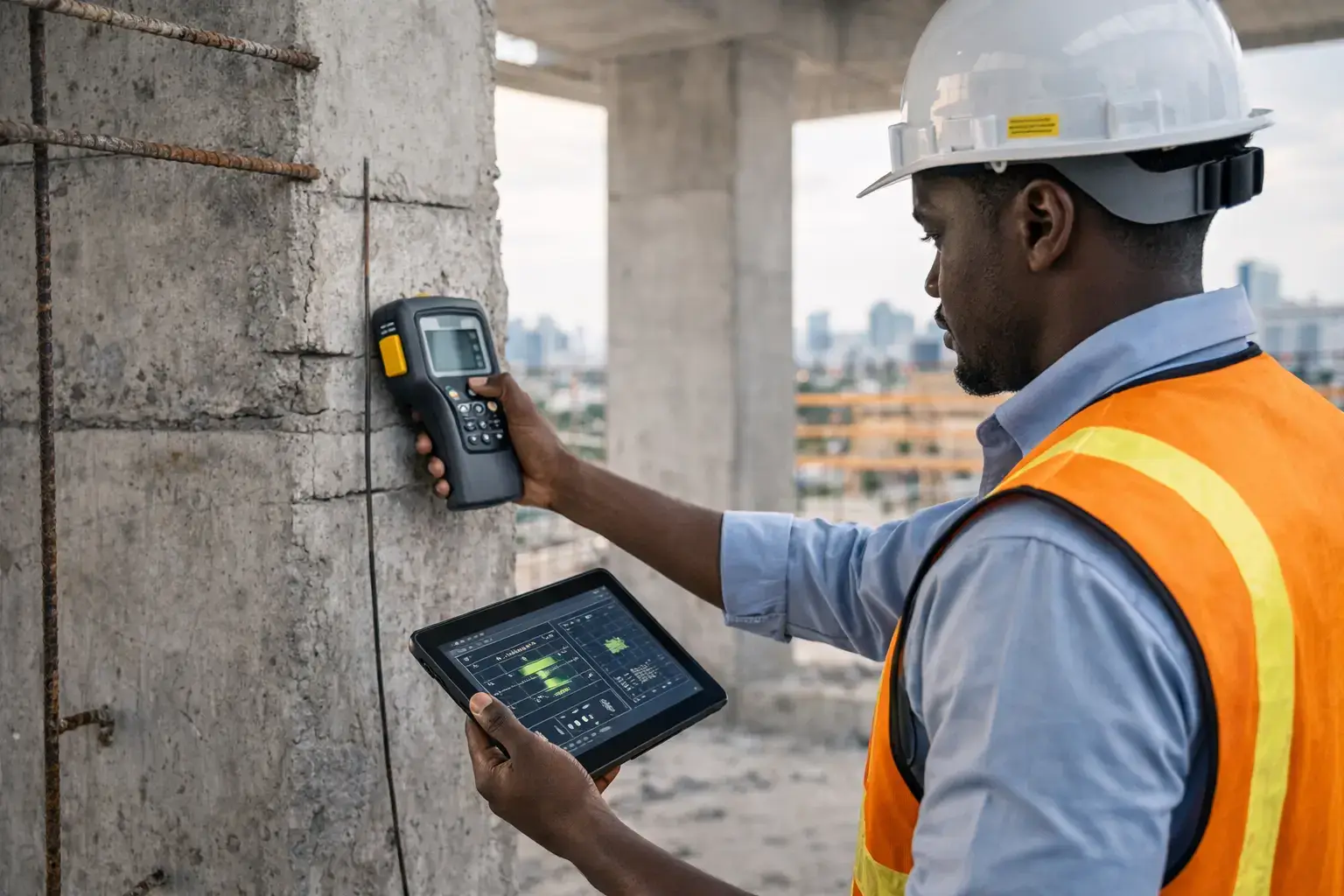
Non-Destructive Testing: Ensuring Structural Integrity in Kenya
Kenya’s rapidly evolving urban landscape, characterized by both ambitious new developments and an aging building stock, presents unique challenges for structural integrity. From the bustling high-rises of Nairobi to the coastal resilience demands of Mombasa, ensuring the safety and longevity of concrete structures is paramount. Non-Destructive Testing (NDT) emerges as a critical methodology, offering engineers the ability to assess the internal condition and properties of structural elements without causing damage. This proactive approach is indispensable for diagnosing existing issues, verifying construction quality, and making informed decisions regarding rehabilitation or demolition, ultimately safeguarding lives and investments across the Kenyan built environment.
Understanding Non-Destructive Testing (NDT) in Concrete Structures
Non-Destructive Testing (NDT) encompasses a suite of techniques designed to evaluate the properties of a material, component, or system without causing permanent damage. In the context of concrete structures in Kenya, NDT methods are invaluable tools for structural engineers undertaking audits, quality control assessments, or post-incident investigations. Unlike destructive methods such as core sampling, which provide precise data but compromise the structural element, NDT allows for extensive, non-invasive surveys, offering a broad understanding of a structure’s health.
The imperative for NDT in Kenya stems from several factors: the legacy of older buildings constructed under varying codes and supervision levels, the rapid pace of modern construction that sometimes outstrips rigorous quality assurance, and the environmental stresses unique to different regions. For instance, structures in coastal regions like Mombasa are susceptible to chloride ingress and carbonation, leading to rebar corrosion, while those in high-seismic zones or areas prone to expansive soils (like black cotton soils around Nairobi and Kajiado) may experience different forms of stress and cracking. NDT helps identify these vulnerabilities early, preventing catastrophic failures and extending service life.
Key applications of NDT in Kenyan concrete structures include:
- Pre-purchase structural assessment: Evaluating the condition of existing buildings before acquisition or major renovation.
- Quality assurance and control: Verifying concrete strength, cover, and rebar placement during construction projects, particularly crucial in areas like Kisumu where material quality can vary.
- Post-event damage assessment: Rapid evaluation of structures after incidents such as fire, flood (as seen in recent Kenyan flooding events), or minor seismic activity, to determine the extent of damage and residual strength.
- Structural audits for change of use: Assessing whether an existing structure can safely accommodate increased loads or altered functions.
- Deterioration mapping: Identifying areas of carbonation, chloride attack, voids, honeycombing, or delamination that could compromise structural integrity.
Beyond these, NDT aids in mapping reinforcement layout for future modifications, ensuring that new openings or service penetrations do not compromise critical structural members. By providing critical data on the internal state of concrete – including void presence, crack propagation, rebar location, and estimated strength – NDT empowers engineers to make data-driven decisions regarding the need for repair, rehabilitation, or, in extreme cases, controlled demolition. This comprehensive understanding is crucial for upholding safety standards and ensuring compliance with the Kenya Building Code and relevant engineering practices.
Ferroscan and Schmidt Hammer: Unpacking Key NDT Methods
Among the array of Non-Destructive Testing techniques available, the Ferroscan and Schmidt Hammer stand out as fundamental tools for assessing concrete structures in Kenya. Each method offers distinct insights, and often, their combined application provides a more comprehensive picture of a structure’s condition.
Ferroscan: Precision Rebar Mapping and Cover Assessment
The Ferroscan, specifically a cover meter or rebar detector utilizing pulsed eddy current and magnetic induction principles, is indispensable for accurately locating reinforcement bars (rebar), determining their diameter, and measuring the concrete cover depth. This device emits an electromagnetic pulse that interacts with the ferromagnetic properties of steel rebar. The resulting induced eddy currents are then detected and processed to provide precise data on the rebar’s position and characteristics.
In the Kenyan context, the Ferroscan is critical for several reasons. Firstly, it allows engineers to verify as-built drawings against actual construction, identifying discrepancies in reinforcement placement that could affect structural capacity. This is particularly vital in older buildings or projects where documentation might be incomplete or inaccurate. Secondly, it is crucial for assessing concrete cover, especially in environments prone to corrosion. In coastal cities like Mombasa, inadequate concrete cover (e.g., less than the 50mm typically required for exposed concrete in severe environments by the Kenya Building Code) significantly accelerates chloride ingress, leading to rebar corrosion and spalling. The Ferroscan can quickly map areas with insufficient cover, highlighting zones of high corrosion risk.
Furthermore, Ferroscan technology is invaluable before any invasive work, such as drilling for service penetrations or cutting for new openings. By precisely locating rebar, engineers can prevent accidental damage to critical reinforcement, which could otherwise compromise the structural integrity of beams, columns, or slabs. Modern Ferroscan devices offer real-time graphical displays, often generating 2D or 3D maps of rebar layouts, which greatly enhance clarity and decision-making. Typical accuracy for cover depth is within ±1mm for depths up to 100mm, and diameter estimation is generally within ±1 standard bar size. While it excels at rebar detection, it’s important to note that a basic Ferroscan primarily provides locational and dimensional data, not a direct measure of corrosion, though some advanced models can indicate corrosion potential.
Schmidt Hammer (Rebound Hammer): Estimating Concrete Compressive Strength
The Schmidt Hammer, or rebound hammer, is a simple yet effective NDT device used to estimate the compressive strength of concrete based on its surface hardness. The principle involves a spring-loaded hammer striking the concrete surface, and the rebound distance (or rebound number) is measured. Harder concrete surfaces result in a higher rebound number, which can then be correlated to an estimated compressive strength using empirical curves.
For Kenyan engineers, the Schmidt Hammer serves as an excellent initial screening tool. It is widely used for:
- Uniformity assessment: Quickly identifying areas of potentially weak or non-uniform concrete within a structure, such as variations in mix quality across a slab in Nairobi or inconsistent curing practices in Kajiado.
- Initial strength estimation: Providing a preliminary indication of concrete strength, particularly useful for existing structures where core samples might be impractical or too destructive for an initial assessment.
- Post-fire damage evaluation: Assessing the extent of concrete degradation on the surface after a fire, as heat exposure significantly reduces surface hardness.
However, it is crucial to understand the limitations of the Schmidt Hammer. The rebound number is influenced by several factors, including the surface condition (smoothness, moisture content, carbonation depth), age of concrete, type of aggregate (e.g., the harder volcanic aggregates common around Nairobi versus softer coral aggregates in coastal regions), and the angle of impact. Therefore, results must be interpreted cautiously and often require calibration curves specific to the local concrete mix. It provides an estimation of surface strength, not the definitive bulk compressive strength obtained from core samples. Best practice involves taking multiple readings (typically 9-12 per test area), calculating an average, and applying correction factors. It is often used in conjunction with other NDT methods or as a precursor to targeted core sampling in areas identified as potentially weak. When combined with Ferroscan data to ensure testing is conducted away from rebar, the Schmidt Hammer offers a cost-effective and rapid method for preliminary concrete strength assessment.
Technical Execution: Ferroscan and Schmidt Hammer NDT Protocols in Kenya
Non-destructive testing (NDT) of concrete structures in Kenya demands meticulous adherence to established protocols to ensure reliable data acquisition and accurate structural assessment. Cadreatech employs a rigorous methodology for both Ferroscan and Schmidt hammer testing, providing clients with actionable insights into their assets. These methods are invaluable for evaluating existing structures, identifying potential weaknesses, and planning targeted remedial interventions, from aging residential blocks in Nairobi to critical infrastructure along the Mombasa coastline.
The Ferroscan, specifically a Hilti PS 200 or similar high-precision rebar detection system, operates on the principle of eddy current and magnetic induction. It is deployed to accurately determine the location, diameter, and cover depth of reinforcing steel within concrete. This is critical in the Kenyan context where as-built drawings are often missing or inaccurate, and concerns over inadequate cover or misplaced rebar are prevalent, contributing to premature corrosion in humid environments or aggressive coastal zones. Our engineers calibrate the device meticulously on a known concrete block before commencing on-site surveys. Scanning is performed in a grid pattern, typically 300mm x 300mm or 500mm x 500mm, across critical structural elements such as beams, columns, and slabs. The data, including 2D images of rebar layout and statistical analysis of cover depth, is then downloaded and processed using proprietary software to generate detailed reports. A common application involves investigating a slab in a high-rise in Upper Hill, Nairobi, where future modifications require knowledge of rebar positioning to avoid cutting through critical reinforcement.
The Schmidt Rebound Hammer, conversely, provides a quick, non-invasive indication of the surface hardness and indirectly, the compressive strength of concrete. This test is based on the principle of an impact energy being absorbed by the concrete surface. The rebound value, ranging from 10 to 100, is measured, and standard correlation curves (often derived from local concrete mixes and aggregates) are used to estimate the characteristic compressive strength. Our Cadreatech engineers ensure the hammer is held perpendicular to the test surface, and a minimum of 9-12 readings are taken within a 300mm x 300mm grid, with the highest and lowest 20% of readings discarded to mitigate localized surface anomalies. This process is repeated across multiple test points to provide a statistically significant average. For instance, assessing a bridge deck in Kisumu might involve hundreds of rebound hammer readings to map out variations in concrete quality across its span. It is crucial to note that the Schmidt hammer provides an index value, and for definitive strength determination, core sampling and laboratory testing remain the gold standard, often used to validate the hammer results or in cases where the hammer indicates significant deviations.
Step-by-Step NDT Assessment Process (Ferroscan & Schmidt Hammer Integration)
- Initial Site Reconnaissance and Scope Definition: Cadreatech engineers conduct a preliminary site visit to understand the structure’s history, identify areas of concern (e.g., visible cracks, deflections, spalling), and define the specific objectives of the NDT. This determines the number and location of test points. For example, assessing a multi-storey car park in Mombasa requires specific focus on areas exposed to salt spray.
- Surface Preparation: Test surfaces must be clean, dry, and free from loose material, paint, or plaster that could interfere with sensor readings or impact hammer rebound. Light grinding may be required for heavily carbonated or deteriorated concrete surfaces.
- Grid Layout and Marking: Precise grids are marked on the concrete surface using chalk or non-permanent markers. These grids ensure systematic data collection and allow for accurate mapping of results, crucial for large-scale assessments such as a warehouse floor in Athi River, Kajiado County.
- Ferroscan Data Acquisition: The Ferroscan device is systematically moved across the marked grids. Real-time data on rebar location, diameter, and cover depth is captured and stored. Multiple scans, often perpendicular to each other, enhance accuracy, especially in areas with dense reinforcement.
- Schmidt Hammer Testing: Following Ferroscan, or on designated areas, the Schmidt hammer is applied. Multiple impacts are performed at each test point, ensuring perpendicularity and consistent pressure. Readings are logged directly into a field sheet or a digital data logger.
- Environmental and Concrete Condition Logging: Throughout the testing, ambient temperature, humidity, and visible concrete conditions (e.g., crack patterns, signs of corrosion, presence of repairs) are meticulously recorded, as these factors can influence test results.
- Data Download and Post-Processing: Raw data from both instruments is downloaded to a computer. Specialized software is used to analyze Ferroscan data for rebar visualization and cover statistics. Schmidt hammer readings are processed to calculate average rebound values and estimate compressive strengths using calibrated conversion charts.
- Reporting and Interpretation: A comprehensive technical report is prepared, detailing the methodology, raw data, processed results, interpretations, and engineering recommendations. This includes 2D rebar maps, cover depth histograms, estimated strength profiles, and an assessment of structural integrity based on the NDT findings.
Investment and Value: Understanding NDT Costs and Benefits in Kenya
Engaging professional Non-Destructive Testing (NDT) services represents a critical investment in the longevity, safety, and operational efficiency of any concrete structure across Kenya. The expenses associated with Ferroscan (rebar mapping) and Schmidt hammer (surface hardness) testing are highly variable, shaped by the scale of the project, the accessibility of the test areas, the required depth of analysis, and the urgency of the situation. Cadreatech strives for transparency in its fee structures, ensuring clients clearly understand the exact scope of work corresponding to their investment.
Levels of NDT Assessment
The scope and nature of an NDT engagement typically fall into one of three categories, depending on the building’s needs and the complexity of the evaluation:
Small-Scale Projects: This basic scope typically covers a handful of critical elements, such as assessing a few columns or a localized slab area in a residential building. It provides initial, localized insights into specific structural integrity concerns and includes a basic technical report.
Comprehensive Engagements: A standard, more thorough assessment encompasses multiple structural elements across an entire floor or a significant section of a larger building—such as an office block or an industrial warehouse. This level of service includes detailed mapping, statistical analysis of results, and an extensive report complete with engineering recommendations.
Large-Scale or Complex Audits: This advanced scope involves full structural audits of multi-storey buildings, bridges, or extensive infrastructure. These projects require several days of intensive site work, advanced data interpretation, and detailed modeling of the internal reinforcement. They are often used to inform major rehabilitation designs for large public facilities or marine structures exposed to harsh environmental factors.
What the Fees Cover
The investment primarily covers the professional services of qualified engineers, the deployment of calibrated diagnostic equipment, data acquisition, processing, and the generation of a comprehensive technical report.
Please Note: Base fees typically exclude costs for extensive surface preparation (such as heavy scabbling to expose clean concrete), core drilling for laboratory strength validation, or specialized access equipment rentals (like cranes, scaffolding, or cherry pickers), which are handled as separate project specifics.
The Value Proposition
The long-term value of NDT far outweighs the initial service costs. Skipping professional testing can lead to catastrophic consequences, both financially and in terms of human safety.
For instance, attempting renovations or structural modifications without understanding the existing rebar layout or concrete strength introduces extreme risk. An unanticipated cut through a critical beam’s reinforcement can immediately compromise structural integrity, leading to massive repair bills, project delays, or sudden structural failure.
Similarly, failing to detect early concrete degradation—such as chloride ingress in coastal structures—allows rebar corrosion and concrete spalling (cracking and breaking away) to spread unchecked. Catching these issues early through NDT prevents minor degradation from escalating into widespread structural damage or requiring full, incredibly disruptive element replacements.
What Has Happened (Without NDT)
- Unforeseen Structural Issues: Discovery of inadequate rebar cover or poor concrete quality only after demolition or visible failure, leading to costly redesigns and delays.
- Safety Hazards: Compromised structural integrity due to uninformed modifications or undetected deterioration, posing risks to occupants and the public.
- Reactive, Expensive Repairs: Emergency repairs for spalling concrete or failing elements, often at a higher cost due to urgency and limited options.
- Project Delays and Cost Overruns: Construction or renovation projects halted due to unexpected structural challenges, incurring penalties and extended timelines.
- Legal and Reputational Risks: Liability issues arising from structural failures or non-compliance with building codes.
What Should Happen (With Cadreatech NDT)
- Proactive Risk Mitigation: Early identification of structural deficiencies (e.g., low strength, inadequate cover, corrosion risk), allowing for planned, cost-effective interventions.
- Informed Decision-Making: Accurate data on rebar layout and concrete quality guides safe structural modifications, renovations, and extensions.
- Optimized Maintenance Planning: Targeted repairs based on detailed condition assessment, extending service life and reducing lifecycle costs.
- Enhanced Safety and Compliance: Assurance that structures meet design and safety standards, protecting lives and investments.
- Cost Efficiency: Avoidance of costly surprises, emergency repairs, and project delays through preventative analysis and strategic planning.
A comprehensive NDT report from Cadreatech typically includes a detailed executive summary, methodology, site observations, a clear presentation of raw and processed data (e.g., rebar maps, cover depth histograms, strength estimation tables), a discussion of findings, and actionable engineering recommendations. This structured approach empowers clients, from developers in Nairobi to facility managers in Nakuru, to make informed decisions regarding their assets, ensuring structural integrity and long-term value.
Risks, Compliance, and Case Context in Kenyan Structural Assessment
The decision to forgo Non-Destructive Testing (NDT) in structural assessments carries significant, often underestimated, risks for property owners, developers, and the public in Kenya. While the immediate cost of an NDT survey might seem an additional expenditure, it pales in comparison to the potential liabilities and catastrophic consequences of structural failure. Unseen defects, whether from poor initial construction, material degradation, or environmental stressors, can compromise a building’s integrity, leading to premature deterioration, costly repairs, or even collapse.
In Kenya’s rapidly evolving urban landscapes, particularly in areas like Nairobi, Mombasa, and Kisumu, structures are increasingly subjected to changed use, vertical extensions, or simply the ravages of time and climate. Without NDT, engineers rely heavily on visual inspections, which are inherently limited to surface-level observations. Critical internal flaws such as insufficient concrete cover, misplaced or missing reinforcement, voids, honeycombing, or advanced rebar corrosion remain undetected. For instance, in a coastal city like Mombasa, chloride ingress due to salt spray is a major concern. Ferroscan can accurately map rebar cover and identify areas of low cover, which are highly susceptible to corrosion. Skipping this step means potentially overlooking widespread rebar degradation, where a structure might look sound externally but is internally compromised, leading to sudden spalling or even collapse under load.
From a compliance standpoint, while the specific mandate for NDT might not be explicitly detailed in every clause of the antiquated Kenya Building Code (1968), the overarching professional responsibility of engineers, as stipulated by the Engineers Board of Kenya (EBK), demands due diligence in ensuring public safety. An EBK-registered engineer is ethically bound to employ all necessary tools and methodologies to accurately assess the structural integrity of a building, especially when alterations are proposed or distress is evident. NDT methods like Ferroscan and Schmidt hammer provide quantitative data that substantiates engineering judgments, offering a defensible basis for design decisions or remedial recommendations. For new constructions, NDT can act as a crucial quality control measure, verifying that as-built conditions meet design specifications, thereby mitigating future disputes and ensuring longevity. For existing structures, a comprehensive NDT report often forms a mandatory component of submissions to county planning departments for approval of rehabilitation or extension projects, particularly in densely populated areas like Nairobi where structural stability of adjacent properties is a constant concern.
When expanding or assessing an existing property, guesswork poses a severe risk to both human life and financial stability. Utilizing Non-Destructive Testing (NDT) transitions structural decisions from speculation to precise science, whether you are planning an vertical extension or evaluating post-incident damage.
Structural Extensions: Planning Vertical Growth Safely
Adding new levels to an older, multi-storey residential building requires a flawless understanding of its existing structural capacity. Without diagnostic testing, calculating whether the current framework can handle the new weight is impossible.
Ferroscan Surveys: Precisely map the internal reinforcement within critical columns and beams. This provides exact data on rebar diameter, spacing, and the depth of the concrete cover protecting the steel.
Schmidt Hammer Tests: Estimate the concrete’s actual compressive strength on-site.
This combined data is indispensable. It gives structural engineers the empirical evidence they need to accurately calculate remaining load-bearing capacity and safely design the building’s extension. Investing in this data upfront represents a minor fraction of the overwhelming expenses—such as reconstruction, legal liabilities, and permanent reputational ruin—that follow a structural collapse.
Post-Incident Damage Assessment
Following an emergency—such as a localized fire, a vehicle impact, or minor seismic activity—the true extent of structural damage is frequently invisible to the naked eye. An impact to a ground-floor column can induce internal micro-cracks or delamination (the separation of concrete layers) that can easily go unnoticed.
Ultrasonic Pulse Velocity (UPV): Used alongside rebar mapping and surface hardness tests to send sound waves through the concrete, successfully detecting internal voids, deep cracks, or hidden pockets of degraded concrete.
Crack Classification: Engineers use NDT to precisely categorize crack widths—ranging from minor hairline fractures to wide, structural splits. This allows them to identify the underlying cause of the distress.
By mapping the internal state of the material, property owners can deploy targeted, precise repair strategies rather than resorting to incredibly expensive, speculative over-engineering.
Project Timeline & Key Deliverables
An NDT intervention is streamlined to provide rapid, actionable insights so that project delays are kept to a absolute minimum.
On-Site Testing: Typically completed within a few days for critical structural elements.
Engineering Report: A detailed analysis is generally compiled and delivered within a couple of weeks.
What the Deliverables Include:
Rebar Cover Maps: Layouts showing how deeply the steel is embedded.
Steel Specifications: Comprehensive reports detailing exact rebar diameters and structural spacing.
Concrete Quality Profiles: Certified estimates of the concrete’s compressive strength.
Structural Integrity Assessment: An overarching engineering evaluation crucial for informed, data-driven decision making.
Frequently Asked Questions
How accurate are Ferroscan and Schmidt hammer results?
Ferroscan devices offer a high degree of accuracy for determining rebar cover, diameter, and layout. For cover depth, the accuracy is typically within +/- 1-4mm, depending on the depth and the diameter of the rebar. Rebar diameter estimation is usually accurate to within one standard bar size (e.g., D12 vs D16). These results can be influenced by factors such as the presence of magnetic aggregates in the concrete or multiple layers of reinforcement, but experienced operators and advanced models account for these. The Schmidt hammer, on the other hand, provides a rebound number that correlates to the surface hardness of the concrete. This rebound number is then converted to an estimated compressive strength using empirical calibration curves. While it’s a valuable tool for identifying areas of varying concrete quality and estimating strength, its accuracy is generally considered to be within +/- 15-20% compared to destructive core tests. Both methods are most effective when used comparatively across a structure and often complemented by a limited number of destructive tests for calibration and verification, especially when precise strength values are critical.
When should I consider NDT for my building in Kenya?
You should consider NDT for your building in Kenya in several critical scenarios to safeguard your investment and ensure safety. This includes pre-purchase assessments of older properties to understand their structural health, especially in dynamic real estate markets like Nairobi. Any plan for major renovations, vertical or horizontal extensions, or a change in the building’s use (e.g., residential to commercial) necessitates NDT to confirm the existing structure’s capacity. If you observe any signs of structural distress such as cracks, spalling concrete, excessive deflection, or leaning elements, NDT can pinpoint the underlying causes. Post-incident assessments after events like fires, vehicle impacts, or minor tremors also require NDT to quantify internal damage. Furthermore, NDT serves as a vital quality control tool during new construction to verify that the installed reinforcement and concrete quality meet design specifications, preventing costly rectifications later. For older public or commercial buildings, routine structural audits incorporating NDT are essential for long-term asset management and public safety compliance.
Can NDT replace concrete core testing for strength?
No, NDT methods like the Schmidt hammer cannot entirely replace concrete core testing for definitive compressive strength determination. The Schmidt hammer provides an estimate of concrete compressive strength based on the surface hardness, which is influenced by numerous factors including the age of concrete, moisture content, and aggregate type. Concrete core testing, being a destructive method, involves extracting cylindrical samples from the actual structure and testing them under controlled laboratory conditions, yielding the most accurate measure of in-situ compressive strength. NDT methods are invaluable for screening large areas efficiently, identifying zones of potentially weaker concrete or inconsistency, and reducing the number of cores required. This approach significantly minimizes damage to the structure and reduces overall assessment costs. Therefore, NDT and core testing are complementary: NDT guides where to take cores, making the destructive testing more targeted and cost-effective, while cores provide the precise strength data needed for critical structural analysis.
What specific information does a Ferroscan report provide that is critical for structural engineers?
A comprehensive Ferroscan report provides several critical pieces of information indispensable for structural engineers. Firstly, it accurately maps the rebar cover depth, which is crucial for assessing corrosion risk, especially in coastal areas like Mombasa, and for fire resistance calculations. Secondly, it determines the rebar diameter and spacing, allowing engineers to verify if the installed reinforcement matches the original design specifications. This is vital for accurately calculating the actual moment capacity and shear resistance of structural elements. Thirdly, the report can reveal the layout of reinforcement, identifying instances of missing bars, incorrect lap lengths, or non-compliance with structural drawings. It can also detect multiple layers of reinforcement and their approximate depths, which is important for complex designs. While not a direct corrosion measurement tool, Ferroscan data can indirectly inform on corrosion by identifying areas of insufficient cover that are prone to chloride ingress. This detailed data empowers engineers to perform precise structural analysis, accurately calculate remaining load-bearing capacities, and design effective, targeted strengthening or repair schemes with confidence.
Contact Cadreatech for Expert NDT Services in Kenya
Ensure the integrity and safety of your structure with Cadreatech’s specialized Non-Destructive Testing (NDT) services. Our team of experienced engineers utilizes advanced Ferroscan and Schmidt hammer technologies to provide accurate and reliable structural assessments across Kenya. From quality control on new builds to detailed audits of existing structures, trust Cadreatech for unparalleled technical expertise and actionable insights.
Reach out to us today for a consultation:
- Phone: +254 719 532 233
- Email: info@Cadreatech.com
- Website: Cadreatech.com
Your structural integrity is our priority.
Key Takeaways
Understanding the structural integrity of your assets is paramount in Kenya’s dynamic construction landscape. Non-destructive testing (NDT) methods like Ferroscan and Schmidt hammer provide invaluable, non-invasive insights without compromising the structural elements. These technologies empower engineers and property owners to make informed decisions regarding maintenance, rehabilitation, and safety. Here are the key lessons from our discussion on leveraging NDT for robust engineering decisions and asset management in Kenya:
- NDT is Essential for Kenyan Structures: Ferroscan and Schmidt hammer are vital for assessing existing concrete structures, identifying hidden defects, and verifying as-built conditions without compromising structural integrity. This is crucial for ensuring safety, compliance, and longevity of buildings and infrastructure across Kenya, from the high-rises of Nairobi to the coastal developments of Mombasa.
- Ferroscan’s Precision in Rebar Mapping: Utilise Ferroscan for precise mapping of rebar location, cover depth, and bar diameter. This data is critical for accurate structural analysis, safe planning of renovations or penetrations, and evaluating corrosion risk, especially in older Kenyan buildings where original structural drawings may be unavailable or incomplete.
- Schmidt Hammer for Rapid Strength Estimation: Employ the Schmidt hammer for rapid, non-invasive estimation of concrete compressive strength. It provides quick, indicative insights into concrete quality, serving as an essential preliminary screening tool that guides further, more intensive investigations and helps ensure compliance with design specifications on site.
- Proactive Risk Mitigation: Implementing NDT proactively helps identify potential structural weaknesses, material degradation (such as carbonation or chloride ingress, particularly prevalent in coastal regions like Kilifi and Kwale), and inadequate reinforcement before they escalate into costly repairs or catastrophic structural failures. This preventative approach is far more economical and safer.
- Informed Decision-Making: NDT results provide engineers, developers, and property owners with objective, data-driven insights. This enables informed decisions regarding structural maintenance, rehabilitation strategies, or demolition, thereby optimising budgets, extending asset lifespans, and ensuring regulatory compliance within the Kenyan context.
- Expert Interpretation is Key: The accuracy, reliability, and ultimate utility of NDT data depend significantly on expert interpretation. Engaging qualified structural engineers ensures that raw data from Ferroscan and Schmidt hammer tests is accurately analysed and translated into actionable recommendations aligned with local building codes, environmental conditions, and best engineering practices.
- Cost-Benefit Advantage: Investing in professional NDT services is a highly cost-effective alternative to destructive testing, which incurs significant repair costs, or the far greater financial and human cost of structural failure. NDT offers peace of mind, long-term savings, and enhanced safety for property owners, investors, and developers across all counties in Kenya.
Ensure Your Structure’s Integrity with Cadreatech
Don’t leave the safety and longevity of your investments to chance. Cadreatech offers comprehensive non-destructive testing services, including Ferroscan and Schmidt hammer assessments, backed by seasoned structural engineering expertise. Our team is equipped to provide precise diagnostics and actionable recommendations tailored to the unique challenges of the Kenyan built environment. Contact us today to schedule a consultation and safeguard your structural assets.
Contact Cadreatech for expert engineering consultancy in Kenya:
- Phone: +254 719 532 233
- Email: info@Cadreatech.com
- Website: Cadreatech.com
