
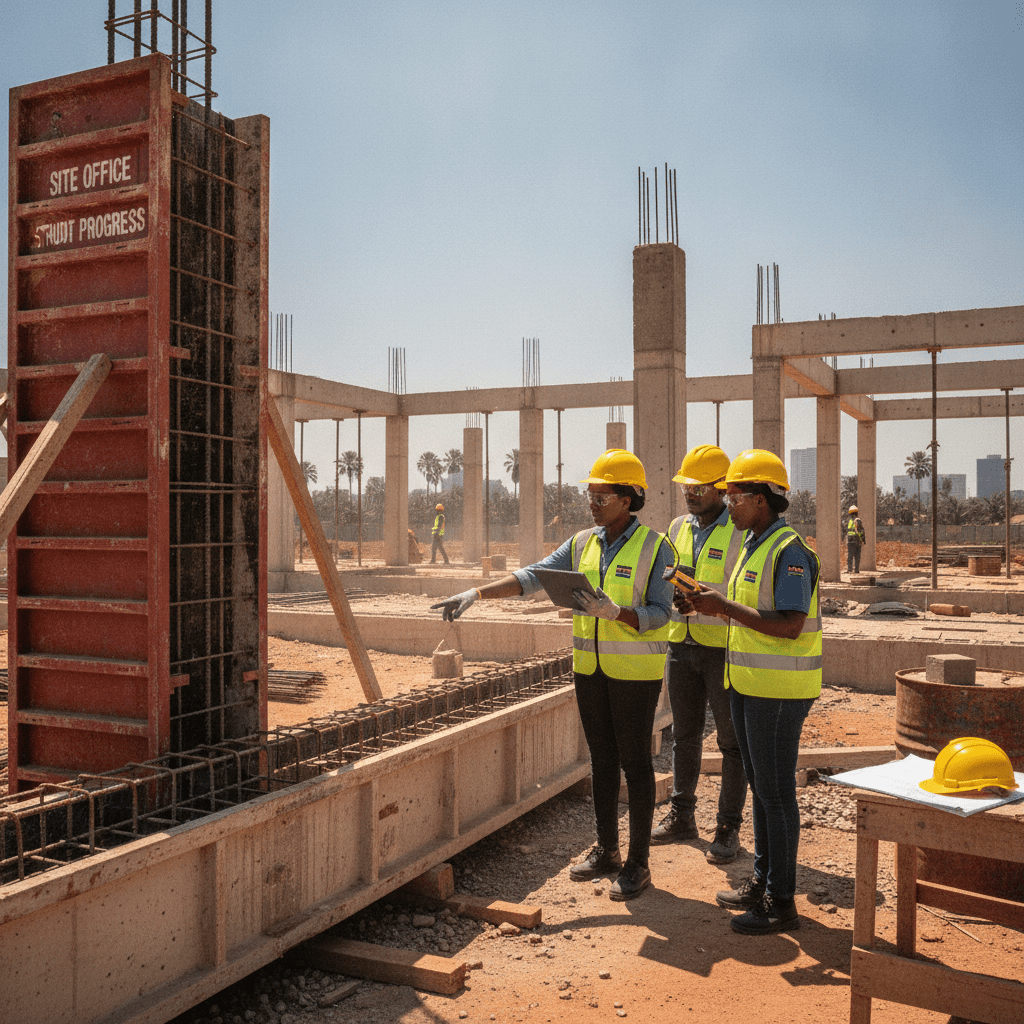
Structural Works Supervision: Engineer’s Site Obligations Under NBC 2024
The integrity and safety of any building project in Kenya hinge critically on robust structural works supervision. Without diligent oversight from a qualified structural engineer, even the most meticulously designed plans can be compromised during execution, leading to costly defects, delays, and, most critically, potential structural failure. As the construction landscape evolves, particularly with the anticipated stringent requirements of the National Building Code (NBC) 2024, the supervising engineer’s role transcends mere compliance, becoming the cornerstone of quality assurance and public safety. Cadreatech understands that navigating these obligations requires deep technical expertise and an unwavering commitment to engineering excellence.
The Imperative of Site Supervision: Beyond Compliance
Effective structural supervision is not merely a bureaucratic checkbox; it is a dynamic, proactive process essential for safeguarding the design intent, ensuring material quality, and verifying construction methodologies on-site. In Kenya, where diverse geological conditions and varying contractor capabilities exist, the supervising engineer acts as the client’s vigilant eyes and expert guide throughout the construction phase. For instance, in Nairobi’s rapidly developing urban areas, foundation work on challenging black cotton soils requires continuous monitoring to prevent differential settlement, a common cause of structural distress. Similarly, in Mombasa, the corrosive coastal environment demands strict adherence to concrete cover specifications and material selection to mitigate premature deterioration.
The consequences of inadequate supervision are far-reaching. They manifest as structural cracks, excessive deflections, water ingress, and in severe cases, partial or total collapse. Such failures not only endanger lives but also incur immense financial losses through expensive rectification works, legal disputes, and reputational damage. A common oversight observed in many Kenyan projects is the misplacement of reinforcement bars or insufficient concrete cover, which directly compromises the load-bearing capacity and durability of structural elements. Without regular, detailed site inspections, these critical errors can go unnoticed until it’s too late.
The supervising engineer’s role extends to verifying the correct interpretation of structural drawings, approving material samples, overseeing critical construction activities like concrete pouring and formwork removal, and ensuring that all works align with the specified quality standards and engineering principles. This proactive engagement mitigates risks by identifying and rectifying deviations before they become systemic problems. Choosing a competent and experienced structural engineering firm, such as Cadreatech, is paramount to ensuring this level of vigilance. A firm with a proven track record, like those detailed in our insights on choosing the right structural engineering firm in Nairobi, brings invaluable expertise and a meticulous approach to supervision. This commitment ensures that the structural integrity of your investment is upheld from groundbreaking to handover.
Skipping professional structural supervision, even for seemingly minor projects, invites significant risks. Common issues include improper compaction of backfill leading to settlement, incorrect rebar detailing affecting shear strength, and inadequate concrete curing resulting in reduced compressive strength. These seemingly small deviations accumulate, weakening the overall structure and potentially leading to catastrophic failures, often long after the contractor has left the site.
Key Obligations Under NBC 2024: A Detailed Framework
The National Building Code (NBC) 2024 is set to introduce a more rigorous framework for construction supervision in Kenya, placing enhanced responsibilities on structural engineers to ensure public safety and structural integrity. While specific clauses of the final gazetted NBC 2024 are awaited, the overarching principles emphasize meticulous documentation, stringent quality control, and a proactive presence on site. The engineer’s obligations will likely be compartmentalized into distinct phases, each requiring specific checks and approvals.
A core obligation involves the regular and systematic inspection of all structural elements. This includes, but is not limited to, foundations, columns, beams, slabs, and retaining walls. For foundations, especially in areas with expansive soils like parts of Kajiado or black cotton soils around Kisumu, the engineer must verify the excavation depths, bearing capacity, and the correct placement of blinding concrete and reinforcement cages before any concrete pour. For vertical elements such as columns, checks include rebar cage dimensions, lap lengths (typically 40-50 times the bar diameter for tension laps), stirrup spacing, and the plumbness of formwork.
During concrete operations, the supervising engineer must oversee the mix proportions, slump tests, pouring procedures, and proper compaction to eliminate voids. Post-pour, critical attention is given to curing methods and durations, which directly impact the concrete’s ultimate compressive strength. Cube tests, typically conducted at frequencies of 3 cubes per 50 cubic metres or per day’s pour (whichever is more frequent), must be witnessed and certified by the engineer, with results meticulously recorded. Any deviation from specified strengths necessitates immediate investigation and remedial action.
The NBC 2024 framework is expected to mandate a comprehensive reporting structure. This includes daily site diaries, weekly progress reports, and detailed inspection checklists. These documents serve as a critical audit trail, demonstrating due diligence and compliance. They also provide a factual basis for addressing any disputes or unforeseen challenges. For projects involving alterations or extensions, such as those discussed in our guide on engaging a structural engineer for renovation and extension in Kenya, the NBC 2024 will likely require even more stringent assessments of existing structural capacity and the impact of new loads. The engineer’s role here is to ensure that the new works seamlessly integrate with and do not compromise the original structure’s integrity.
The frequency of site visits will depend on the project’s complexity and the stage of construction. Critical stages, such as foundation pouring, major concrete pours, or the erection of precast elements, often necessitate continuous supervision. Regular site meetings with the contractor and client are also an integral part of the engineer’s obligations, facilitating clear communication and prompt resolution of site-specific issues.
| Structural Element | Key Supervision Checks Under NBC 2024 | Criticality |
|---|---|---|
| Foundations |
|
High – Direct impact on stability and settlement. |
| Columns & Walls |
|
High – Primary vertical load-bearing elements. |
| Beams & Slabs |
|
High – Horizontal load transfer and floor integrity. |
| Concrete Works |
|
Very High – Quality dictates structural strength and durability. |
The Engineer’s Mandate in Structural Works Supervision Under NBC 2024
Effective structural works supervision in Kenya is not merely an advisory role; it is a statutory obligation for a registered engineer under the National Building Code (NBC) 2024. This mandate ensures that the executed works strictly adhere to the approved structural drawings, specifications, and the highest standards of safety and quality. The engineer’s presence and oversight are critical from the initial ground-breaking through to the final finishes, mitigating potential structural failures that could have catastrophic consequences.
The NBC 2024 places a renewed emphasis on the engineer’s direct involvement in critical stages of construction. For instance, foundation inspections are paramount, especially in areas like Nairobi and Kisumu, which feature varied soil profiles including expansive black cotton soils or compressible clays. An engineer’s supervision during excavation ensures that the bearing strata match geotechnical report assumptions and that foundation dimensions and reinforcement are correctly implemented before concrete pouring. Deviations, such as inadequate depth or incorrect rebar cages, can lead to differential settlement, cracking, and ultimately, structural instability.
Beyond foundations, the supervision extends to the entire structural frame: columns, beams, slabs, and shear walls. This includes verifying the concrete mix design, ensuring proper placement and compaction to achieve specified compressive strengths (e.g., C25, C30 MPa), and confirming that reinforcement bar sizes, spacing, and cover are as per design. In coastal regions like Mombasa, the engineer must pay particular attention to concrete cover to mitigate chloride ingress and subsequent corrosion of reinforcement, a common issue impacting structural longevity. A structural engineer in Mombasa must account for the unique challenges of coastal construction, including the corrosive marine environment and specific wind loading considerations.
Skipping professional structural supervision, even for seemingly minor projects, introduces unacceptable risks. Unsupervised sites often exhibit poor workmanship, use of substandard materials, and unauthorized alterations to approved designs. These shortcuts might offer short-term cost savings but inevitably lead to structural deficiencies, premature deterioration, and significant long-term repair costs, not to mention the inherent danger to occupants. Compliance with the NBC 2024 and local county by-laws is not optional; it is a legal requirement for obtaining occupation certificates and ensuring public safety.
The specified concrete cover to reinforcement bars is a critical design parameter, particularly in aggressive environments. For internal elements in mild conditions, a minimum cover of 20mm might suffice, but for external elements exposed to weather, or elements in corrosive environments (like coastal areas), this can increase to 40mm or even 50mm. Deviations from these specifications significantly reduce the protective barrier against moisture and corrosive agents, leading to premature rebar corrosion and spalling of concrete. Cadreatech’s supervision includes meticulous checks using cover meters to ensure compliance.
Typical Structural Site Inspection Process
Cadreatech’s approach to structural works supervision involves a systematic, multi-stage process designed to ensure comprehensive oversight and compliance. This typically includes:
- Pre-Pour Formwork and Reinforcement Inspection: Before any concrete is placed, the engineer conducts a thorough inspection of the formwork for rigidity, alignment, and leak-tightness. Reinforcement bars are checked for correct diameter, spacing, lap lengths, cleanliness, and most critically, adequate concrete cover via spacers. This stage also verifies the correct placement of all embeds and services.
- Concrete Mix Design Verification: Reviewing the batching plant’s mix design report against specifications, including cement content, aggregate grading, water-cement ratio, and admixtures. On-site, the engineer verifies delivery tickets to confirm the correct mix is supplied.
- Concrete Placement Supervision: Monitoring the actual pouring process, ensuring proper compaction using vibrators, avoiding segregation, and verifying that concrete is placed without excessive free fall. This stage also involves conducting slump tests to confirm workability.
- Cube Sampling and Curing Monitoring: Taking concrete samples for cube tests (typically 3 cubes per batch/day) for laboratory compressive strength testing at 7 and 28 days. The engineer also advises and monitors proper curing methods (e.g., water curing, curing compounds) critical for strength development and durability.
- Post-Pour Inspection and Defect Identification: After formwork removal, inspecting the hardened concrete for surface defects such as honeycombing, cold joints, excessive cracking (classifying crack widths – e.g., hairline <0.1mm, minor 0.1-0.3mm, significant >0.3mm), and dimensional accuracy.
- Structural Element Handover and Certification: Upon satisfactory completion of a structural element or phase, the engineer provides a certification confirming compliance with design and standards. This forms a crucial part of the overall project documentation and eventual occupation certificate application.
- Reporting and Documentation: Maintaining detailed site diaries, inspection reports with photographic evidence, non-conformance reports (NCRs) for identified issues, and progress reports for stakeholders.

Critical Supervision Checkpoints and Deliverables for Compliance
The depth of structural supervision is dictated by the project’s complexity, scale, and specific site challenges. For instance, a multi-storey building in Nairobi’s Central Business District will demand more frequent and intensive supervision than a single-storey residential dwelling in Kajiado. However, the fundamental checkpoints remain consistent, focusing on ensuring structural integrity and longevity.
One of the most critical checkpoints involves the correct detailing and placement of reinforcement, particularly at beam-column junctions and slab supports. Errors in these areas, such as insufficient lap lengths, incorrect rebar curtailment, or inadequate anchorage, can severely compromise the structural system’s ability to resist seismic forces or heavy loads. Cadreatech employs engineers who are adept at interpreting complex rebar schedules and identifying such discrepancies on site, preventing future structural distress.
Another vital aspect is the quality of construction materials. While concrete strength is verified through cube tests, other materials like structural steel, masonry units, and timber must also meet specified standards. For structural steel, the engineer verifies mill certificates for yield strength and tensile strength. For masonry, compressive strength tests and absorption rates are critical, especially in areas prone to moisture, ensuring the walling system contributes effectively to the overall structural stability. This diligent material verification process is essential to ensure the entire building performs as designed.
The scope of structural supervision also adapts to specific project needs. For example, in renovation and extension projects, an initial structural assessment is crucial to determine the load-carrying capacity of existing elements before new loads are applied. Understanding the load assessment process is key for any structural engineer involved in renovation and extension projects in Kenya, ensuring that the integrity of the existing structure is maintained and enhanced rather than compromised.
Key Supervision Stages and Deliverables
The following table outlines typical critical checkpoints and the associated deliverables from Cadreatech’s structural supervision services:
| Supervision Stage | Critical Checkpoints | Cadreatech Deliverables |
|---|---|---|
| Foundation Works |
|
|
| Column/Wall Construction |
|
|
| Beam/Slab Construction |
|
|
| Material Verification |
|
|
The extent of supervision, including frequency of site visits and depth of reporting, is a function of the project’s scale, complexity, and specific structural systems. Larger, more intricate projects involving post-tensioned slabs or deep basements, for example, necessitate more intensive and specialized supervision. Similarly, sites with challenging ground conditions or located in high-seismic zones demand heightened vigilance. Cadreatech works with clients to define a supervision scope that aligns with their project’s unique requirements, ensuring optimal safety and compliance without unnecessary overhead. We encourage prospective clients to contact Cadreatech for a detailed discussion and tailored quotation based on their project’s specific needs and scope drivers.
Navigating Risks and Ensuring Compliance in Structural Works
Effective structural works supervision in Kenya is not merely about adhering to a checklist; it is an active risk mitigation strategy, critical for safeguarding investments and ensuring public safety. The National Building Code 2024 (NBC 2024) sets stringent requirements for structural integrity, material quality, and construction methodology. Without diligent supervision by a qualified structural engineer, projects face elevated risks ranging from latent defects to catastrophic failures, with significant legal and financial ramifications for all parties involved.
One of the most common pitfalls observed in Kenyan construction is the deviation from approved drawings and specifications, often driven by attempts to cut costs or accelerate timelines. This can manifest in substandard concrete mixes, inadequate reinforcement placement, or incorrect foundation depths. For instance, in areas with expansive black cotton soils, such as parts of Kajiado and Nairobi’s outskirts, foundations require specific design considerations to counteract soil movement. If supervision fails to ensure proper excavation, soil treatment, or raft slab construction as per design, differential settlement can lead to severe cracking and structural instability shortly after completion. Similarly, in coastal regions like Mombasa, the corrosive marine environment necessitates specific concrete covers, material selection, and protective coatings for reinforcement. A lack of rigorous supervision can lead to early onset of rebar corrosion, spalling concrete, and compromised structural longevity, a crucial aspect detailed further in our guide on structural engineering for coastal construction.
Compliance extends beyond the physical structure to documentation and regulatory approvals. The supervising engineer is responsible for verifying that all materials delivered to site meet specified standards and that critical construction stages, such as formwork striking or concrete pouring, are executed under controlled conditions. This includes reviewing test reports for concrete compressive strength (e.g., cube tests at 7 and 28 days), steel reinforcement tensile strength, and soil bearing capacity. Failure to maintain comprehensive site records and test data can lead to serious challenges during project handover, subsequent renovations, or in the event of a structural incident requiring forensic investigation. The legal framework in Kenya places a significant burden of responsibility on the supervising engineer to ensure the works are constructed safely and in accordance with the approved design and relevant codes.
Any deviation from the approved structural drawings, whether it’s altering beam dimensions, reducing steel reinforcement, or changing column layouts, can severely compromise the building’s stability. Such changes, if not reviewed and approved by the supervising structural engineer, can invalidate insurance, lead to regulatory penalties, and, most critically, result in structural failure. Always consult your engineer before making any modifications to the structural design on site.
Beyond the immediate construction phase, the implications of poor supervision can extend to property valuation, insurability, and future expansion possibilities. Buildings with documented structural deficiencies or a history of non-compliance become liabilities. Cadreatech’s approach to structural supervision integrates proactive risk identification with meticulous quality control, ensuring that every element, from foundation to roof, meets the highest standards of engineering excellence and regulatory compliance. This comprehensive oversight is paramount for projects in high-density urban centres like Nairobi and Kisumu, where multi-storey developments demand absolute adherence to structural safety protocols.
| Common Structural Risk Area | Consequence of Inadequate Supervision | Cadreatech’s Supervision Mitigation |
|---|---|---|
| Foundation Execution (e.g., depth, soil compaction) | Differential settlement, severe wall cracking, structural instability, costly underpinning. | Pre-pour inspections, soil test verification, compaction checks, approval of blinding concrete. |
| Reinforcement Placement (spacing, cover, laps) | Reduced load-carrying capacity, premature corrosion, concrete spalling, brittle failure. | Detailed rebar checks before concrete pour, cover block verification, lap length adherence. |
| Concrete Quality (mix design, curing) | Low compressive strength, increased permeability, durability issues, early deterioration. | Witnessing batching, slump tests, cube sampling, curing method verification and duration. |
| Structural Alterations Without Design | Overstressing existing elements, progressive collapse, non-compliance with NBC 2024. | Strict adherence to approved drawings, immediate halt of unapproved works, design review for modifications. |
Frequently Asked Questions
What is the typical duration for structural supervision on a project?
The duration of structural supervision is highly dependent on the project’s complexity, scale, and the contractor’s construction schedule. For a typical residential bungalow, supervision might span 3-6 months, focusing on critical stages like foundation, slab casting, and roof structure. Larger multi-storey commercial buildings in urban centres like Nairobi could require continuous supervision for 12-24 months or even longer, covering multiple floor slabs, complex transfer structures, and specialised elements. The engineer’s site visits are typically scheduled at critical hold points defined in the construction program, such as before concrete pours, after rebar fixing, and during major structural installations. The frequency of visits and overall duration are agreed upon at the project’s outset, tailored to ensure all critical structural activities receive expert oversight without unnecessary delays.
How does Cadreatech ensure compliance with NBC 2024 during supervision?
Cadreatech ensures compliance with NBC 2024 through a multi-faceted approach. Firstly, our engineers possess an in-depth understanding of the code’s requirements, including material specifications, design loads, and construction practices. We conduct thorough reviews of contractor’s proposed methods and materials against the approved design and NBC 2024. On-site, we perform detailed inspections at critical stages, verifying dimensions, reinforcement detailing (bar size, spacing, cover, lap lengths), concrete quality through slump tests and cube sampling, and adherence to formwork and shoring protocols. We also review and verify all relevant site documentation, including material delivery notes, test certificates, and daily progress reports. Any non-compliance is immediately flagged, documented, and corrective actions are mandated and followed up until resolution, ensuring that the final structure meets all regulatory and safety standards.
Ensure your structural engineer’s scope of work explicitly includes these critical supervision milestones:
- Foundation excavation and blinding level approval.
- Reinforcement steel fixing inspection for all structural elements (foundations, columns, beams, slabs).
- Concrete pour approval for each structural element, including slump test witnessing.
- Formwork and shoring inspection before concrete pouring.
- Verification of concrete cube sampling and 7/28-day test results.
- Assessment of structural integrity after formwork striking.
- Final structural completion inspection and certification.
Can an existing structure be supervised for compliance if it was built without proper oversight?
Yes, an existing structure can undergo a structural assessment to determine its compliance and integrity, even if it was initially built without adequate supervision. This process, often referred to as a structural audit or condition assessment, involves a detailed investigation by a qualified structural engineer. The assessment typically includes visual inspections for cracks, deflections, and signs of distress, non-destructive testing (NDT) such as concrete rebound hammer tests or ultrasonic pulse velocity (UPV) tests to estimate concrete strength, and potentially intrusive investigations like core sampling or rebar scanning to determine reinforcement details. Based on the findings, the engineer will prepare a comprehensive report outlining the structure’s current condition, identifying any deficiencies, and recommending remedial actions or strengthening measures required to bring it to a safe and compliant standard. This is particularly crucial for older buildings or those undergoing renovation and extension projects where original construction documents may be lacking.
What factors influence the scope of structural supervision services?
The scope of structural supervision services is influenced by several key factors, primarily the nature and scale of the project. A small residential house will have a different supervision scope compared to a multi-storey commercial building or a complex industrial facility. Factors include the structural system (e.g., reinforced concrete, steel, masonry), the complexity of the design, the type of materials used, and the site’s geological conditions. The client’s specific requirements, such as the desired frequency of site visits, the level of detailed reporting, and the need for witnessing specific tests, also play a significant role. Access challenges on site, the contractor’s experience level, and the overall project timeline can also affect the required intensity and duration of supervision. Cadreatech works closely with clients to define a tailored scope that ensures comprehensive oversight while optimising resources for each unique project.
Key Takeaways
- NBC 2024 as the Foundation: Adherence to the National Building Code 2024 is not merely a regulatory formality but the fundamental bedrock for ensuring the structural safety, stability, and longevity of any construction project in Kenya. Supervising engineers are mandated to interpret and enforce these provisions diligently, translating code requirements into practical site applications, from foundation design verification to final structural elements. This ensures that every structural component, from the footing to the roof, meets the prescribed strength, serviceability, and durability criteria, providing a robust framework against environmental stressors and operational loads.
- Engineer’s Unwavering Responsibility: The supervising structural engineer carries a profound legal and ethical obligation to safeguard public safety and the client’s investment. This responsibility extends beyond design review to active site engagement, meticulous inspection, and decisive intervention when deviations from approved plans or substandard workmanship are identified. Their professional stamp signifies a commitment to quality and compliance, acting as the primary guardian of the project’s structural integrity throughout the construction lifecycle.
- Proactive Site Presence and Inspection: Effective structural supervision necessitates consistent, scheduled, and unscheduled site visits. Engineers must conduct detailed inspections at critical construction stages—such as foundation excavations, reinforcement placement, formwork erection, and concrete pouring—to identify potential issues before they become irreversible defects. This proactive approach minimises costly rework, prevents structural failures, and ensures that all elements are constructed in strict accordance with the approved structural drawings and specifications from the ground up.
- Rigorous Documentation and Reporting: Comprehensive record-keeping is indispensable for transparent and accountable supervision. This includes daily site diaries, detailed inspection reports, photographic evidence, material test certificates (e.g., concrete cube tests, steel tensile tests), and formal communication logs for all instructions and non-conformance reports. Such documentation provides a robust audit trail, essential for dispute resolution, demonstrating due diligence, and facilitating future maintenance or renovation works.
- Mitigating Risks Through Quality Assurance: Structural supervision is a continuous quality assurance process designed to identify and mitigate risks associated with material quality, construction methods, and adherence to design specifications. By implementing stringent quality control checks and demanding corrective actions promptly, engineers prevent structural deficiencies that could compromise the building’s safety and serviceability over its lifespan. This includes verifying concrete mixes, rebar sizes and spacing, weld quality, and adherence to curing protocols.
- Long-term Value Beyond Compliance: Engaging a professional structural engineer for supervision delivers immense long-term value, extending far beyond simply meeting regulatory requirements. It ensures the structural resilience of the asset against seismic activity or extreme weather, reduces future maintenance and repair costs, enhances property value, and provides peace of mind regarding the safety of occupants. This investment in expert oversight is critical for sustainable development and the protection of both human life and capital.
- Navigating Complexities with Expertise: Kenyan construction sites often present unique challenges, from varying geotechnical conditions (e.g., expansive black cotton soils in Kajiado, corrosive coastal environments in Mombasa, or high water tables in Kisumu) to logistical constraints and local material variations. A seasoned structural engineer leverages their expertise to anticipate these complexities, provide pragmatic solutions, and ensure that construction proceeds without compromising structural integrity or project timelines, adapting designs and methods as necessary while maintaining code compliance.
Ensuring the structural integrity of your project in Kenya is non-negotiable. The complexities of the National Building Code 2024, coupled with the unique challenges of local site conditions, demand the unwavering attention and expertise of a dedicated structural engineer. Cadreatech provides comprehensive structural supervision services, ensuring that your investment is protected, compliance is met, and safety standards are not just achieved but exceeded. Our commitment to meticulous oversight, detailed reporting, and proactive problem-solving guarantees that your project’s structural elements are robust, resilient, and built to last, providing you with confidence in your construction venture.
Partner with Cadreatech for Expert Structural Supervision
Do not compromise on the safety and longevity of your construction project. Cadreatech’s team of experienced structural engineers is ready to provide the rigorous supervision your project demands, ensuring full compliance with NBC 2024 and optimal structural performance. Contact us today for a tailored consultation and quotation that addresses your specific project needs.
Phone: +254 719 532 233
Email: info@Cadreatech.com
Website: Cadreatech.com
