
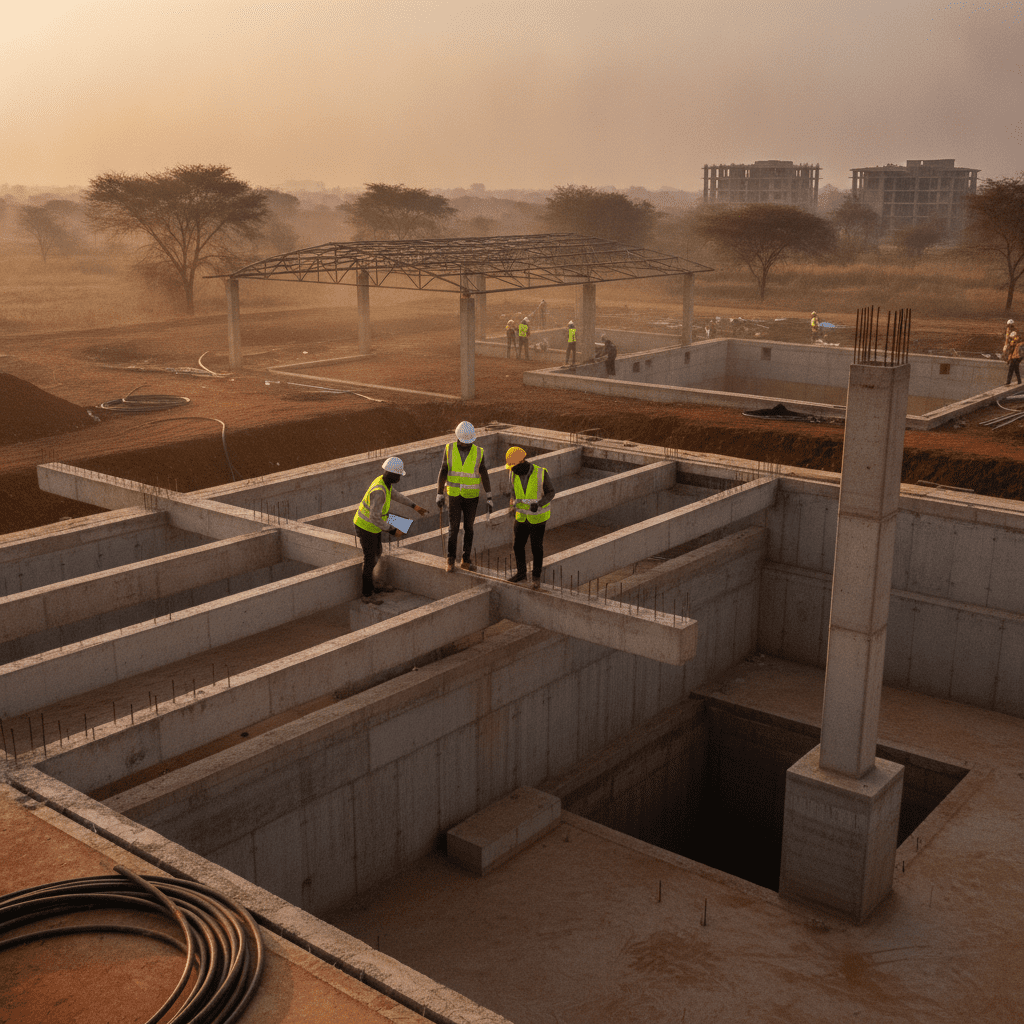
Swimming Pool Structural Design: Kenya Considerations
The increasing popularity of swimming pools across Kenya, from private residences in Karen to resort developments along the coast, underscores a critical need for robust and informed structural engineering. A swimming pool is not merely a contained body of water; it is a complex water-retaining structure subjected to significant hydrostatic pressures, dynamic loads, and intricate interactions with diverse ground conditions. Inadequate structural design or construction can lead to catastrophic failures, including leaks, cracks, differential settlement, and even collapse, posing severe safety risks and incurring substantial repair costs. Understanding the fundamental engineering principles, local soil characteristics, and specific loading conditions is paramount to ensuring the longevity, safety, and functional integrity of any swimming pool project in the Kenyan context.
Geotechnical Investigation and Site Preparation
The foundation of any successful swimming pool project in Kenya lies in a thorough geotechnical investigation. Kenya’s varied topography and geology present a wide array of soil conditions, each demanding specific engineering considerations. For instance, the expansive black cotton soils prevalent in parts of Nairobi, Kajiado, and western Kenya exhibit significant volume changes with moisture content fluctuations, leading to ground heave or settlement. Conversely, the murram soils common in central Kenya offer better bearing capacity but may still require careful assessment for stability and drainage. Coastal areas, such as Mombasa and Kilifi, often feature sandy soils with varying degrees of compressibility and susceptibility to groundwater influence.
A comprehensive geotechnical investigation typically involves drilling boreholes or excavating trial pits to depths well below the proposed pool base. Samples collected at various depths undergo laboratory testing to determine crucial parameters such as soil classification (e.g., clay, silt, sand, gravel), moisture content, Atterberg limits (for expansive soils), unconfined compressive strength, shear strength, and consolidation characteristics. The Standard Penetration Test (SPT) is commonly employed on-site to estimate soil density and bearing capacity, providing critical data for foundation design. For sites with potential for high water tables, particularly in low-lying areas or near water bodies like Lake Victoria in Kisumu, piezometers may be installed to monitor groundwater levels and inform hydrostatic uplift calculations.
Based on the geotechnical report, engineers can design an appropriate foundation system. This might range from a simple reinforced concrete raft slab on well-compacted, stable ground to piled foundations in areas with weak or highly compressible soils. Proper site preparation is equally vital, often involving excavation to design levels, removal of unsuitable material, and backfilling with engineered fill compacted to specified densities. In regions prone to expansive soils, measures like pre-wetting, chemical stabilisation, or the use of stiffened rafts or suspended slabs may be necessary to mitigate the effects of soil movement. Neglecting a detailed geotechnical assessment can lead to differential settlement, structural cracking, and compromise the waterproofing integrity of the pool shell, significantly reducing its lifespan and increasing maintenance burdens. A robust structural design relies heavily on accurate geotechnical data to ensure the long-term stability of the pool structure against ground-related stresses.
Building a swimming pool without a comprehensive geotechnical report is a critical oversight. It can lead to severe structural issues such as differential settlement, extensive cracking, and compromised waterproofing, all of which are costly and complex to rectify after construction. Always ensure a qualified professional conducts a detailed site investigation.
| Common Oversight in Pool Design | Recommended Practice for Kenyan Context |
|---|---|
| Generic structural drawings used for varying soil conditions. | Site-specific geotechnical investigation and customised structural design by a registered engineer. |
| Inadequate waterproofing layer or poor application. | Multi-layer waterproofing system (e.g., crystalline admixture, membrane, render) with rigorous quality control. |
| Ignoring hydrostatic pressure or buoyancy in high water table areas. | Incorporating hydrostatic relief valves and sufficient dead load or anchoring to counteract uplift forces. |
| Lack of proper expansion and construction joint detailing. | Careful placement and sealing of movement joints to prevent cracking due to thermal expansion and contraction. |
| Using standard concrete mixes without considering chemical resistance. | Specifying concrete with appropriate cement type and admixtures for resistance to pool chemicals and aggressive groundwater. |
Hydrostatic and Structural Loading Considerations
The structural design of a swimming pool must account for a complex interplay of forces, primarily hydrostatic pressures, dead loads, live loads, and seismic forces. Unlike typical building structures, a pool is designed as a water-retaining vessel, meaning its walls and floor must resist both the outward pressure of the contained water and, in some cases, the inward pressure of external groundwater. The primary load is the hydrostatic pressure exerted by the water within the pool, which increases with depth. This pressure dictates the required thickness and reinforcement of the concrete shell to prevent bowing, cracking, or failure.
Beyond the internal water pressure, external hydrostatic uplift can be a significant concern, especially in areas with high groundwater tables or during heavy rainfall seasons. If the groundwater level rises above the pool floor, it can exert an upward buoyant force on the empty or partially empty pool shell. Without adequate structural design to counteract this uplift, the pool can literally float out of the ground, causing severe damage to plumbing, finishes, and surrounding structures. Solutions include incorporating hydrostatic relief valves, designing a heavy enough concrete shell, or installing a drainage system around the pool to manage groundwater.
Dead loads include the self-weight of the concrete structure, finishes (tiles, plaster), and any permanent equipment (filtration systems, heaters). Live loads comprise the weight of occupants, surrounding deck areas, and any temporary fixtures. These loads, combined with the hydrostatic forces, determine the overall bending moments and shear forces that the reinforced concrete elements must withstand. The design must also consider dynamic loads from human activity, such as diving or splashing, which can momentarily increase localized pressures.
Furthermore, Kenya is located in an active seismic zone, particularly along the Great Rift Valley. Therefore, swimming pool structures must be designed to resist seismic forces as per relevant building codes. This involves detailing reinforcement to ensure ductility and prevent brittle failure during an earthquake. The interaction between the pool structure and the surrounding backfill material is also critical. Proper compaction of backfill is essential to provide uniform support and prevent differential settlement around the pool perimeter. The design process involves detailed calculations for bending moments, shear forces, and deflection, ensuring that the chosen concrete strength and reinforcement layout provide sufficient capacity for all anticipated load combinations. Integrating a pool’s structural requirements into the broader property development requires careful consideration, often impacting house plans and structural drawings for adjacent buildings.
The structural design of a swimming pool transcends simple aesthetics, focusing primarily on ensuring its integrity against various forces, including hydrostatic pressure, soil movements, and seismic activity. In Kenya, diverse geological conditions, from the expansive black cotton soils of Kajiado to the corrosive coastal environments of Mombasa, necessitate a meticulous design process. An engineer must consider the interaction between the pool structure and the surrounding ground, particularly for in-ground pools, where differential settlement can lead to significant cracking and leakage. For elevated or rooftop pools, the design must account for the substantial dead and live loads transferred to the building’s main frame, requiring careful integration with the overall structural system. This complex interplay of forces underscores the importance of a comprehensive Structural Design (Concrete, Steel, Timber and Masonry) approach, tailored to the specific site.
A robust design process typically follows these critical steps:
- Site Investigation and Geotechnical Analysis: This initial phase is paramount. It involves drilling boreholes to classify soil types, determine bearing capacity, identify the water table level, and assess potential for expansive or collapsible soils. For example, sites with black cotton soil require specialized foundation designs, such as raft foundations or piles, to mitigate the effects of volumetric changes due during wetting and drying cycles.
- Conceptual Layout and Hydraulic Integration: Collaborating with architects and M&E engineers, the structural engineer helps define the pool’s dimensions, depth, and overall geometry. Critical structural implications of overflow systems, skimmers, and filtration plant room placement are considered early to ensure seamless integration without compromising structural elements.
- Structural System Selection: Based on the site conditions and pool type (in-ground, semi-in-ground, elevated), the engineer selects the most appropriate structural system. Reinforced concrete is the predominant choice due to its versatility and watertight properties. Considerations include wall thickness, slab design (e.g., suspended slab for elevated pools, raft slab for in-ground), and joint detailing.
- Hydrostatic and Soil Load Calculations: Detailed calculations are performed to determine the forces acting on the pool structure. This includes the internal hydrostatic pressure of the water, external soil pressure, potential uplift forces from a high water table, and any imposed loads such as decking or equipment. Seismic loads, particularly in regions like parts of the Rift Valley, must also be incorporated.
- Reinforcement Design and Detailing: This step involves specifying the type, size, spacing, and cover of steel reinforcement bars (rebar). Double layers of reinforcement are common for pool walls and slabs to resist both internal and external pressures and to control cracking. Careful detailing around openings, corners, and movement joints is crucial to prevent stress concentrations. Concrete grades (e.g., C25/30) and slump requirements are also specified to ensure durability and workability for proper compaction.
- Waterproofing System Specification: An integral part of the structural design, the waterproofing system prevents water ingress and egress. This involves selecting appropriate materials such as crystalline admixtures for concrete, self-adhesive bituminous membranes, PVC liners, or cementitious coatings. The specification must detail surface preparation, application methods, and protection layers to ensure long-term performance.
- Construction Drawings and Specifications: Comprehensive structural drawings are prepared, showing all dimensions, reinforcement layouts, concrete specifications, and joint details. These drawings, along with detailed written specifications, guide the contractor through the construction process, ensuring adherence to the design intent and local building codes.
- Construction Supervision and Quality Assurance: Although not strictly a design step, ongoing supervision by the design engineer during critical construction phases (e.g., reinforcement fixing, concrete pouring, waterproofing application) is essential to verify compliance with the approved design and specifications.
The longevity and safety of a swimming pool structure are intrinsically linked to the thoroughness of the initial site assessment and the quality of materials selected. Neglecting these foundational aspects can lead to costly failures, extensive repairs, and potential safety hazards.
A comprehensive site assessment begins with a detailed geotechnical investigation. This is not merely a formality but a critical engineering exercise that informs the entire design. In Kenya, different regions present unique geotechnical challenges. For instance, in Nairobi and parts of Kajiado, the presence of expansive black cotton soils requires special attention. These soils swell significantly when wet and shrink when dry, leading to differential settlement if not properly accounted for in the foundation design. Engineers often specify deep foundations, such as bored piles extending to stable strata, or stiffened raft foundations designed to bridge over localized movements. Conversely, coastal areas like Mombasa and Kilifi may feature sandy soils with good bearing capacity but often have high water tables and are susceptible to chloride attack, necessitating concrete mixes with higher cement content, low water-cement ratios, and corrosion-resistant reinforcement. Kisumu, with its proximity to Lake Victoria, often deals with high water tables and soft silty clays, demanding careful dewatering strategies during construction and robust foundation solutions.
Material selection is equally crucial. For reinforced concrete pools, the concrete mix design must be specified to achieve adequate strength, durability, and impermeability. A minimum concrete strength class of C25/30 is generally recommended for pool structures, with specific requirements for water-cement ratio (typically not exceeding 0.5) and workability (slump) to ensure proper compaction around reinforcement. The use of waterproofing admixtures, such as crystalline or pore-blocking agents, directly within the concrete mix can significantly enhance its watertightness, forming an integral barrier against water penetration.
Reinforcement steel, typically Grade 460 (formerly High Tensile), must be correctly sized and spaced according to structural calculations. Adequate concrete cover to reinforcement is vital, especially in corrosive environments, to protect the steel from rust and subsequent spalling of the concrete. For coastal regions, considering epoxy-coated rebar or stainless steel reinforcement in critical sections can provide superior corrosion resistance, albeit at a higher material cost.
Waterproofing membranes form the second line of defense against leakage. The choice of membrane depends on the structural system, anticipated movements, and budget. Options include:
- Bituminous Membranes: Often torch-applied or self-adhesive, these are robust but require careful detailing at joints and penetrations.
- PVC/TPO Liners: Factory-fabricated or site-welded, these offer excellent flexibility and are suitable for structures with potential movement.
- Cementitious Coatings: Applied as a slurry, these are rigid but can bridge minor cracks and provide a durable surface.
- Crystalline Waterproofing: Reacts with concrete to form insoluble crystals, blocking pores and capillaries, often used in conjunction with other systems.
Skipping professional input in these critical stages can lead to catastrophic consequences. Inadequate geotechnical analysis might result in foundation failure due to unforeseen soil conditions, leading to severe cracking and structural instability. Poor material selection or improper concrete mix design can result in porous concrete, leading to persistent leaks, water loss, and damage to surrounding property. Non-compliance with structural detailing, such as insufficient reinforcement or inadequate concrete cover, can compromise the pool’s ability to resist hydrostatic pressures, potentially leading to a structural collapse. Such failures not only pose significant safety risks but also incur exorbitant repair costs and lengthy operational delays. Proper Retrofitting and Structural Strengthening might be required if these issues manifest post-construction, which is far more expensive than getting the design right initially.
The chosen waterproofing system must be compatible with the pool’s finish (tiles, paint, plaster) and able to withstand chemical exposure from pool water treatment. Detailing around pipe penetrations, expansion joints, and changes in section is paramount, as these are common points of failure for waterproofing systems. Each component, from the structural concrete to the final finish, must be considered as part of an integrated system designed to contain water safely and reliably for decades.
The structural integrity and longevity of a swimming pool in Kenya hinge significantly on meticulous design that anticipates local environmental conditions and adheres to regulatory frameworks. Overlooking these crucial aspects can lead to costly failures, safety hazards, and significant legal repercussions. Kenyan sites present unique challenges, from expansive black cotton soils to high water tables along the coast, each demanding specific engineering solutions to ensure a pool remains watertight and structurally sound for its intended lifespan.
One of the primary risks stems from inadequate geotechnical investigation. In regions like Kajiado County or parts of Nairobi, expansive black cotton soils are prevalent. These soils undergo significant volume changes with moisture variation, leading to differential settlement if foundations are not properly designed. A pool constructed on such soils without appropriate measures, such as deep strip foundations, raft slabs, or soil stabilization, is highly susceptible to cracking, which compromises its waterproofing and structural integrity. Conversely, sandy soils in coastal areas like Mombasa or Kilifi, often coupled with high water tables, introduce risks of buoyancy, erosion around foundations, and accelerated corrosion of reinforcement if not adequately protected.
Constructing a swimming pool based on generic or uncertified designs, or without the supervision of a registered structural engineer, carries substantial risks. These include catastrophic structural failure, persistent leaks, non-compliance with local building codes, and potential invalidation of property insurance. Such oversights can lead to extensive repair costs, legal liabilities, and significant safety hazards for users.
Compliance with Kenyan building regulations is non-negotiable for any permanent structure, including swimming pools. Before construction commences, a building permit must be obtained from the relevant County Government (e.g., Nairobi City County, Mombasa County). This process typically requires submission of architectural plans, structural design drawings, and sometimes environmental impact assessments, all endorsed by registered professionals. The structural drawings, specifically, must be signed and stamped by an engineer registered with the Engineers Board of Kenya (EBK). Failure to secure these approvals can result in stop orders, demolition notices, and heavy fines. Furthermore, the design must incorporate considerations for seismic activity, even though Kenya is not highly seismic, general structural stability under dynamic loads is a standard requirement.
The consequences of skipping professional engineering input are severe. A pool designed without proper analysis of hydrostatic pressures, soil bearing capacity, and material specifications is prone to failure. For instance, an improperly designed pool shell can crack under the immense pressure of water, leading to continuous leaks that damage surrounding structures, landscaping, and waste significant amounts of water. In coastal areas, inadequate design for corrosion protection can lead to premature degradation of steel reinforcement, compromising the pool’s long-term stability. Retrofitting or structural strengthening a failed pool is often far more complex and costly than investing in a robust initial design and construction, sometimes requiring complete demolition and rebuild. Understanding these complexities is essential for any property owner considering a pool installation.
Ensure a comprehensive geotechnical survey is conducted, a registered structural engineer prepares and certifies all structural drawings, and all necessary county building permits are secured before breaking ground. Confirm that the design accounts for specific site conditions, including soil type, water table, and local environmental factors.
The importance of selecting appropriate construction materials and methods cannot be overstated. For instance, using low-quality concrete or inadequate curing practices can lead to porous concrete, making the pool shell susceptible to water penetration and chemical attack from pool water. Proper concrete mix design, including waterproofing admixtures and careful placement, is crucial. Expansion joints and construction joints must be correctly detailed and sealed to accommodate thermal movements and prevent stress concentrations that could lead to cracking. In cases where existing structures need to accommodate a new pool, or an older pool requires rehabilitation, specialised retrofitting and structural strengthening techniques may be employed to ensure the long-term viability and safety of the installation.
| Common Oversight in Pool Design | Recommended Engineering Practice |
|---|---|
| Assuming uniform soil conditions across the site without testing. | Conducting thorough geotechnical investigations with boreholes and lab tests. |
| Underestimating external groundwater pressure on an empty pool. | Calculating hydrostatic uplift and designing for appropriate counter-measures like relief valves or drainage. |
| Using standard concrete mixes without considering water retention. | Specifying dense, low-permeability concrete with appropriate water-cement ratios and admixtures for water retention. |
| Inadequate reinforcement detailing for corners and openings. | Providing additional diagonal and perimeter reinforcement to manage stress concentrations. |
| Ignoring seismic design principles in active fault zones. | Incorporating seismic detailing for reinforcement and connections as per local building codes. |
| Poor compaction of backfill around the pool structure. | Supervising backfill operations to ensure specified material and compaction densities are achieved. |
The Design Process for Resilient Swimming Pools
| Common Oversight | Recommended Practice |
|---|---|
| Assuming uniform soil conditions across the site without investigation. | Conduct a comprehensive geotechnical survey to understand soil stratification, bearing capacity, and water table. |
| Using generic concrete mixes not optimized for watertightness or durability. | Specify a concrete mix with a low water-cement ratio, appropriate strength (e.g., C25/30), and consider integral waterproofing admixtures. |
| Inadequate concrete cover to reinforcement, especially in coastal or aggressive environments. | Ensure minimum concrete cover as per design codes (e.g., 50mm for ground contact) and consider corrosion-resistant rebar. |
| Relying solely on external plaster for waterproofing without a dedicated membrane system. | Incorporate a multi-layered waterproofing system, including integral concrete admixtures and a robust membrane (e.g., PVC liner, bituminous membrane). |
| Ignoring potential uplift pressures from a high water table during design. | Calculate uplift forces and design a foundation system with sufficient self-weight or anchoring to counteract these forces. |
Frequently Asked Questions
What makes soil testing crucial for swimming pool structural design?
Soil testing is paramount because the ground beneath the pool is its ultimate support. In Kenya, varying soil types, such as expansive black cotton soils in parts of Nairobi and Kajiado, or sandy, often water-saturated soils along the coast, behave differently under load and moisture changes. A geotechnical report provides critical data on soil bearing capacity, potential for settlement, and the presence of a water table. This information dictates the most suitable foundation type, whether deep piles, raft foundations, or reinforced strip footings, ensuring the pool structure is stable and protected against differential settlement, which is a leading cause of structural cracking and leaks.
What are the key elements of effective swimming pool waterproofing?
Effective swimming pool waterproofing typically involves a multi-pronged approach to create an impenetrable barrier against water egress and ingress. This begins with a dense, high-quality concrete shell, often incorporating crystalline waterproofing admixtures during the mixing stage. This is followed by the application of a flexible, durable waterproofing membrane or render system on the interior surface of the shell. Critical areas like pipe penetrations, construction joints, and expansion joints require specific detailing and robust sealing using waterstops and specialized sealants. Thorough surface preparation and careful application by experienced personnel are essential to ensure the integrity of the waterproofing system, preventing leaks and protecting the reinforced concrete.
How does structural design prevent swimming pool leaks?
Structural design plays a fundamental role in preventing pool leaks by ensuring the concrete shell is robust enough to resist all anticipated loads without cracking. This involves careful calculation of reinforcement steel quantity, size, and spacing to control crack widths within acceptable limits, even under hydrostatic pressure and thermal stresses. Proper design of construction joints and expansion joints, incorporating waterstops, is vital to accommodate movement and prevent water passage. Additionally, specifying high-quality, impermeable concrete mixes and ensuring correct concrete cover for reinforcement protects against corrosion, which could otherwise lead to concrete spalling and subsequent leaks. A well-designed pool maintains its structural integrity, thereby preserving its watertightness.
What permits are typically needed for building a swimming pool in Kenya?
In Kenya, the primary permit required for building a swimming pool is a building permit from the relevant County Government. This process involves submitting a comprehensive set of documents, including architectural drawings showing the pool’s location and dimensions, detailed structural drawings certified by a registered structural engineer, and sometimes a site plan and an environmental impact assessment report, particularly for larger or commercial installations. The County Building Control Department reviews these submissions to ensure compliance with local building codes and zoning regulations. Without these permits, construction can be halted, and penalties or demolition orders may be issued. It is crucial to obtain all necessary approvals before commencing any construction work.
Key Takeaways
- Thorough Geotechnical Investigation is Paramount: Prior to design, a detailed soil report is crucial to understand bearing capacity, groundwater levels, and potential for expansive soils like black cotton, directly influencing foundation design and hydrostatic considerations.
- Hydrostatic Pressure Requires Robust Design: Pools act as inverted tanks; thus, the structural design must account for significant uplift pressures from groundwater when empty and outward pressure from water when full, necessitating adequate slab thickness and reinforcement.
- Integrated Waterproofing is Non-Negotiable: Effective waterproofing, comprising both primary structural integrity and secondary membrane systems, is essential to prevent leaks, protect reinforcement from corrosion, and ensure the longevity of the pool structure.
- Reinforcement Detailing is Critical: Proper detailing of steel reinforcement, including adequate cover, lap lengths, and crack control measures, is vital to manage stresses from water loads, thermal expansion, and soil movement, especially in seismic zones.
- Consideration of Thermal and Environmental Loads: Design must accommodate thermal expansion and contraction of concrete, as well as environmental factors like UV radiation for exposed components and chemical resistance for internal finishes.
- Drainage and Backfill Quality are Key to Stability: Surrounding drainage systems must effectively manage surface and subsurface water to prevent saturation of backfill, which can exert undue pressure or compromise the pool’s foundation.
- Compliance with Local Standards and Best Practices: Adherence to Kenyan building codes and international best practices for concrete structures ensures safety, durability, and minimizes future maintenance issues for swimming pool installations.
- Engage Qualified Structural Engineers: The complex interplay of soil mechanics, hydraulics, and structural engineering principles demands expertise; therefore, a qualified structural engineer is indispensable for safe and compliant pool design and supervision.
Need Expert Guidance for Your Pool Project?
Ensure your swimming pool’s structural integrity and longevity with professional engineering oversight. From initial soil analysis to final waterproofing specifications, expert input is crucial for a safe and durable installation.
Contact a qualified structural engineering firm to discuss your project requirements and ensure compliance with all design standards.
Phone: +254 719 532 233
Email: info@Cadreatech.com
Website: Cadreatech.com
