

Demolition Engineering Plans: Kenya NBC Safety Guidelines
The demolition of a structure, while seemingly a destructive act, requires meticulous planning and rigorous execution to ensure safety, environmental protection, and compliance with national regulations. In Kenya, the National Building Code (NBC) provides a stringent framework for all construction and demolition activities, aiming to safeguard lives, adjacent properties, and public infrastructure. Uncontrolled or poorly planned demolition can lead to catastrophic failures, injuries, and significant legal repercussions. Therefore, a comprehensive demolition engineering plan, prepared by qualified professionals, is not merely a procedural step but a fundamental necessity for any project involving the dismantling of existing structures across urban centres like Nairobi, Mombasa, and Kisumu, or even in rapidly developing areas such as Kajiado.
From concept to site supervision, structural design should track your programme. Explore structural engineering Kenya, structural drawings & house plans, and recent Cadreatech projects.
The Mandate for Demolition Engineering Plans in Kenya
In Kenya, the process of demolishing any structure is governed by the National Building Code (NBC), which outlines specific requirements to ensure the safety of workers, the public, and surrounding properties. This mandate is not merely an administrative hurdle but a critical safeguard against the inherent risks associated with structural dismantling. Before any physical work commences, a detailed demolition engineering plan must be developed and approved by the relevant county authorities. This plan serves as a roadmap, detailing every step from initial site assessment to final debris removal, ensuring compliance with local bylaws and national standards.
The primary objective of this regulatory framework is to prevent uncontrolled collapses, mitigate environmental impact, and manage potential hazards such as asbestos, lead-based paints, or other harmful substances commonly found in older buildings. A qualified and registered engineer, typically a structural or civil engineer, is legally required to oversee the preparation of this plan. Their expertise ensures that the proposed demolition methodology is sound, takes into account the building’s structural integrity, and considers the proximity of neighbouring structures, utilities, and public access ways. For instance, demolishing a multi-storey building in a densely populated area of Nairobi’s CBD presents vastly different challenges and risks compared to dismantling a single-storey structure in a more rural setting.
The National Construction Authority (NCA) plays a crucial role in regulating construction and demolition activities, ensuring that only registered contractors with the requisite experience and equipment undertake such projects. Prior to submitting the demolition plan for county approval, a thorough pre-demolition survey is indispensable. This survey involves a comprehensive structural assessment of the building to be demolished, identifying its construction materials, structural system (e.g., reinforced concrete, steel frame, masonry), and any existing damage or deterioration. Furthermore, it must identify all utility connections (water, electricity, gas, sewer, telecommunications) that need to be safely disconnected or rerouted. This initial phase is critical for developing a safe and efficient demolition strategy.
| Pre-Demolition Assessment Type | Key Focus Areas |
|---|---|
| Structural Survey | Building materials, structural system, existing damage, stability, load-bearing elements. |
| Hazardous Materials Survey | Identification of asbestos, lead, PCBs, mercury, and other regulated substances. |
| Utility Disconnection Survey | Location and confirmation of safe disconnection for water, electricity, gas, sewer, and communication lines. |
| Environmental Impact Assessment (EIA) | Potential for dust, noise, vibration, soil contamination, and waste generation. |
| Adjacent Property Survey | Pre-demolition condition of neighbouring structures, shared walls, and boundary lines. |
Engineers should also conduct a detailed hazardous materials assessment, especially for buildings constructed before the year 2000, which may contain asbestos-containing materials (ACMs). The presence of such materials necessitates specialised handling, removal, and disposal procedures in strict accordance with National Environment Management Authority (NEMA) guidelines to prevent airborne fibre release and protect public health. The absence of a proper pre-demolition survey can lead to unforeseen complications, significant delays, and increased costs, not to mention severe safety risks.
Checklist Highlight: Essential Pre-Demolition Steps
- Obtain all necessary permits from county authorities. Refer to guidelines for county building plan approval Kenya.
- Engage a registered structural engineer to prepare the demolition plan.
- Conduct a comprehensive structural survey of the building and adjacent properties.
- Identify and safely disconnect all utility services (water, electricity, gas, sewer).
- Perform a hazardous materials assessment (e.g., asbestos, lead paint).
- Notify adjacent property owners and relevant public services.
- Establish a clear site safety and security plan.
The process for obtaining demolition permits is rigorous and requires submission of detailed engineering drawings and reports. This often includes a structural analysis report justifying the proposed demolition method, a waste management plan, and a comprehensive safety statement. Failure to adhere to these requirements can result in significant penalties, including fines, stop orders, and legal action, impacting project timelines and budgets. Ensuring compliance from the outset is paramount for any demolition project in Kenya, from residential structures in Kilimani to industrial facilities in Athi River.
Key Components of a Comprehensive Demolition Plan
A well-structured demolition engineering plan is a testament to professional due diligence and a critical document for ensuring a safe and compliant project. Beyond the initial surveys and regulatory approvals, the plan meticulously details the operational aspects of the demolition process. This includes the chosen demolition methodology, which must be appropriate for the structure’s type, location, and surrounding environment. For example, manual demolition might be suitable for smaller, isolated structures or specific sections requiring precision, while mechanical demolition using excavators with specialized attachments is common for larger, more robust buildings. In rare, highly controlled circumstances for very large, isolated structures, controlled implosion might be considered, though this is less common in Kenya due to urban density and the specialized expertise required.
The plan must specify the sequence of demolition, detailing how each structural element will be dismantled to maintain stability and prevent premature collapse. This is particularly crucial for multi-storey buildings where top-down demolition is typically employed, removing floors and structural members progressively. Temporary works, such as shoring, bracing, or scaffolding, must be designed and included to support unstable sections or protect adjacent structures during the process. For projects near sensitive infrastructure, like the railway lines in Mombasa or the busy roads of Kisumu, specific vibration monitoring and noise control measures must be integrated into the plan to mitigate potential impacts.
An equally vital component is the waste management plan. Demolition generates substantial volumes of waste, including concrete, masonry, steel, timber, and potentially hazardous materials. The plan must outline strategies for waste segregation at the source, recycling, reuse, and safe disposal in accordance with NEMA regulations. This not only minimises environmental impact but also often reduces overall project costs through material recovery. For instance, crushed concrete can be repurposed as aggregate for sub-bases in new construction or roadworks, a practice increasingly encouraged in Kenya’s drive towards sustainable construction. This aligns with principles discussed in Green Building Design in Kenya — Sustainable Construction, even in the context of deconstruction.
Safety protocols form the bedrock of any demolition plan. This section must cover worker safety, including personal protective equipment (PPE) requirements, fall protection, dust suppression, and emergency procedures. It must also address public safety, outlining measures such as hoardings, security fencing, warning signs, and traffic management plans to prevent unauthorised access and protect passersby. A detailed risk assessment, identifying potential hazards (e.g., falling debris, structural instability, utility strikes, fire, noise, dust) and outlining specific mitigation strategies, is mandatory. This includes provisions for continuous monitoring of structural stability of the remaining elements and adjacent properties throughout the demolition works. Regular site inspections, similar to those conducted during a periodic building inspection Kenya — five-year rule under NBC, should be scheduled to ensure adherence to the plan and address any unforeseen conditions promptly.
Warning: Consequences of Unplanned Demolition
Proceeding with demolition without a professionally prepared and approved engineering plan carries severe risks. These include uncontrolled structural collapses leading to fatalities or serious injuries, extensive damage to adjacent properties, environmental contamination from hazardous materials, and significant legal liabilities for
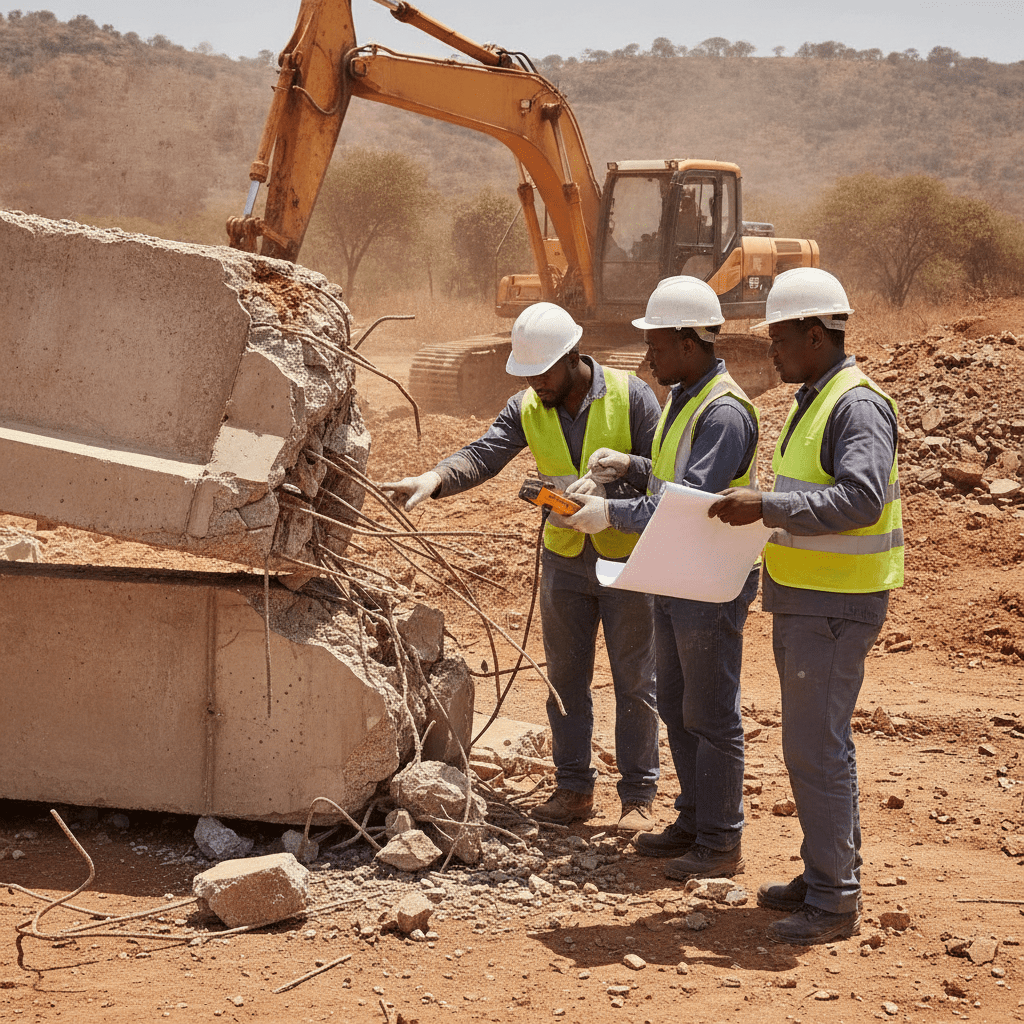
The Demolition Engineering Plan: Essential Components and Development
A comprehensive building demolition engineering plan is the cornerstone of a safe, compliant, and efficient project in Kenya. This plan, meticulously prepared by a qualified structural engineer, goes far beyond simply knocking down a structure. It is a detailed roadmap that anticipates challenges, mitigates risks, and ensures adherence to the National Building Code (NBC) and other local regulations. The development process involves several critical stages, each requiring expert assessment and foresight.
Pre-Demolition Site Assessment and Surveys
Before any physical work commences, a thorough site assessment is mandatory. This involves a multi-faceted approach to understand the existing structure, its environment, and potential hazards. Structural engineers conduct detailed surveys to identify the building’s original construction materials, structural system (e.g., reinforced concrete frame, masonry load-bearing walls), and any signs of deterioration or previous modifications. This assessment includes reviewing original as-built drawings, if available, and conducting non-destructive testing (NDT) to determine material strengths and reinforcement patterns. For older structures, especially in areas like Mombasa or Kisumu, engineers must also assess the presence of hazardous materials such as asbestos, lead-based paints, or mercury-containing components, which require specialized handling and disposal protocols under NEMA guidelines.
Beyond the structure itself, the surrounding environment demands careful consideration. Adjacent properties, public utilities (water, sewer, electricity, communication lines), and pedestrian/vehicular traffic routes must be identified and their integrity protected. Geotechnical surveys may also be necessary, particularly for deep excavations or if the demolition could impact the stability of nearby foundations, a common concern in areas with expansive soils like black cotton in Nairobi’s outskirts or unstable ground near riparian reserves.
Warning: Unidentified Utilities are Major Hazards
Failing to accurately locate and disconnect all utilities (electricity, water, gas, sewer, communication lines) before demolition is a critical safety oversight. Live utilities pose risks of electrocution, explosions, flooding, and service disruption to neighboring properties. Always verify disconnection with service providers and conduct ground penetrating radar (GPR) scans.
Steps in Developing a Demolition Engineering Plan
The creation of a robust demolition plan follows a structured approach to ensure all aspects are covered. This methodical process helps engineers systematically address potential issues and present a clear strategy to the relevant county authorities for approval, often linking to the broader county building plan approval process in Kenya.
- Initial Site Investigation and Document Review: Collect existing drawings, structural reports, and conduct a preliminary site visit to understand the building’s context and identify obvious hazards.
- Detailed Structural Assessment: Perform a comprehensive structural survey to determine the building’s construction type, identify load-bearing elements, assess structural integrity, and locate critical connections.
- Hazardous Material Survey: Engage specialists to identify, sample, and quantify hazardous materials (e.g., asbestos, lead) in accordance with NEMA regulations, outlining safe removal and disposal procedures.
- Utility Disconnection and Relocation Plan: Liaise with utility providers (KPLC, Nairobi Water, Telkom, Safaricom) to confirm all services are safely disconnected or rerouted, and document this process.
- Demolition Methodology Selection: Based on the structural assessment and site constraints, select the most appropriate demolition method (e.g., mechanical, manual, selective) and detail the sequence of operations.
- Temporary Works Design: Design any necessary temporary supports, shoring, scaffolding, or protection systems for adjacent structures, public areas, and remaining portions of the building.
- Safety and Environmental Management Plan: Develop comprehensive plans for worker safety, public protection, dust control, noise mitigation, waste management (segregation, recycling, disposal), and emergency procedures.
- Traffic Management and Public Protection Plan: Outline measures for managing vehicular and pedestrian traffic around the site, establishing exclusion zones, and protecting public infrastructure.
- Permitting and Regulatory Compliance Documentation: Compile all necessary documentation for submission to county authorities (e.g., Nairobi City County, Mombasa County) and NEMA, ensuring compliance with the NBC and local bylaws.
- Supervision and Monitoring Plan: Establish protocols for continuous site supervision by a qualified engineer, structural monitoring of adjacent properties, and regular safety audits during demolition.
Each step is crucial, and omissions can lead to significant safety risks, environmental damage, and legal penalties. The engineer’s role is to integrate these elements into a coherent, actionable plan that prioritizes safety and regulatory adherence.
Executing a demolition project requires not only a well-conceived plan but also a rigorous adherence to established methodologies and stringent safety protocols. The choice of demolition method is dictated by the building’s structure, location, surrounding environment, and the need to manage various risks. Regulatory compliance, particularly with the National Building Code (NBC) and county bylaws, is non-negotiable and requires continuous vigilance throughout the project lifecycle.
The primary demolition methods employed in Kenya typically fall into two categories: manual and mechanical. Selective demolition, a hybrid approach, is also increasingly common for projects aiming for material recovery or partial removal.
- Manual Demolition: This method involves the use of hand tools and smaller powered equipment (e.g., jackhammers, saws) to dismantle structures piece by piece. It is often preferred for smaller buildings, structures in densely populated areas (like parts of Eastleigh or Gikomba in Nairobi) where heavy machinery access is limited, or when preserving adjacent structures is paramount. Manual demolition allows for greater control, precise material segregation for recycling, and reduced noise and vibration. However, it is labor-intensive and generally slower.
- Mechanical Demolition: This is the most common method for larger structures, utilizing heavy machinery such as excavators with specialized attachments (hydraulic breakers, pulverizers, shears). Long-reach excavators are particularly effective for multi-story buildings, keeping operators at a safe distance. This method is faster and more efficient for large volumes but requires significant clear space, generates more dust and noise, and necessitates careful management of falling debris. It is widely used in rapidly developing areas like Ruiru or Athi River.
- Selective Demolition: Often employed for renovations or when specific parts of a building need to be removed while others remain intact. This method combines elements of both manual and mechanical approaches, focusing on precise removal to facilitate material reuse or specific structural alterations. For instance, removing an interior wall to create an open-plan office while retaining the main structural frame.
While controlled implosion is a method for very large structures, its application in Kenya is extremely rare due to the dense urban fabric, high costs, and the specialized expertise and permits required, which are not readily available locally.
Safety is paramount in any demolition project. The demolition plan must include a detailed safety management system that covers all aspects of the operation. This involves establishing clear exclusion zones to protect workers and the public, implementing fall protection measures, and ensuring the proper use of Personal Protective Equipment (PPE) such as hard hats, safety boots, high-visibility vests, and respiratory masks. Regular safety briefings and toolbox talks are essential to keep the workforce informed of potential hazards and safe work practices.
Environmental protection is equally critical. Dust suppression techniques, such as water spraying, are vital, especially in windy conditions or urban settings to prevent air pollution. Noise control measures, including scheduling noisy activities during off-peak hours, must be implemented. Waste management is a significant component, requiring careful segregation of demolition debris into recyclable materials (e.g., concrete, steel, timber) and non-recyclable waste. Proper disposal of hazardous waste, as identified in the pre-demolition survey, must comply with NEMA regulations to prevent soil and water contamination.
Tip: Regular Structural Monitoring of Adjacent Buildings
For demolition projects near existing structures, implement a continuous structural monitoring plan. This involves installing crack gauges, tilt sensors, and vibration monitors on adjacent buildings to detect any movement or distress caused by demolition activities. This proactive approach allows for immediate intervention and mitigates potential damage claims.
The table below highlights common oversights in demolition safety and environmental management, contrasted with recommended practices:
Compliance with the National Building Code (NBC) is mandatory for all demolition projects in Kenya. This includes obtaining the necessary permits from the relevant county government (e.g., Nairobi City County, Kisumu County, Kajiado County) after submitting a detailed demolition plan. The plan must demonstrate how the proposed works will be carried out safely, without endangering public health, safety, or the environment. NEMA permits are also crucial, especially for projects involving hazardous materials or significant waste generation. Engineers must ensure all documentation aligns with these statutory requirements.
The role of a qualified structural engineer extends beyond plan preparation to continuous supervision throughout the demolition process. This supervision ensures that the approved methodology is followed, safety protocols are strictly observed, and any unforeseen site conditions are addressed promptly and safely. Regular site visits, inspections, and formal reports are essential components of this oversight. This proactive engineering input helps prevent accidents, ensures compliance, and protects all stakeholders, including the public and project personnel. Furthermore, continuous supervision ensures proper documentation, which is vital for project closure and any future land use changes, potentially paving the way for new developments that might incorporate principles of green building design in Kenya.
Building demolition, while often perceived as a destructive process, is a highly technical and controlled engineering discipline requiring meticulous planning and execution. The inherent risks associated with collapsing structures, uncontrolled debris, and potential environmental hazards necessitate a robust engineering plan guided by local regulations and best practices. Unplanned or poorly executed demolition can lead to catastrophic failures, injuries, fatalities, and significant environmental damage, impacting adjacent properties and public infrastructure.
A primary risk in demolition is structural instability. Buildings, especially older ones, may have deteriorated elements, hidden structural defects, or undocumented modifications that can alter their collapse behaviour. In urban centres like Nairobi or Mombasa, where structures are often closely spaced, uncontrolled collapse can damage neighbouring buildings, disrupt utilities, and block public access. The National Building Code (NBC) 2009 provides a foundational framework, requiring a detailed demolition plan to be submitted and approved by the relevant county authorities. This plan must outline the proposed methods, sequence of operations, safety precautions, and waste management strategies. The National Construction Authority (NCA) also plays a role in regulating demolition contractors, ensuring they possess the necessary expertise and equipment to undertake such complex works safely.
Undertaking demolition without the required permits and a professionally engineered plan can result in severe penalties, including hefty fines and forced cessation of works by county authorities. More critically, it exposes workers and the public to extreme hazards, often leading to structural collapse, injury, or loss of life, and leaves property owners liable for damages.
Environmental considerations are paramount in demolition. Dust generation is a significant concern, particularly in arid regions or densely populated areas. Demolition dust can contain harmful particulates, including asbestos fibres from older construction materials, which pose severe respiratory health risks. Noise pollution from heavy machinery and falling debris can also disturb local communities. Furthermore, the disposal of demolition waste requires careful planning to prevent illegal dumping and ensure proper segregation for recycling or safe landfill disposal. The National Environment Management Authority (NEMA) mandates environmental impact assessments for large-scale demolition projects, ensuring measures are in place to mitigate these impacts.
The unique geological and urban characteristics of Kenya introduce specific challenges. In areas with black cotton soil, such as parts of Kajiado and Nairobi’s outskirts, the expansive nature of the soil can affect the stability of temporary shoring and the foundations of heavy demolition equipment. Engineers must account for potential ground movement and ensure stable working platforms. Conversely, in regions with murram soil, which offers better bearing capacity, the challenges shift to managing harder ground excavation if basement structures are involved. Along the coast, in cities like Mombasa and Malindi, older buildings may exhibit significant rebar corrosion due to the saline environment, potentially compromising structural integrity and requiring more cautious demolition approaches. Understanding the local context, including the typical construction methods of the specific era the building was constructed, is crucial for developing an effective demolition strategy.
The process of obtaining a demolition permit is integral to compliance. It typically involves submitting architectural and structural drawings of the existing building, a detailed demolition plan, and an environmental management plan to the relevant county planning department. This is similar to the broader process for county building plan approval Kenya, albeit with a focus on deconstruction rather than new construction. The county engineers and planners review these documents to ensure all safety and environmental standards are met before granting approval. Skipping this vital step not only invites legal repercussions but also bypasses the critical technical oversight necessary for safe demolition.
A comprehensive pre-demolition structural survey is non-negotiable. It identifies hazardous materials, assesses the building’s structural stability, determines the condition of adjacent structures, and informs the safest and most efficient demolition methodology. This survey forms the backbone of the engineering plan.
Demolition is a dynamic process, and continuous monitoring is essential. Engineers on site must constantly assess structural behaviour, debris fall patterns, and the impact of vibrations on adjacent properties. Modern monitoring techniques, including vibration sensors and inclinometers, can provide real-time data to ensure operations remain within safe limits. The plan should also detail emergency procedures, including evacuation routes and first-aid provisions, to respond effectively to unforeseen incidents.
| Demolition Risk Category | Mitigation Strategy |
|---|---|
| Uncontrolled Collapse | Develop a phased demolition sequence with structural analysis and temporary shoring. |
| Hazardous Material Exposure | Conduct a pre-demolition hazmat survey and implement specialist removal procedures. |
| Impact on Adjacent Structures | Implement vibration monitoring, physical barriers, and structural protection measures. |
| Environmental Contamination | Control dust and noise, manage stormwater runoff, and ensure proper waste segregation. |
| Worker Safety Hazards | Provide comprehensive PPE, adhere to working-at-height regulations, and conduct daily safety briefings. |
Methodologies, Safety Protocols, and Regulatory Compliance
Demolition Methodologies and Their Application in Kenya
Ensuring Safety and Environmental Protection
| Common Demolition Oversight | Recommended Practice |
|---|---|
| Inadequate exclusion zones or unsecured perimeters. | Establish clearly marked, robust exclusion zones with controlled access points and continuous monitoring. |
| Failure to implement effective dust and noise control. | Utilize water misting systems, dust screens, and schedule noisy operations during approved hours. |
| Mixing all demolition waste for general disposal. | Implement on-site waste segregation for recycling of concrete, steel, wood, and proper hazardous waste disposal. |
| Lack of emergency response plan for incidents. | Develop a detailed emergency plan with clear communication protocols, first aid, and evacuation procedures. |
| No pre-demolition survey of adjacent properties. | Conduct condition surveys of neighbouring structures to document their state before demolition begins. |
Regulatory Compliance and Professional Supervision
Risks, Compliance, and Kenyan Context in Demolition Engineering
Engaging a qualified structural engineer for the demolition plan is crucial. Their expertise ensures that the chosen method is appropriate for the structure, the site conditions, and the regulatory environment. They will specify the type of equipment, the sequence of operations, the required temporary works, and the safety protocols, transforming a potentially chaotic process into a controlled engineering operation.
Frequently Asked Questions
What is a pre-demolition survey, and why is it essential?
A pre-demolition survey is a detailed investigation of a structure and its surroundings conducted before any demolition work begins. It involves a thorough visual inspection, structural analysis, and often includes material sampling. Its primary purpose is to identify potential hazards such as asbestos-containing materials (ACMs), lead paint, or other hazardous substances, assess the structural integrity of the building, and determine the condition of adjacent properties that might be affected by the demolition. The survey also helps in planning the safest demolition method, sequencing of operations, and waste management strategies, ensuring compliance with environmental and safety regulations. Skipping this step can lead to unforeseen structural collapses, worker exposure to toxic materials, and damage to surrounding infrastructure.
How long does it typically take to obtain a demolition permit in Kenya?
The duration for obtaining a demolition permit in Kenya varies significantly depending on the county, the complexity of the project, and the completeness of the submitted documentation. Generally, the process can take anywhere from 1 to 3 months. Factors influencing this timeline include the efficiency of the county planning department, the need for additional approvals (e.g., NEMA for environmental clearances), and the completeness of the demolition engineering plan and associated documents. Projects involving hazardous materials or those in densely populated areas may require more extensive reviews, potentially prolonging the approval period. Early engagement with a qualified professional to prepare a comprehensive submission package can help expedite the process.
What are the key environmental considerations during building demolition?
Environmental considerations during building demolition are critical to minimise adverse impacts on the surrounding ecosystem and community. Key aspects include dust control, achieved through water spraying and containment measures, to prevent air pollution and protect respiratory health. Noise pollution from heavy machinery and falling debris must be mitigated through scheduling and noise barriers, especially in residential areas. Waste management is paramount, requiring strict segregation of demolition waste into recyclable materials (metal, concrete, timber) and non-recyclables, with proper disposal at licensed facilities. Hazardous materials like asbestos, lead paint, and PCBs must be identified during the pre-demolition survey and removed by certified specialists following strict protocols to prevent environmental contamination and health risks.
Is it possible to partially demolish a building, and what are the implications?
Yes, partial demolition is entirely possible and often undertaken for renovations, extensions, or to remove unsafe sections of a structure. However, it is significantly more complex than full demolition because it requires careful structural analysis to ensure the remaining parts of the building maintain their stability and integrity. An experienced structural engineer must design the partial demolition plan, specifying temporary shoring, bracing, and the precise sequence of cuts and removals to prevent progressive collapse. Implications include the need for detailed structural calculations, potential challenges with integrating new construction with existing elements, and the absolute necessity for continuous structural monitoring during the process. Without professional engineering input, partial demolition carries substantial risks of structural failure and safety hazards.
Key Takeaways
Successful and compliant building demolition in Kenya hinges on meticulous planning, strict adherence to regulations, and professional engineering oversight. Understanding these core principles ensures safety, prevents unforeseen complications, and safeguards both the project and its surroundings.
- Comprehensive Demolition Plan: Every demolition project, regardless of scale, necessitates a detailed engineering plan encompassing structural analysis, site logistics, and hazard mitigation strategies to ensure a controlled and safe process.
- National Building Code Compliance: Adherence to the National Building Code (NBC) is paramount, requiring specific procedures, permits, and documentation from initial assessment through to site clearance, ensuring legal and safety standards are met.
- Thorough Pre-Demolition Assessment: A rigorous assessment of the existing structure, adjacent properties, utility services, and ground conditions (e.g., black cotton soil in Nairobi, coastal corrosion in Mombasa) is crucial to identify potential risks and inform the demolition methodology.
- Prioritise Safety Protocols: Implementing stringent safety measures for all personnel on site, protection for the public, and safeguards for neighbouring structures is non-negotiable, including exclusion zones, dust suppression, and structural support plans.
- Environmental Management: Demolition plans must integrate robust environmental management strategies, addressing waste segregation, recycling opportunities, noise control, and proper disposal of hazardous materials to minimise ecological impact.
- County Authority Permits: Obtaining all necessary permits and approvals from relevant county authorities (e.g., Nairobi City County, Mombasa County) is a mandatory prerequisite, confirming the plan meets local regulations and public safety requirements.
- Engage Qualified Professionals: The involvement of registered structural engineers is essential for developing, reviewing, and supervising the demolition plan, providing expert guidance that ensures technical soundness and compliance, thereby mitigating unforeseen risks.
- Detailed Demolition Sequence: A clear, step-by-step demolition sequence, outlining the method of dismantling, equipment usage, and temporary structural supports, is vital to prevent uncontrolled collapse and ensure efficiency and safety throughout the project duration.
Need Expert Demolition Planning Guidance?
Navigating the complexities of building demolition requires specialized engineering expertise to ensure compliance, safety, and efficiency. For professional consultation on your demolition project, reach out to our team of qualified engineers.
Contact Us:
Phone: +254 719 532 233
Email: info@Cadreatech.com
Website: Cadreatech.com
