

Forensic Structural Investigation: Uncovering Building Defects in Kenya
The integrity of a building is paramount, not just for its functional purpose, but critically for the safety of its occupants and the longevity of the investment. In Kenya’s dynamic construction landscape, where rapid urbanisation and diverse environmental conditions present unique challenges, structural defects can emerge from various factors, including design flaws, substandard materials, poor workmanship, or unforeseen ground conditions. When such issues arise, a systematic and objective approach is required to diagnose the root cause, assess the extent of damage, and recommend appropriate remedial actions. This process, known as forensic structural investigation, is crucial for resolving disputes, ensuring compliance, and ultimately safeguarding the built environment. It provides a scientific basis for understanding why a structure is not performing as intended, moving beyond mere symptoms to identify the fundamental problems that threaten a building’s stability and serviceability.
The Role of Forensic Structural Investigation in Kenya
Forensic structural investigation is a specialized engineering discipline focused on determining the causes of structural failures, performance deficiencies, and construction defects. Unlike routine inspections, which primarily check for compliance with design or construction standards, a forensic investigation delves deeper, employing scientific principles and detailed analysis to uncover the precise origin and progression of structural distress. In Kenya, the need for such investigations is increasingly evident across various counties, from the high-rise developments in Nairobi experiencing settlement issues to coastal structures in Mombasa battling accelerated corrosion, and even agricultural storage facilities in Kisumu suffering from foundation failures due to expansive soils.
The triggers for a forensic investigation are diverse. They often begin with visible signs of distress such as significant cracking in concrete or masonry elements, excessive deflections of beams or slabs, persistent water ingress, or unexpected movements in the foundation. Beyond these obvious indicators, investigations may be initiated following partial collapses, construction accidents, or even disputes between property owners, contractors, and insurers regarding liability for defects. A qualified professional undertaking this work acts as an impartial expert, collecting evidence, conducting tests, and performing analyses to reconstruct the sequence of events leading to the observed problems. This objective assessment is vital for legal proceedings, insurance claims, and for guiding effective repair strategies. For instance, in regions like Kajiado, where structures are often built on black cotton soils, differential settlement is a common issue. A forensic investigation would not only identify the extent of settlement but also pinpoint whether it stems from inadequate geotechnical investigation, improper foundation design, or poor compaction during construction. The findings provide clarity on complex technical issues, allowing stakeholders to make informed decisions and prevent future occurrences, thereby enhancing the overall resilience and safety of Kenya’s infrastructure.
Regular visual inspections by a competent structural engineer can often detect early signs of distress, such as hairline cracks or minor deflections, before they escalate into significant structural problems. Prompt action based on these observations can prevent costly repairs and potential safety hazards.
| Common Oversight in Structural Defect Management | Recommended Practice through Forensic Investigation |
|---|---|
| Delaying intervention due to perceived minor issues or cost concerns. | Prompt engagement of a qualified engineer to assess, diagnose, and recommend early remedial action. |
| Attempting quick, superficial repairs without understanding the root cause. | Conducting a detailed forensic investigation to identify primary causes (e.g., design error, material defect, construction flaw). |
| Lack of proper documentation for observed defects and previous repair attempts. | Maintaining comprehensive records, including photographic evidence, crack monitoring data, and inspection reports. |
| Underestimating the potential for progressive deterioration and safety risks. | Implementing a structured monitoring plan and immediate shoring if stability is compromised. |
| Failing to involve an independent expert in disputes, relying solely on involved parties. | Engaging an impartial forensic engineer to provide an objective, evidence-based report for dispute resolution. |
Methodologies for Defect Identification
A thorough forensic structural investigation employs a systematic multi-stage methodology to identify defects and their underlying causes. This process typically begins with a comprehensive review of all available documentation, including architectural and structural drawings, geotechnical reports, construction specifications, and maintenance records. This initial desk study helps in understanding the original design intent and construction history. Following this, a detailed site reconnaissance is conducted, involving visual inspections of the entire structure to document all visible signs of distress, such as crack patterns, spalling concrete, corrosion, and misalignment of elements. High-resolution photography, drone surveys, and laser scanning may be used to capture precise data and create comprehensive visual records.
The next critical phase involves a combination of non-destructive testing (NDT) and, where necessary, destructive testing (DT) techniques. NDT methods are invaluable as they allow for the assessment of material properties and structural integrity without causing damage to the structure. Common NDT techniques include:
* Rebound Hammer Test (Schmidt Hammer): Used to estimate the compressive strength of concrete by measuring the rebound of a spring-loaded hammer. While providing an index, it is crucial for indicating areas of potentially weak concrete.
* Ultrasonic Pulse Velocity (UPV) Test: Measures the velocity of ultrasonic pulses through concrete, which can indicate the presence of voids, cracks, or variations in concrete quality. Lower velocities often correspond to poorer concrete quality.
* Cover Meter Survey: Detects the location, orientation, and depth of reinforcing steel within concrete elements, also estimating rebar diameter. This is vital for assessing concrete cover, which protects rebar from corrosion, particularly in aggressive environments like the Kenyan coast.
* Ground Penetrating Radar (GPR): Used to locate buried utilities, rebar, and assess concrete thickness, as well as to identify subsurface anomalies that might indicate foundation issues.
When NDT methods provide insufficient data, or when specific material properties are required, destructive testing may be employed. This involves carefully extracting samples from the structure for laboratory analysis. Core samples from concrete can determine actual compressive strength, density, and permeability. Material samples, such as steel rebar, can be tested for tensile strength, yield strength, and chemical composition to ensure they meet specified standards. For structures experiencing foundation problems, often linked to inadequate initial geotechnical investigations, additional soil borings and laboratory testing of soil samples may be necessary to assess bearing capacity, settlement characteristics, and soil aggressivity. Environmental factors, such as moisture content, temperature variations, and chemical exposure (e.g., chloride ingress in marine environments or sulphate attack in certain soil types), are also meticulously evaluated as they can significantly contribute to structural deterioration. The collected data from all these investigations is then analysed using advanced structural analysis and modelling software to simulate the structure’s behaviour under various loads and conditions, helping to pinpoint the exact failure mechanism.
A comprehensive forensic structural investigation in Kenya follows a methodical, multi-stage process designed to systematically uncover the root causes of structural defects, assess their implications, and propose effective remedies. This process moves from initial observation to detailed analysis and culminates in a definitive expert report.
- Initial Site Reconnaissance and Documentation: The first critical step involves a thorough visual inspection of the affected structure. Engineers meticulously document all visible signs of distress, including cracks, deflections, spalling, and signs of corrosion. Photographic evidence, detailed crack mapping (classifying cracks by width, depth, and activity—e.g., hairline <0.1mm, minor 0.1-0.3mm, moderate 0.3-0.7mm, severe >0.7mm), and sketches are essential. Any available historical documentation, such as original architectural and structural drawings, construction records, and maintenance logs, is reviewed to establish the building’s history and design intent.
- Non-Destructive Testing (NDT) and Preliminary Data Collection: Following the initial visual assessment, NDT methods are employed to gather data without causing damage to the structure. Common NDT techniques include:
- Rebound Hammer Test: Estimates the compressive strength of concrete in situ, providing an indication of concrete quality.
- Ultrasonic Pulse Velocity (UPV) Test: Measures the velocity of ultrasonic waves through concrete, identifying internal flaws, voids, or areas of poor quality.
- Covermeter Survey: Locates reinforcing steel bars (rebars) and determines the concrete cover depth, crucial for assessing corrosion risk.
- Thermal Imaging: Detects moisture ingress, delamination, and thermal bridges, which can contribute to material degradation.
These tests help pinpoint areas requiring more invasive investigation and provide a preliminary understanding of material properties. For a broader understanding of structural health, refer to principles of Structural Integrity Assessments.
- Destructive Testing (DT) and Material Sampling: When NDT indicates potential issues or when more precise material properties are required, destructive testing is performed. This involves carefully extracting samples for laboratory analysis:
- Concrete Core Sampling: Cylindrical concrete cores are extracted to determine actual compressive strength, density, carbonation depth, and chloride content. This is particularly important in coastal regions like Mombasa where chloride-induced corrosion is prevalent.
- Rebar Exposure and Sampling: Concrete cover is carefully removed to expose reinforcing bars, allowing for visual assessment of corrosion extent, measurement of bar diameter, and, if necessary, removal of rebar samples for tensile strength and chemical analysis.
- Soil Sampling: For foundation-related issues, especially in regions with problematic soils like expansive black cotton in Kajiado or parts of Nairobi, soil samples are taken for geotechnical analysis to determine bearing capacity, settlement potential, and moisture content.
- Laboratory Analysis and Data Interpretation: All collected samples undergo rigorous laboratory testing. Concrete cores are crushed to determine compressive strength, rebar samples are tested for tensile properties, and soil samples are analyzed for their engineering characteristics. The results from NDT and DT are then correlated with visual observations and historical data to build a comprehensive picture of the structural condition.
- Structural Analysis and Modelling: Based on the as-built conditions, material properties, and identified defects, engineers develop detailed structural models. These models are used to perform advanced Structural Analysis and Modelling, simulating the structure’s behavior under various load conditions and assessing its remaining capacity against current design codes (e.g., Kenya Building Code, relevant BS or Eurocodes). This step is crucial for identifying the precise failure mechanisms or performance deficiencies.
- Reporting and Recommendations: The final stage involves compiling a comprehensive forensic engineering report. This document details the investigation methodology, presents all findings (visual, NDT, DT, and analysis results), identifies the root cause(s) of the defects, assesses the structural implications, and provides clear, actionable recommendations for remedial measures, monitoring plans, and strategies to prevent future recurrence.
The scope, complexity, and ultimately, the duration of a forensic structural investigation are not static; they are dynamically shaped by several critical factors. Understanding these drivers is essential for property owners and stakeholders to appreciate the depth of work required to thoroughly diagnose structural issues.
The primary determinant is the nature and extent of the defects. A localized crack in a non-structural element will require a far less extensive investigation than widespread structural distress, such as significant foundation settlement affecting an entire building or severe corrosion impacting primary structural members. For instance, active, wide cracks (exceeding 0.3mm in concrete) often signal ongoing structural movement or overloading, necessitating a more in-depth analysis than dormant hairline cracks.
The age and construction type of the building also play a significant role. Older buildings, particularly those constructed before modern building codes were fully enforced, may lack comprehensive design documentation, requiring engineers to conduct more extensive in-situ testing to determine original material properties and construction details. Different construction materials (e.g., reinforced concrete, steel, timber, masonry) each require specific testing protocols and expertise. For example, a concrete structure in a coastal area like Mombasa will warrant specific attention to chloride ingress and its impact on rebar corrosion, a concern less prevalent in dry inland regions like Kajiado.
Site accessibility and physical constraints can significantly impact the investigation. Difficult access to affected areas, such as buried foundations, high-rise facades, or confined spaces, can increase the logistical complexity and time required for fieldwork. This might necessitate specialized equipment or access solutions, influencing the investigation timeline.
The availability of historical documentation is another critical factor. Access to original architectural and structural drawings, soil investigation reports (especially relevant for understanding foundation performance, often requiring a Geotechnical Investigation Nairobi — Soil Testing Services), construction photographs, and maintenance records can substantially streamline the investigation process. A lack of such documentation means engineers must invest more time in reverse engineering and material characterization.
Furthermore, the regulatory and legal context surrounding the investigation can expand its scope. Investigations initiated due to legal disputes, insurance claims, or a requirement from regulatory bodies (such as county planning departments following a partial collapse or significant defect report) often demand a more rigorous, defensible, and extensively documented approach, potentially involving expert witness testimony.
Finally, environmental factors exert a profound influence. Structures exposed to aggressive environments, such as the saline atmosphere along the Kenyan coast, are prone to accelerated corrosion of reinforcing steel. Buildings on expansive black cotton soils, common in parts of Nairobi and Kajiado, are susceptible to differential settlement due to moisture fluctuations. Understanding these environmental interactions is crucial for identifying the root cause of defects and formulating sustainable repair strategies.
Ignoring or inadequately addressing these factors can lead to an incomplete diagnosis, resulting in recurrent defects, compromised structural safety, escalated repair costs, prolonged legal disputes, and potential regulatory penalties. A thorough, well-scoped investigation is an investment in the long-term integrity and safety of the structure.
Structural defects, left unaddressed, pose significant risks that extend beyond immediate structural integrity. These risks encompass safety hazards, financial liabilities, and regulatory non-compliance, often culminating in complex disputes. In Kenya, understanding the interplay between technical findings, legal frameworks, and ethical engineering practice is paramount in forensic structural investigations. The consequences of overlooking early signs of distress can range from minor repair costs to catastrophic failures, loss of life, and protracted legal battles.
Safety is the foremost concern. A compromised structure, whether due to design flaws, substandard materials, or poor workmanship, presents an inherent danger to occupants and the public. Examples include progressive collapse risks in multi-storey buildings with inadequate column reinforcement, as seen in some urban developments, or sudden failures of retaining walls in areas like Limuru and Kiambu during heavy rainfall due to improper drainage and soil pressure. Engineers conducting forensic investigations must prioritize identifying immediate hazards and recommending urgent remedial actions to mitigate danger.
Regulatory compliance is another critical aspect. The Engineers Board of Kenya (EBK) sets professional standards and guidelines that engineers must adhere to. Building codes, while primarily focused on new construction, often inform the assessment of existing structures, particularly concerning safety factors, material specifications, and performance criteria. A forensic investigation report frequently serves as a crucial document for county planning departments, such as those in Nairobi or Kisumu, when assessing the safety and legality of a distressed building. Non-compliance can lead to severe penalties, including demolition orders, revocation of occupancy certificates, and legal prosecution of responsible parties.
Disputes often arise from structural defects, involving property owners, developers, contractors, insurers, and even financial institutions. These cases can be highly contentious, requiring an impartial, evidence-based forensic report to establish facts, determine causation, and apportion responsibility. The report must be robust enough to withstand scrutiny in various dispute resolution forums, including mediation, arbitration, or litigation. An expert witness, typically a seasoned structural engineer with experience in forensic work, may be required to present findings and opinions in court, explaining complex engineering concepts in an understandable manner.
For instance, in coastal regions like Mombasa, disputes frequently involve issues of accelerated concrete corrosion due to high chloride ingress, leading to spalling and reinforcement degradation. Conversely, in areas like Kajiado and parts of Nairobi with expansive black cotton soils, foundation settlement and associated cracking patterns are common causes of contention. A comprehensive forensic report will detail the specific soil-structure interaction, material analysis, and design adequacy to provide a clear technical basis for resolving such disputes. Engineers often rely on detailed site observations, non-destructive testing, laboratory analysis of material samples, and structural analysis and modelling to build a compelling case.
The forensic report itself is a structured document that typically includes an executive summary, scope of work, methodology, detailed observations (photographic evidence, crack mapping, deflection measurements), results of testing (concrete core strength, rebar scanning, chemical analysis), engineering analysis, conclusions on defect causation, and clear, actionable recommendations for remediation. The precision and clarity of this report are critical, as it forms the bedrock of any subsequent decisions, whether for repairs, insurance claims, or legal actions. A thorough report ensures that all stakeholders have a common understanding of the structural issues and the path forward.
| Common Defect Indicator | Forensic Investigation Approach |
|---|---|
| Hairline cracks in concrete beams | Measure crack width and depth, monitor propagation over time, conduct rebound hammer tests on adjacent concrete. |
| Spalling concrete with exposed rebar | Conduct cover meter survey to assess rebar depth, take concrete core samples for chloride content analysis, assess rebar corrosion extent. |
| Excessive floor slab deflection | Measure actual deflection, compare with design limits, conduct load tests if safe, perform finite element analysis. |
| Persistent water ingress through walls | Identify entry points, trace water paths, conduct permeability tests on masonry or concrete, assess drainage systems. |
| Differential settlement of foundations | Conduct precise levelling surveys, review existing geotechnical data, perform new soil investigations if needed, assess foundation design. |
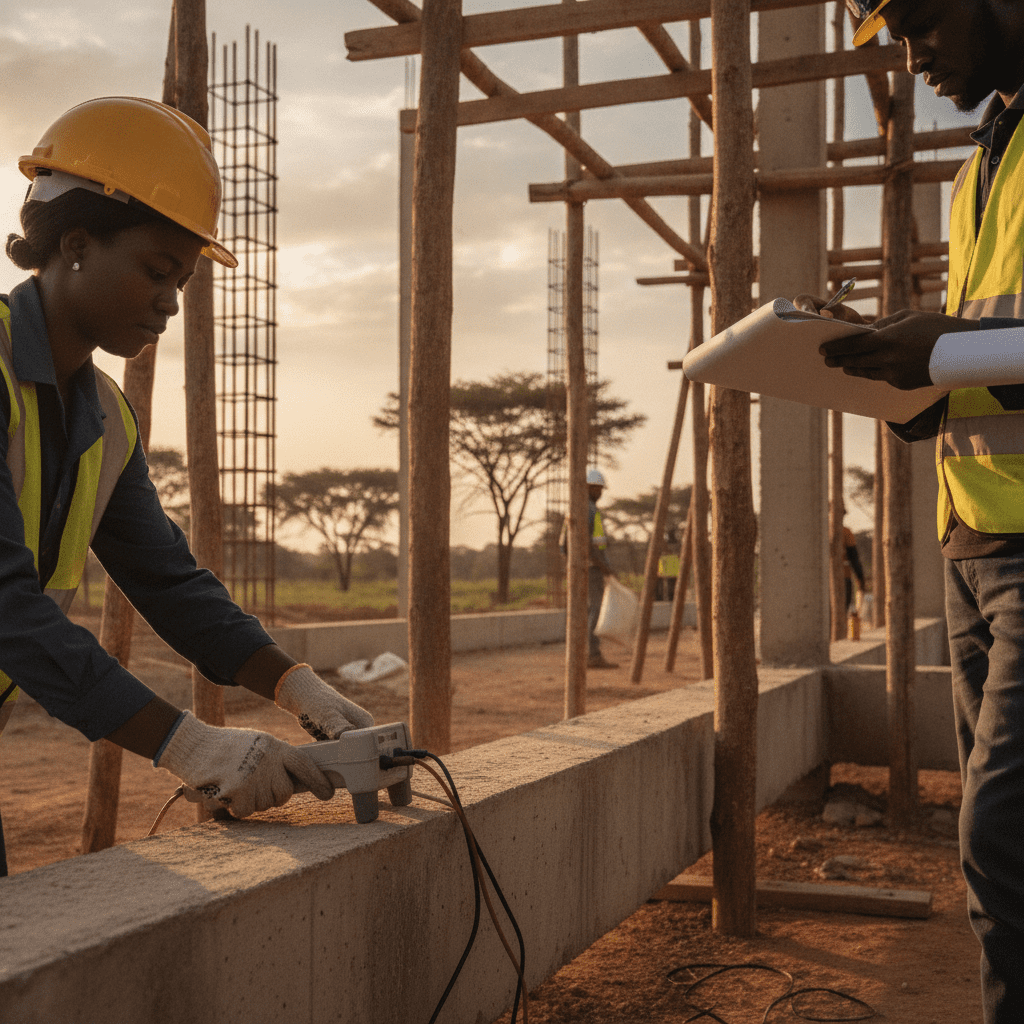
The Forensic Investigation Process: A Step-by-Step Guide
| Common Oversight | Recommended Practice |
|---|---|
| Delaying investigation despite visible signs of distress. | Initiate an assessment promptly upon noticing any significant structural changes or defects. |
| Relying solely on visual inspection for complex issues. | Integrate Non-Destructive Testing (NDT) and Destructive Testing (DT) for comprehensive data. |
| Discarding old drawings or construction records. | Maintain a complete archive of all building documentation for future reference. |
| Focusing only on the visible defect, ignoring potential underlying causes. | Conduct a holistic analysis considering all contributing factors, including environmental and design aspects. |
| Attempting quick, unengineered patch repairs. | Seek expert engineering input for a root cause analysis and professionally designed repair strategy. |
Key Factors Influencing Investigation Scope and Deliverables
Risks, Compliance, and Case Context in Forensic Investigations
Frequently Asked Questions
What is the typical duration for a forensic structural investigation in Kenya?
The duration of a forensic structural investigation in Kenya varies significantly based on several factors, including the size and complexity of the structure, the nature and extent of the defects, the required scope of testing, and access constraints. A preliminary assessment might take a few days, but a comprehensive investigation involving detailed site inspections, non-destructive testing (NDT), laboratory analysis of material samples (e.g., concrete core tests, chemical analysis), detailed structural analysis, and report generation can typically span from two weeks to several months. Urgent cases requiring immediate safety assessments may be expedited, focusing initially on critical areas and temporary support recommendations, with a more detailed analysis following.
How does a forensic investigation differ from a standard structural assessment?
A standard structural assessment generally focuses on evaluating the current condition and structural integrity of a building for purposes such as pre-purchase, renovation planning, or routine maintenance. It identifies visible defects and assesses overall stability. In contrast, a forensic structural investigation is a deeper, more specialized process specifically aimed at determining the root cause of a structural failure, defect, or distress. It is typically initiated when there’s an unexplained failure, significant damage, or a dispute, requiring detailed analysis of design, materials, construction methods, and environmental factors to establish causation and responsibility. This often involves more intrusive testing and detailed engineering calculations.
What specific types of defects does a forensic structural investigation address?
Forensic structural investigations address a wide array of defects. These commonly include, but are not limited to: foundation settlement or heave (often due to expansive soils like black cotton in Nairobi or poor compaction), various cracking patterns in concrete or masonry (e.g., shrinkage, thermal, shear, flexural, or settlement-induced cracks), material degradation (such as concrete spalling, rebar corrosion, timber rot), deflections or excessive vibrations in floor slabs or beams, water ingress and its structural impact, fire damage assessment, design errors (e.g., inadequate reinforcement, incorrect member sizing), construction flaws (e.g., poor concrete cover, honeycombing, misaligned elements), and impacts from external events like vehicle collisions or seismic activity. The investigation aims to pinpoint the specific mechanisms leading to these issues.
Can a forensic report be used in court as evidence in Kenya?
Yes, a well-prepared forensic structural investigation report is a critical piece of evidence that can be used in court or other dispute resolution forums in Kenya. For a report to be admissible and influential, it must be objective, impartial, technically sound, and clearly presented. The engineer authoring the report often serves as an expert witness, providing an independent professional opinion based on their findings. The report should adhere to principles of expert evidence, detailing the methodology, factual findings, analysis, conclusions, and recommendations, ensuring that it is comprehensive, logical, and defensible under cross-examination. It is essential that the expert maintains independence and focuses solely on the technical facts.
Key Takeaways
- Early Detection is Crucial: Prompt identification of structural anomalies, whether cracks, deflections, or material degradation, can significantly mitigate the extent of damage and complexity of repairs. Regular visual inspections are a fundamental first line of defence against escalating issues.
- Expertise is Non-Negotiable: Forensic structural investigations demand specialised knowledge in structural mechanics, materials science, and relevant building codes. Engaging a qualified and experienced structural engineer ensures a thorough, impartial, and technically sound assessment, crucial for both safety and legal standing.
- Comprehensive Data Collection is Key: A robust investigation relies on meticulous data gathering, including historical documentation, site observations, non-destructive testing (NDT), and laboratory analysis. Each piece of evidence contributes to a complete understanding of the defect’s origin and progression.
- Understanding Root Causes: Defects often stem from a combination of design errors, poor construction practices, material failures, environmental factors, or inadequate maintenance. A forensic investigation aims to pinpoint these underlying causes rather than just addressing symptoms, preventing recurrence.
- Impartial Reporting is Paramount: Expert reports must be objective, fact-based, and clearly articulate findings, methodologies, and conclusions. Such reports serve as critical evidence in dispute resolution, insurance claims, or remedial action planning, requiring clarity and defensibility.
- Compliance and Regulatory Adherence: All investigations and subsequent recommendations must align with Kenyan building codes, standards, and regulatory frameworks. Non-compliance can lead to legal penalties, project delays, and compromised structural integrity, highlighting the importance of professional oversight.
- Proactive Maintenance Prevents Failure: While investigations address existing problems, the ultimate goal is prevention. Implementing a robust structural maintenance program, informed by professional assessments, is vital for extending asset lifespan and ensuring long-term safety and functionality.
Need Expert Structural Guidance?
For detailed structural assessments, forensic investigations, or expert engineering advice in Kenya, connect with qualified professionals.
Phone: +254 719 532 233
Email: info@Cadreatech.com
Website: Cadreatech.com
