
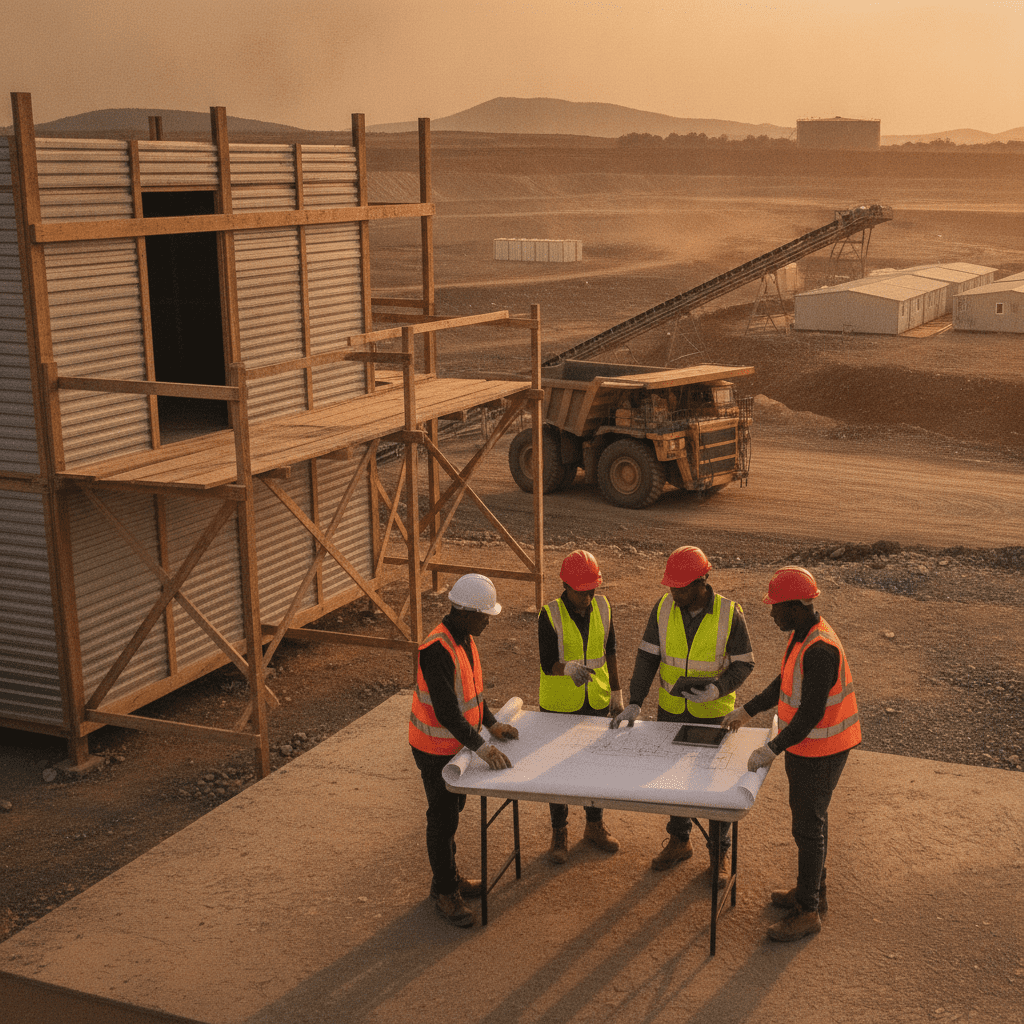
Mining Camps & Temporary Works: Kenyan Safety & Compliance
Kenya’s burgeoning resource sector, particularly in mining and exploration, relies heavily on the rapid deployment and efficient operation of temporary works and associated camps. While often perceived as transient, these structures are critical infrastructure, demanding the same rigorous engineering scrutiny as permanent installations. Failure to adhere to stringent design, construction, and safety protocols can lead to severe operational disruptions, environmental damage, and, most critically, endanger lives. Understanding the unique challenges posed by Kenya’s diverse geography, regulatory landscape, and construction practices is paramount for ensuring the integrity and compliance of all temporary installations.
Mobilisation triggers occupational safety duties — not practical completion. Read construction site safety, DOSH registration, and project supervision.
Understanding Temporary Works in Mining Operations
Temporary works encompass all non-permanent structures and systems required to facilitate the construction, operation, or decommissioning of a main project. In the context of Kenyan mining, this can range from simple access roads and excavation support systems to complex dewatering infrastructure, material handling setups, and extensive site accommodation. The temporary nature often belies their critical role, as they directly impact the safety of personnel, the efficiency of operations, and the overall project timeline.
One of the primary considerations in Kenya is the varied geological and geotechnical conditions. A mining operation in the hard rock regions of West Pokot will face different challenges compared to an alluvial gold mine in Kakamega or a mineral sands project along the Kwale coast. For instance, excavation support systems, such as shoring or sheet piling, must be meticulously designed to account for specific soil characteristics. Expansive black cotton soils, common in parts of Kajiado and Nairobi, require different foundation and retention strategies than stable murram or rocky outcrops. Engineers must conduct thorough geotechnical investigations to inform the design of temporary slopes, retaining structures, and heavy equipment pads, ensuring stability under dynamic loads.
Access and haul roads represent another significant component of temporary works. In remote mining locations, these roads are essential for transporting personnel, equipment, and extracted materials. Their design must account for the specific axle loads of mining vehicles, anticipated traffic volumes, and the prevailing climatic conditions, especially during Kenya’s long rainy seasons. Proper drainage, culverts, and erosion control measures are non-negotiable to prevent washouts and ensure continuous access. The principles of designing durable and safe Parking, Driveways and External Works are directly applicable here, scaled up for heavy-duty industrial use. Without robust engineering, these roads can quickly degrade, causing delays, vehicle damage, and safety hazards.
Furthermore, temporary works include specialized structures like formwork for concrete batching plants, scaffolding for crushing and processing facilities, and temporary bridges or culverts. Each of these requires a detailed design brief, structural analysis, and a clear method statement for erection, use, and dismantling. The rapid pace of mining projects often means these elements are erected and adapted quickly, making robust engineering oversight even more crucial.
Overlooking the design and construction integrity of temporary works can have catastrophic consequences. Undersized shoring, improperly braced scaffolding, or poorly drained access roads can lead to collapses, equipment damage, and severe injuries or fatalities. These failures often result in significant project delays, costly repairs, and potential legal liabilities, far outweighing any perceived savings from inadequate engineering input.
| Common Oversight in Temporary Works | Recommended Practice for Kenyan Mining Sites |
|---|---|
| Inadequate geotechnical investigation for foundations. | Conduct comprehensive soil testing across the camp footprint to inform foundation design for all temporary structures, especially in areas with expansive soils like black cotton. |
| Generic camp layouts without local context. | Site-specific planning that considers terrain, hydrology, wind patterns, local community proximity, and emergency access routes. |
| Overlooking NEMA requirements for temporary structures. | Proactive engagement with NEMA for Environmental Impact Assessment (EIA) or Environmental Audit (EA) for all temporary works, including waste management plans. |
| Insufficient fire safety measures in accommodation blocks. | Implement robust fire detection and suppression systems, clear evacuation routes, fire drills, and appropriate building material specifications for fire resistance. |
| Lack of regular structural inspections during operation. | Establish a routine inspection schedule by a qualified engineer to assess structural integrity, material degradation, and compliance throughout the temporary works’ lifespan. |
Dewatering systems are also critical temporary works, particularly in areas with high water tables or active groundwater ingress. Effective dewatering is essential for maintaining dry excavations, ensuring foundation stability, and preventing geotechnical failures. The design must consider hydrogeological conditions, pumping rates, discharge locations, and environmental impact, especially in sensitive ecosystems like those found near Lake Victoria or coastal wetlands.
Ensuring Compliance and Structural Integrity for Mining Camps
Beyond the operational temporary works, mining camps serve as self-contained communities, providing accommodation, medical services, administrative offices, and recreational facilities for the workforce. While temporary in their intended duration, these camps must meet the same, if not higher, standards of safety, habitability, and structural integrity as permanent buildings, especially given their human occupancy.
The structural design of mining camp buildings, whether modular prefabricated units or site-built structures, must address several key factors specific to the Kenyan environment. Foundations, for example, need to be adaptable to diverse ground conditions. In areas with expansive clay soils, such as parts of Kajiado County, shallow foundations must be designed to mitigate differential settlement, while rocky terrains might require specialized anchoring or leveling techniques. Wind loading is another critical consideration, particularly in open savanna regions or coastal areas like Kwale, where high wind speeds can exert significant forces on light-frame structures. Seismic activity, though less frequent, is also a factor in the Rift Valley region, necessitating appropriate structural detailing.
Compliance with Kenyan building codes and standards is non-negotiable. This includes adherence to the Building Code of Kenya, local county by-laws (e.g., Nairobi City County’s planning regulations, Mombasa County’s construction guidelines), and relevant international standards adapted for local conditions. These regulations govern everything from structural stability and material specifications to fire safety and sanitation. Engineers play a pivotal role in ensuring that camp designs incorporate these requirements from the outset, facilitating smoother approval processes and avoiding costly retrofits. Seeking Regulatory and Compliance Advisory early in the project lifecycle can streamline this complex process.
Fire safety is paramount in mining camps due to the concentrated occupancy and often remote locations. Designs must include adequate fire separation, appropriate fire-rated materials, accessible fire suppression equipment, and clearly marked, unobstructed escape routes. Emergency lighting and signage are also crucial, especially for multi-occupancy accommodation blocks. The remoteness of many mining sites means that external emergency services may have extended response times, making internal fire prevention and early detection systems even more vital.
Furthermore, comprehensive utility infrastructure is essential for a functional and compliant camp. This includes reliable water supply, often requiring boreholes, treatment plants, and distribution networks; robust wastewater treatment systems to prevent environmental contamination; and a stable power supply, frequently from generators or hybrid solar solutions. Waste management plans, addressing both solid and liquid waste, must align with NEMA (National Environment Management Authority) guidelines to ensure environmental protection and sustainable operation.
The establishment of mining camps and associated temporary works in Kenya demands a rigorous engineering assessment process to ensure both operational efficiency and, critically, safety. These structures, ranging from accommodation blocks and administrative offices to workshops, storage facilities, and processing plant ancillaries, are often located in remote and challenging environments. A thorough assessment goes beyond mere design, encompassing site-specific geotechnical conditions, environmental factors, and the transient nature of these installations.
A foundational step involves detailed geotechnical investigation. Mining sites in Kenya can present diverse soil conditions, from expansive black cotton soils in parts of Kajiado and Kisumu, requiring specialised foundation solutions to mitigate swelling and shrinkage, to stable murram or lateritic soils common in many arid regions. Coastal mining operations, such as those in Kwale County, contend with sandy, often corrosive, environments which necessitate particular attention to material selection and foundation protection. Engineers conduct boreholes, trial pits, and in-situ tests to determine soil stratification, bearing capacity, and groundwater levels. This data is paramount for designing appropriate foundations, whether they are simple pad foundations, strip footings, or more complex piled solutions for structures on weaker or unstable ground. Ignoring these site-specific conditions can lead to differential settlement, structural instability, and premature failure of temporary facilities, posing significant risks to personnel and operations.
Structural design principles for temporary works must account for all anticipated loads, including dead loads (self-weight of the structure), live loads (occupants, equipment), wind loads (which can be substantial in open, exposed mining areas), and potential seismic loads, especially in regions prone to tremors. The choice of construction materials, often prefabricated steel or modular units for rapid deployment, must align with durability requirements and local availability. Connections are particularly critical in modular structures, requiring careful detailing to ensure structural integrity and ease of assembly/disassembly. Furthermore, the design must consider the potential for future expansion or relocation, making modularity and robust, reversible connections vital. Proper drainage design around temporary structures is also essential to prevent water ingress, soil erosion, and subsequent foundation damage, particularly during Kenya’s heavy rainy seasons.
The engineering assessment process for mining camps and temporary works typically follows a structured approach to ensure all critical aspects are addressed:
- Initial Site Reconnaissance and Data Collection: A preliminary visit to understand the site layout, access, topography, existing infrastructure, and potential environmental hazards. Collection of available geological maps, hydrological data, and local climate information.
- Detailed Geotechnical Investigation and Reporting: Execution of boreholes, trial pits, laboratory testing of soil samples, and preparation of a comprehensive geotechnical report detailing soil profiles, bearing capacities, and foundation recommendations.
- Conceptual Design and Feasibility Study: Development of initial layout options for the camp and temporary structures, considering functional requirements, space utilisation, and preliminary cost implications. Evaluation of various structural systems and material options.
- Detailed Engineering Design and Load Calculations: Preparation of detailed architectural and structural drawings, including foundation designs, structural framing, connection details, and material specifications. Comprehensive load calculations for all structural elements.
- Material Specification and Procurement Planning: Finalisation of material types, grades, and quantities, considering factors like durability, fire resistance, and local supply chain logistics.
- Regulatory Submission and Permitting: Preparation of all necessary documentation and drawings for submission to relevant county authorities and regulatory bodies, including NEMA for environmental compliance. This phase often involves regulatory and compliance advisory to navigate local permitting requirements efficiently.
- Construction Supervision and Quality Assurance: Ongoing site inspections during construction to ensure adherence to approved designs, specifications, and quality standards. This includes verifying material quality, foundation installation, structural erection, and safety protocols.
This systematic approach mitigates risks, optimises resource utilisation, and ensures that temporary works provide a safe and functional environment for mining operations throughout their intended lifespan.
Maintaining the structural integrity of mining camp facilities and ensuring continuous compliance with regulatory standards are paramount for the safety of personnel and the uninterrupted flow of operations. Unlike permanent structures, temporary works often face unique challenges related to their intended short-to-medium lifespan, potential for relocation, and exposure to harsh, dynamic mining environments. A proactive approach to structural monitoring and adherence to statutory requirements is therefore essential.
Structural stability in temporary camps hinges on several key aspects that require ongoing attention. Foundations, while designed for the specific site, can be affected by changes in ground conditions over time, such as prolonged heavy rainfall causing soil saturation or excavation activities nearby. Regular inspections should focus on detecting signs of differential settlement, cracking in foundations or slabs, and any distortion in the superstructure. Connections between modular units or structural elements are particularly vulnerable points; bolts can loosen, welds can crack due to fatigue or poor execution, and bracing elements can be damaged. Corrosion is a significant concern, especially for steel structures in humid or coastal mining areas, or where acidic process water may be present. Protective coatings must be routinely inspected and maintained to prevent degradation that could compromise structural capacity. Deflection limits, as stipulated in design codes, must be monitored to ensure that floors, beams, and roofs are not exhibiting excessive sag, which could indicate overloading or structural distress.
Beyond the primary structural frame, the integration of Mechanical, Electrical, and Plumbing (MEP) systems also plays a crucial role in the overall integrity and safety of a mining camp. Firefighting and life safety systems design, for instance, must be robust and regularly tested, given the potential for flammable materials and remote locations. Electrical installations must be compliant with Kenyan standards to prevent fire hazards and ensure reliable power. Water supply and sanitation systems, while not directly structural, are critical for health and safety, and their infrastructure must be protected from damage that could lead to contamination or structural impact from leaks.
Compliance with the diverse regulatory framework in Kenya is non-negotiable. This includes adherence to the National Building Regulations, county-specific by-laws (e.g., those enforced by the County Governments of Kajiado, Turkana, or Kwale where mining is prevalent), and environmental guidelines from NEMA. These regulations cover aspects from structural safety and fire egress to waste management and worker accommodation standards. Failure to comply can result in severe penalties, operational shutdowns, and reputational damage. Regular audits by qualified professionals are necessary to verify that all temporary structures meet these standards throughout their operational life.
A comparison of common oversights versus recommended practices highlights the importance of expert engineering input in maintaining mining camp safety and compliance:
By prioritising these engineering best practices, mining operators can ensure that their temporary camps provide a safe, compliant, and efficient environment for their workforce, minimising risks and supporting long-term operational success.
Establishing mining camps and temporary works in Kenya presents a unique set of engineering and logistical challenges, primarily driven by remote locations, diverse geological conditions, and a robust regulatory framework. These temporary installations, critical for exploration, extraction, and processing phases, must be designed and implemented with an acute understanding of both local environmental sensitivities and national safety standards. From the arid regions of Turkana to the coastal mineral sands of Kwale, each site demands tailored solutions that mitigate risks and ensure compliance.
A fundamental aspect of any temporary works project in Kenya is the Environmental Impact Assessment (EIA), a mandatory requirement under the Environmental Management and Co-ordination Act (EMCA) Cap 387, enforced by the National Environment Management Authority (NEMA). Even temporary camps and access roads require an EIA or an Environmental Audit (EA) to identify potential impacts on ecosystems, water resources, and local communities. Engineers must consider site selection to minimize ecological disturbance, implement effective waste management strategies (solid, liquid, and hazardous waste), and plan for site rehabilitation upon project completion. Failure to secure NEMA approvals can lead to significant project delays, hefty fines, and reputational damage.
Occupational Safety and Health (OSH) is another paramount concern, governed by the Occupational Safety and Health Act, 2007. Temporary structures, by their nature, often introduce unique hazards. Worker accommodation, site offices, workshops, and storage facilities must meet minimum structural integrity standards, provide adequate ventilation, sanitation, and access to clean water. Fire safety systems, including detection, suppression, and emergency evacuation plans, are crucial, especially in densely populated camp areas. Engineers are responsible for ensuring that designs account for safe working practices during erection, use, and dismantling of these temporary works. This includes specifying appropriate materials, connection details, and load-bearing capacities, particularly for structures exposed to harsh weather conditions such as high winds or intense solar radiation. For comprehensive guidance on structural integrity and safety, engineers often consult various national and international standards. Effective implementation of such systems is critical, and further insights can be found in resources dedicated to Firefighting and Life Safety Systems Design.
Beyond environmental and safety compliance, land tenure and community engagement are critical. Mining operations often take place on communal or private land, necessitating clear agreements and compensation frameworks. While primarily a legal and social issue, engineers play a role in site layout, ensuring that infrastructure respects local land use patterns and minimizes disruption. Geotechnical investigations are also indispensable. Kenyan soils vary significantly, from expansive black cotton soils in parts of Kajiado and Kisumu, which require specialized foundation designs to manage swelling and shrinking, to stable murram or rocky outcrops. Accurate soil assessments inform the design of foundations for temporary buildings, culverts, and bridge abutments, preventing structural failures and ensuring the stability of access routes. The selection of appropriate temporary works, such as scaffolding, formwork, and shoring, must consider these ground conditions and the specific loads they will bear. Navigating these complex requirements often benefits from expert consultation on Regulatory and Compliance Advisory.
Utilising uncertified temporary works designs or structures without professional engineering oversight poses severe risks. This includes potential for structural collapse, worker injuries, environmental contamination, and significant legal penalties. Always ensure all temporary structures are designed, inspected, and certified by a qualified and registered engineer in Kenya, adhering to all local and national codes.
| Common Oversight in Camp Design | Recommended Practice for Compliance |
|---|---|
| Underestimating wind loads on light structures, especially in exposed areas. | Conduct site-specific wind load analysis and ensure structural framing is adequately braced and anchored. |
| Inadequate fire separation between accommodation units or critical facilities. | Implement fire-rated walls, doors, and ceilings, along with a clear fire safety plan and evacuation routes. |
| Generic foundation design without specific geotechnical investigation. | Perform detailed geotechnical surveys to inform foundation design tailored to local soil conditions. |
| Neglecting proper wastewater treatment or solid waste disposal plans. | Design and implement NEMA-compliant wastewater treatment plants and comprehensive waste management protocols. |
| Lack of accessible emergency exits and clear signage in multi-occupancy buildings. | Ensure all buildings have clearly marked, unobstructed emergency exits and robust emergency lighting. |
| Assuming “temporary” status exempts from standard building codes. | Adhere to all relevant national building codes, county by-laws, and international standards for structural and life safety. |
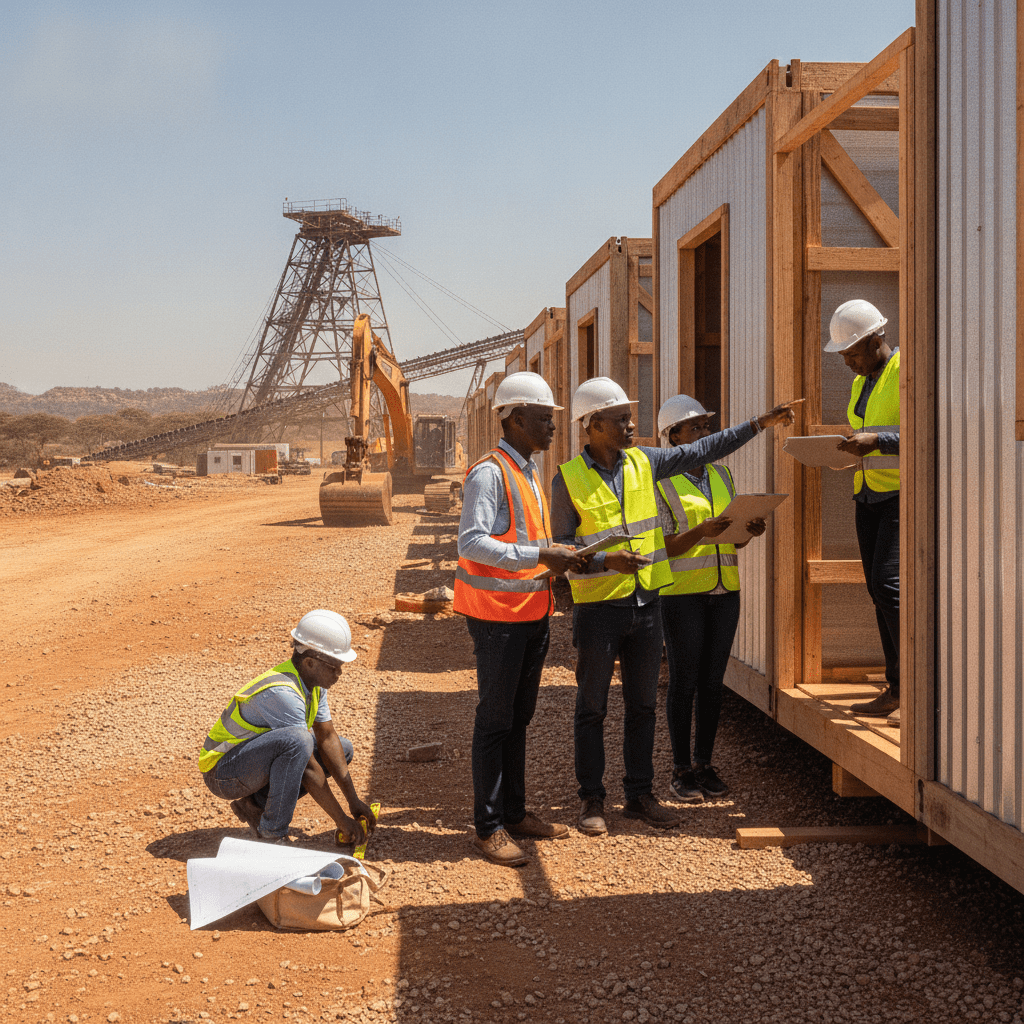
Comprehensive Engineering Assessment for Temporary Works
| Common Structural Oversight | Correct Engineering Approach |
|---|---|
| Inadequate foundation design based on superficial soil assessment. | Site-specific geotechnical analysis and tailored foundation solutions for ground conditions. |
| Poor material selection or use of substandard components. | Specification of durable, corrosion-resistant materials suitable for local environmental conditions. |
| Neglecting comprehensive load analysis, especially for dynamic or environmental loads. | Thorough load analysis incorporating dead, live, wind, seismic, and dynamic loads specific to the site. |
| Insufficient bracing or poorly detailed connections in modular structures. | Robust cross-bracing, moment connections, and detailed connection designs for lateral stability. |
| Infrequent or superficial structural inspections. | Scheduled structural audits by qualified engineers, including non-destructive testing where applicable. |
| Ignoring minor cracks or signs of deformation. | Prompt investigation and assessment of any structural anomalies by a professional engineer. |
Ensuring Structural Integrity and Compliance in Mining Camps
Navigating Risks and Regulatory Compliance in Kenyan Mining Camps
The table above highlights crucial areas where attention to detail and professional engineering input can significantly enhance the safety, efficiency, and compliance of mining camp and temporary works projects in Kenya. Proactive planning and adherence to these practices are not just regulatory necessities but fundamental pillars of responsible engineering.
Frequently Asked Questions
What are the primary environmental considerations for temporary mining camps in Kenya?
The primary environmental considerations for temporary mining camps in Kenya revolve around minimizing ecological footprint and ensuring compliance with NEMA regulations. This includes conducting a thorough Environmental Impact Assessment (EIA) or Environmental Audit (EA) prior to construction to identify and mitigate potential impacts on biodiversity, water resources, and air quality. Key concerns include proper management of solid and liquid waste, prevention of soil erosion, protection of local flora and fauna, and responsible sourcing of construction materials. Furthermore, a detailed site rehabilitation plan is essential, outlining how the site will be restored to its original or an improved state once the temporary works are decommissioned, ensuring no long-term environmental degradation.
How do prevailing Kenyan soil conditions affect the design of temporary structures?
Kenyan soil conditions significantly influence the design of temporary structures. Expansive black cotton soils, common in areas like Kajiado and parts of Kisumu, require specialized foundation designs such as rafts or deep strip foundations to accommodate their high swelling and shrinking potential with moisture changes. Conversely, murram or rocky terrains offer better bearing capacity but may require extensive excavation and rock anchoring for stability. Engineers must conduct detailed geotechnical investigations to classify soil types, determine bearing capacities, and assess potential for settlement or instability. This data directly informs the choice of foundation systems, material selection, and overall structural design to ensure the stability and safety of temporary buildings, access roads, and other infrastructure.
Which key permits and approvals are necessary for establishing a mining camp in Kenya?
Establishing a mining camp in Kenya requires a hierarchy of permits and approvals, primarily starting with a valid mining license from the Ministry of Mining. Beyond this, an Environmental Impact Assessment (EIA) license from NEMA is mandatory for any development, including temporary camps, to ensure environmental compliance. County government approvals, such as development permits and change of user (if applicable), are also critical, aligning with local planning regulations. Additionally, occupational safety and health permits from the Directorate of Occupational Safety and Health Services (DOSHS) are required for worker accommodation and workplaces. Depending on water usage, Water Resources Authority (WRA) permits may also be necessary for abstraction or discharge.
Engaging with regulatory bodies like NEMA, county planning departments, and DOSHS early in the project lifecycle is crucial. This proactive approach helps clarify requirements, streamline the permitting process, and avoid costly delays or non-compliance issues during the construction and operation of temporary mining works.
What is the recommended inspection frequency for temporary mining camp infrastructure?
The recommended inspection frequency for temporary mining camp infrastructure depends on several factors, including the type of structure, material, environmental exposure, and duration of use. Generally, a qualified engineer should conduct a comprehensive structural inspection at least once every six to twelve months for all temporary buildings and critical infrastructure. For high-risk elements or structures exposed to harsh conditions (e.g., coastal corrosion, heavy rainfall, high winds), more frequent quarterly inspections may be warranted. Daily or weekly visual checks by site personnel are also essential to identify immediate concerns like loose connections, material damage, or ground instability. Any significant weather event or observed structural distress should trigger an immediate, unscheduled inspection by a professional engineer.
Key Takeaways
- Prioritise Comprehensive Site Assessments: Before any design, a thorough geotechnical investigation, topographical survey, and environmental impact assessment are crucial for safe and compliant mining camps and temporary works in Kenya. Understanding local soil conditions, such as expansive black cotton or stable murram, is fundamental to foundation design and overall stability.
- Adhere to Kenyan Regulatory Frameworks: All designs and constructions must strictly comply with local building codes, NEMA regulations, the Occupational Safety and Health Act (OSHA), and relevant county by-laws to ensure legal operation and worker safety. Non-compliance can lead to significant penalties, operational delays, and serious safety incidents.
- Implement Robust Structural Design: Temporary structures, including accommodation units, workshops, and processing facilities, require designs that account for dynamic loads, potential seismic activity in regions like the Rift Valley, and specific local wind patterns. Designs must ensure stability and durability for the intended operational lifespan.
- Focus on Essential Life Safety Systems: Non-negotiable life safety provisions for all temporary and permanent camp structures include adequate fire detection and suppression systems, clearly marked emergency exits, and well-rehearsed evacuation routes. These systems must be designed for the specific occupancy and hazard profiles of a mining environment.
- Develop a Detailed Decommissioning Plan: From the project’s inception, engineers should integrate a comprehensive decommissioning and site rehabilitation plan. This includes strategies for the safe removal of structures, waste management, and environmental restoration to minimise long-term impact and ensure responsible closure.
- Engage Qualified Engineering Professionals: The design, supervision, and certification of all mining camp infrastructure and temporary works should be undertaken by registered and experienced engineers. This guarantees adherence to safety standards, quality construction practices, and regulatory requirements, protecting both personnel and investment.
- Regular Inspections and Maintenance are Critical: Implement a rigorous schedule for routine inspections, maintenance, and structural integrity checks throughout the operational life of the camp. Proactive identification and mitigation of potential hazards, material degradation, or settlement issues are essential for sustained safety and functionality.
Connect with Engineering Experts
Navigating the complexities of mining camp and temporary works engineering requires specialised knowledge and adherence to stringent safety and compliance standards. For expert guidance on planning, design, and regulatory compliance for your projects in Kenya, connect with qualified professionals.
Phone: +254 719 532 233
Email: info@Cadreatech.com
Website: Cadreatech.com
